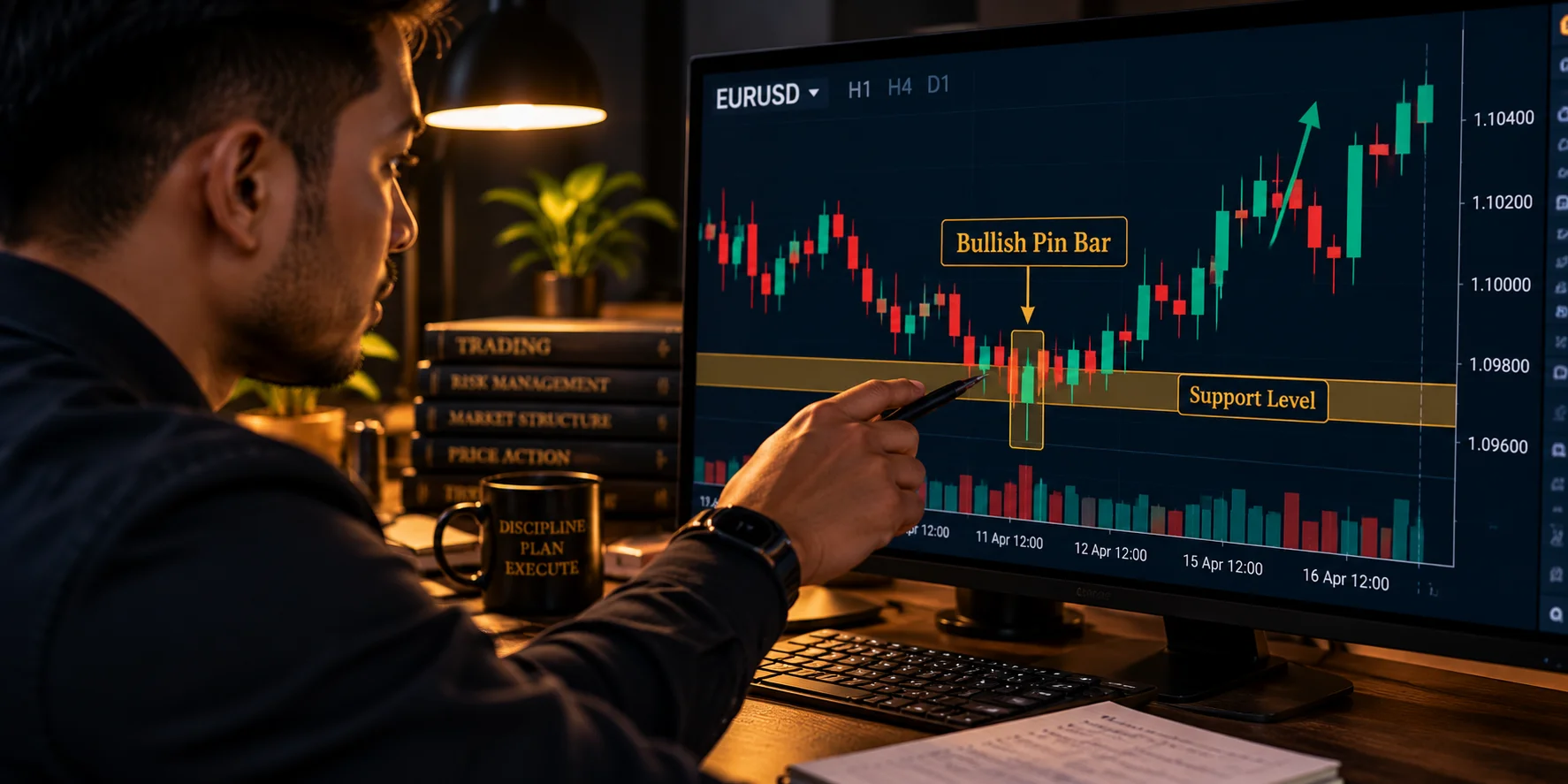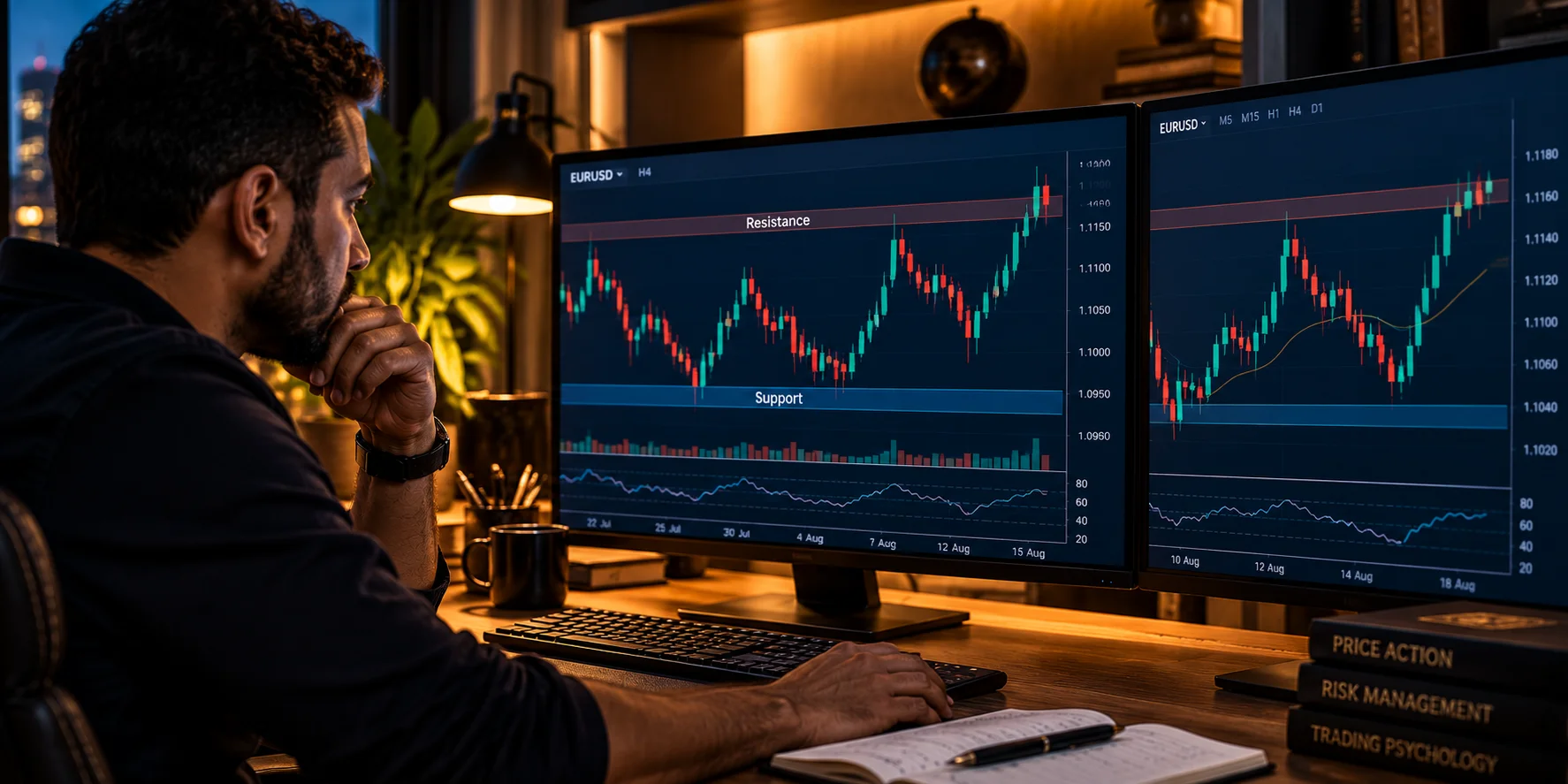
Many traders see an inside bar and think it means a reversal is coming. That is usually why they lose money on it.
You find a small candle hiding entirely inside the range of the candle before it. You assume the market has run out of breath. You bet against the trend, and the market immediately explodes in the opposite direction. That is not how the formation works. It is a continuation trap.
I spent my first two years in forex fighting these patterns because I treated them like reversal signals. The market kept proving me wrong. Once I started treating them for what they actually are, my results changed.
What an Inside Bar Actually Represents on Your Chart
Let us look at the market mechanics behind the inside bar breakout strategy. Most traders treat candlestick patterns like mysterious symbols that tell the future. They are not, rather they are a visual map of supply, demand, and trapped orders.
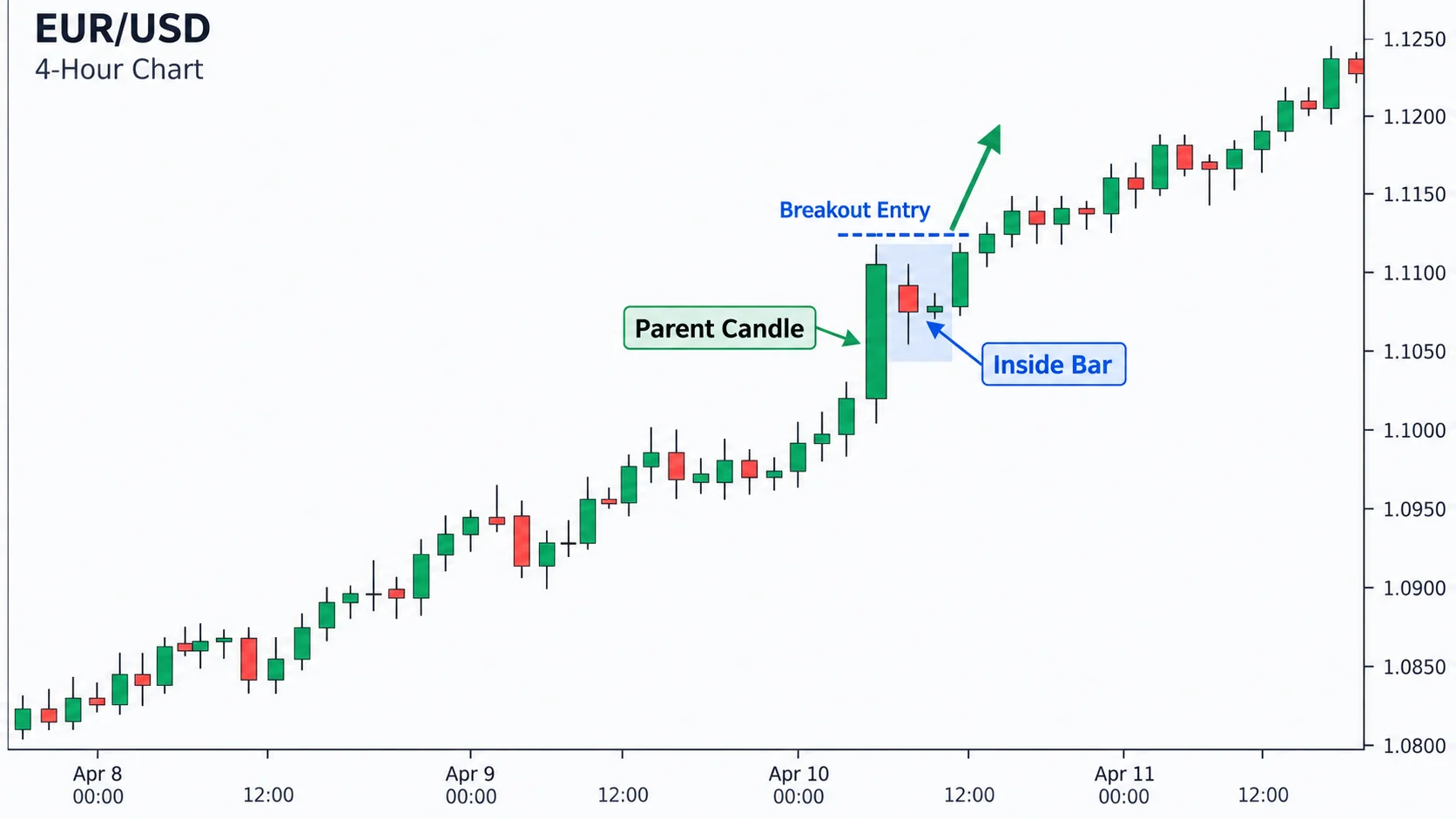
When you see a large candle form, followed by a smaller one whose high and low are inside the first candle, you are not looking at indecision. You are looking at a pause.
The first candle shows a big move. Big players pushed the price. The second candle is the inside bar. It represents digestion. Volatility gets smaller. Orders are being built up on both sides.
Retail traders often search for how to read candlestick patterns because understanding this pause is the only way to trade it without guessing. The market is coiling like a spring.
The breakout happens when people who guessed wrong get squeezed out. If you bet on a reversal and the price breaks the high of the big candle, your sell orders get hit. That triggers buying pressure, which pushes the price even higher.
Why Most Traders Trade Inside Bars Wrong
Look at any trading forum and you will see people selling the top of an inside bar or buying the bottom. They call it mean reversion. They assume the small candle means the market must bounce back. The market does not care about your assumptions. The market cares about where the money is moving.
I remember trying to short EURUSD because I saw an inside bar after a long run up. I thought, "This is it, it is overbought." I placed my trade. The market took a breath for ten minutes, then ripped higher. It hit my stop in seconds. I was trying to stop a moving train with my hands.
When you trade an inside bar against a strong trend, you are the one getting trapped. The pros use that quiet time to add to their winning positions. They are not reversing the move. They are fueling the next leg of it.
This is why understanding the broader context of your candlestick patterns is so important. A pattern by itself is just a shape. A pattern in context is a set of instructions.
How to Identify a Valid Setup on the Charts
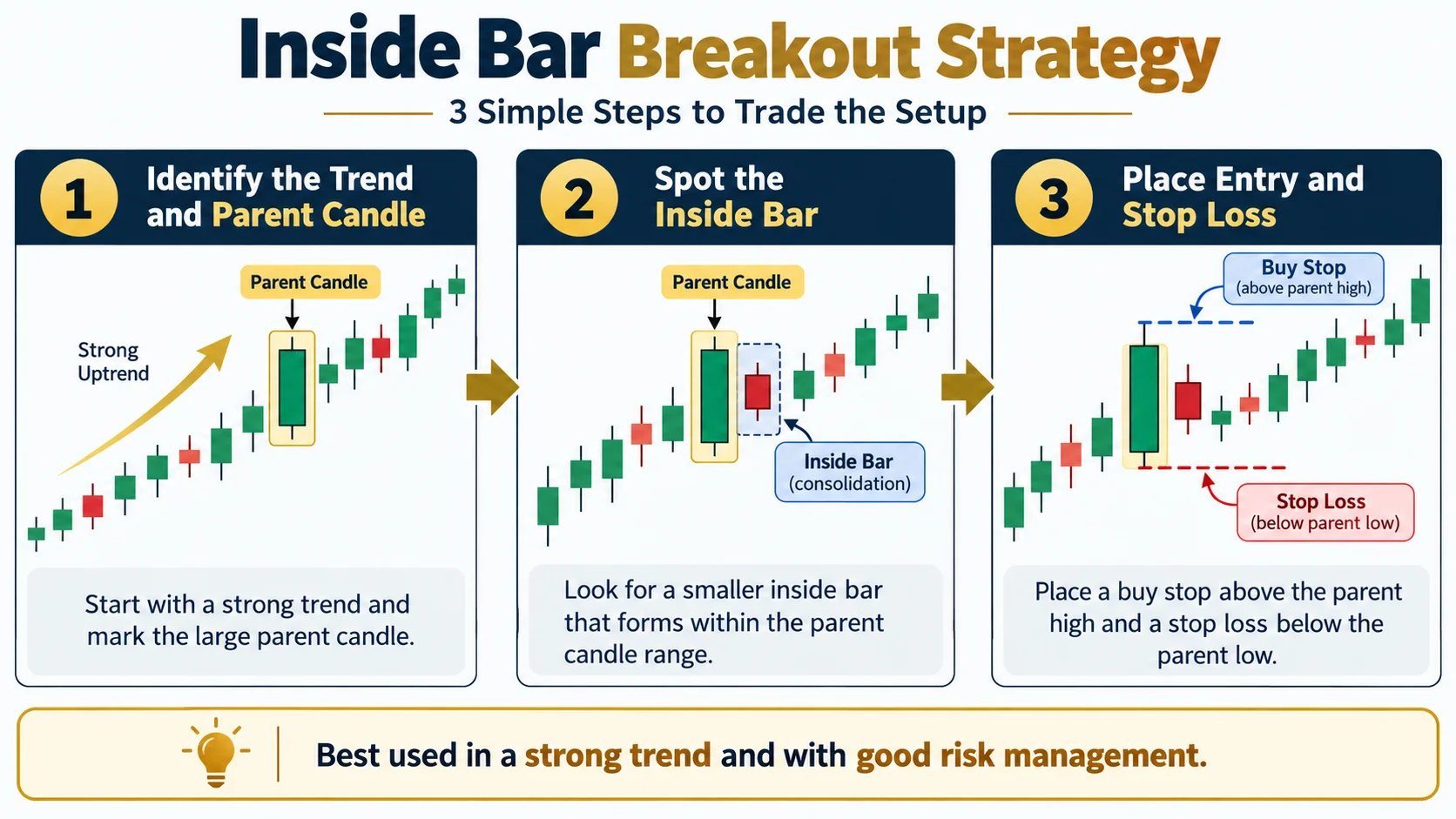
You cannot trade every inside bar. If you do, you will lose money in choppy markets. You need strict rules. First, find a strong trend on a 4 hour or daily chart. Look for big, impulsive candles. Wait for a pullback or a quiet spot where an inside bar forms.
The big "parent" candle should be larger than the ones before it. This shows big money entered the market. The inside bar must fit completely inside that parent candle.
I once watched GBPUSD on a 4 hour chart. The price shot up. A small inside bar formed right under a level. Most people sold it. I waited for the price to break the high of the big candle. It kept running for two hundred pips. I just followed the path the big money laid out. The setup is simple. But you must wait. Do not enter while the inside bar is still forming. Wait for the break.
Setting Your Entry and Stop Loss Correctly
Execution is where most traders fail. They chase the price or put stops in bad spots. For an inside bar breakout strategy, put your buy order a few pips above the parent candle's high. If you are selling, put your sell order a few pips below the parent candle's low.
Your stop loss matters more than your entry. Do not put it under the inside bar. That is too close. The market noise will kick you out before the real move starts.
Place your stop loss on the other side of the parent candle. Yes, this makes your stop wider. That means you must use a smaller position size. If your stop is fifty pips away, lower your size so that you only lose 1% of your account if it hits. If you don't know where your stop should go, you are gambling. Don't trade if you aren't sure.
Managing the Trade and Taking Profits
Once you are in, the work is not over. Sometimes the price pokes through the high and then drops back down. This is a fake-out.
To stay safe, some people wait for a candle to close above the level. This gives you a safer trade, but you get in at a worse price. I use a pending order to get in early, but I accept that some trades will be fake-outs.
This is why your reward must be at least twice your risk. If you risk 10 dollars, you need to make 20 dollars. If you do this, you can be wrong half the time and still make money.
Why Context Beats Pattern Recognition Every Time
You can learn every candle shape in the world. If you trade them in a quiet, sideways market, you will still lose. The inside bar is useless if there is no clear trend.
It needs to appear in a logical place. Look for them after a major level breaks, or during a pullback in a strong trend.
Early on, I traded every inside bar I saw. I treated the market like a slot machine. My account bled money slowly. Once I started only trading them with the trend, my win rate jumped. I stopped fighting the market and started following it.
The market rewards those who wait. The hardest part is sitting on your hands while the inside bar forms. You have to watch the screen and do nothing. Let the market show its hand. Then, you make your move.
Where To Read Next
To continue building your price action toolkit, make sure to read our core guide:
What Are Morning and Evening Star Patterns in Forex? (coming soon)
- How to Read Candlestick Patterns for Beginners in Forex
- How to Trade Hammer and Shooting Star Candles in Forex
- How to Trade Bullish and Bearish Engulfing Candles in Forex
- How to Read Bullish and Bearish Candlesticks in Forex
- How to Trade a Pin Bar Candlestick Strategy in Forex
Frequently Asked Questions
What is the best inside bar breakout strategy for retail forex traders?
The best way is to trade it with the trend. Wait for a strong move on a 4-hour or daily chart. Find an inside bar during a pullback. Place an order to enter when the price breaks the high or low of the parent candle.
Why do my inside bar breakouts keep failing and hitting my stop loss?
You are likely trading them in markets that are just moving sideways. Inside bars need a strong trend to work well. Without that push, the market doesn't have the power to break out, and you get trapped in a fake move.
How do I set my stop loss when trading an inside bar breakout?
Put your stop loss on the opposite side of the parent candle. If you have a 1,000 dollar account and a 40-pip stop, trade 0.02 lots. This keeps your loss to 10 dollars, which is 1% of your money. This is how you stay in the game.
Is the inside bar pattern a reversal or continuation signal?
Most books say it is for reversals. That is wrong. It is a continuation signal. It is just a quick pause before the market continues its original direction.
What timeframe is best for trading inside bar breakouts?
Use the 4-hour or daily charts. These timeframes show the real moves. If you use 1-minute or 5-minute charts, you will see too much noise and get tricked by fake breakouts.
I am not your financial adviser, this is only what worked for me.
Found this helpful? Share it with someone who needs it.