I have an affiliate link for every broker I am about to mention. That means if you sign up using my link, the broker pays me a small fee.
I am telling you this because I don't want to pretend I am just a neutral observer. But here is the thing: I actually use these brokers with my own money. I have used JustMarkets for seven years, and I use Exness when I want to trade the Nasdaq. I am not here to sell you a dream, I am here to show you which tool works for which job.
Choosing a broker is the first real decision you make as a trader, and it is where many people go wrong. They pick a broker because of a flashy ad or a big bonus, and then they wonder why their money disappears or why they can't get a withdrawal out. I have been through the frustration of slow support and high fees, so I want to help you avoid that. In this review, I am going to break down the five brokers I trust in and tell you exactly what I use them for.
We are all looking for the same things: low costs, fast withdrawals, and a platform that doesn't freeze when the market gets moving. But the "best" broker depends on how much money you have and what you like to trade. A trader with $10 needs something very different from a trader with $10,000. Let's look at the facts so you can decide which one fits your journey.
The Top 5 Brokers at a Glance
Before we go deep, I want to give you the quick answer. If you are in a hurry, this is the summary of my experience with these five. I checked all these details as of today, but always double check on their websites because things can change.
JustMarkets : This is my "home" broker. It is the best for beginners who only have $10 or $20 to start because of its Cent accounts.
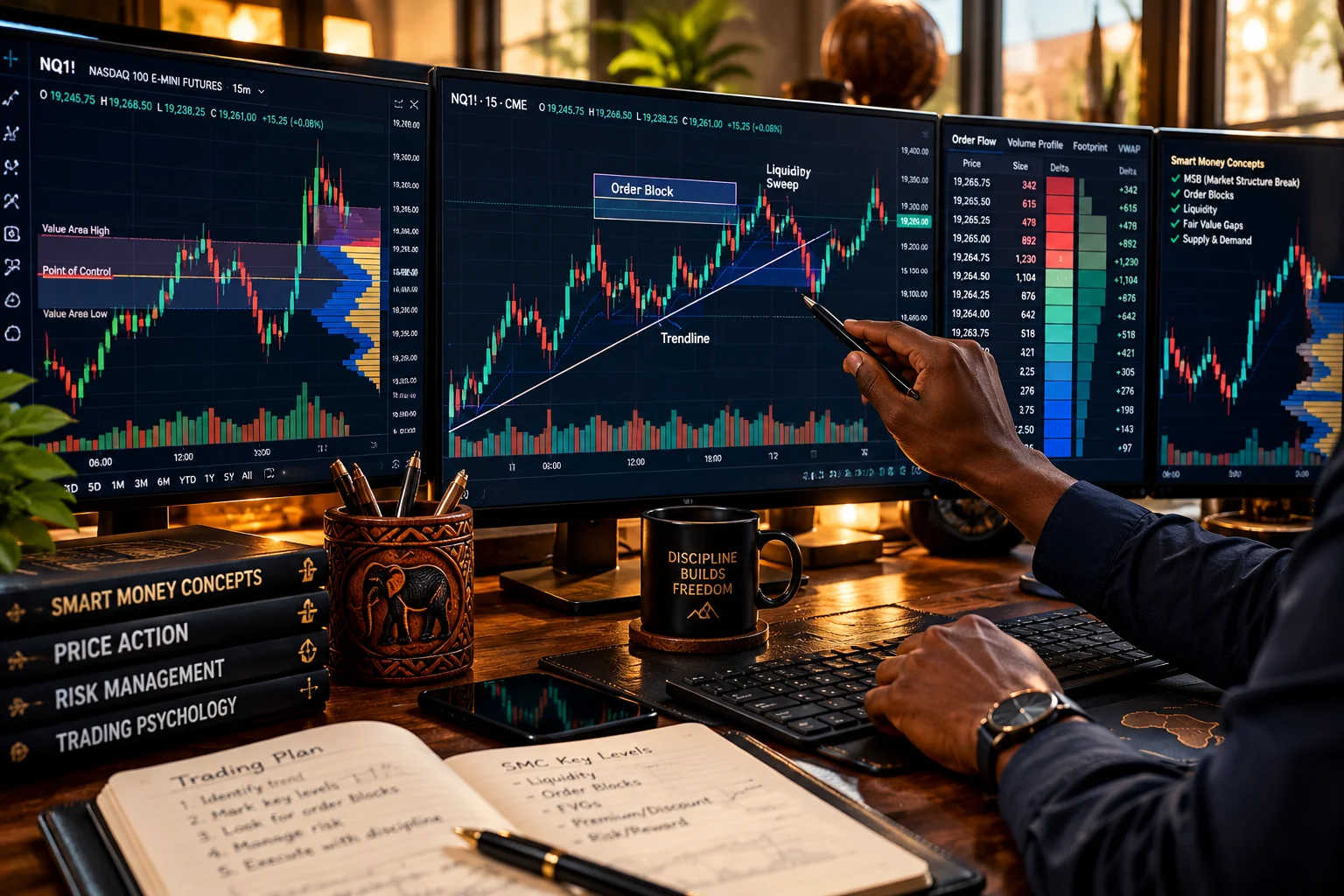
Exness : This is what I use for Nasdaq 100. It is great because you can choose between many different account types.
IC Markets : If you want the lowest possible cost per trade and you like using cTrader, this is the one.
FxPro : I use this for trading gold. They have a very strong reputation and have been around a long time.
Deriv : Best if you want to trade 24/7. They have "synthetic indices" that trade even on Saturdays and Sundays.
Choosing a broker is about more than just the name. You need to understand how they actually handle your trades. I talk about this more in my post on How to Choose a Forex Broker for Beginners, and honestly, it changed how I approach every new platform I test.
How a Broker Actually Works: The Bridge
I want to tell you something that most brokers don't put in their ads. A broker is basically a bridge. On one side, you have you, the retail trader, with your $100 or $500. On the other side, you have the "interbank market," which is where the big banks like JP Morgan and HSBC trade millions of dollars at a time. Because you don't have millions of dollars, you cannot walk into a big bank and ask to trade. You need the broker to sit in the middle. Since you are trading against these big players, I recommend learning How to Use Smart Money Concepts for Retail Trading Strategy to understand how they actually move the price.
When you click "Buy" on your phone, the broker takes your small order and matches it with someone else, or they pass it on to a bigger provider who can handle it. They make their money by charging you a small fee. This fee comes in two ways: the spread and the commission. The spread is like the difference between the price you buy a loaf of bread for and the price the shopkeeper bought it for. It is a small markup on the price.
Some traders get upset when they see they are "in the red" the moment they open a trade. But that is just the spread. It is the cost of crossing that bridge. If you understand this, you will realise why we look for brokers with "low spreads." The smaller that gap is, the less the market has to move before you start making a profit. If your broker has a huge spread, you are starting every trade with a big disadvantage.
JustMarkets: My Choice for Small Accounts
JustMarkets is the broker I have used for the longest time, about seven years now. When people ask me where to start with $10, I always point them here. The reason is their Standard Cent account. In a normal account, if you have $10, one bad move can blow your whole balance. But in a Cent account, your $10 shows up as 1,000 cents. It makes you feel like you have more room to breathe, and it lets you trade in very tiny sizes.
I remember when I first started, I was so scared of losing my deposit. Using a cent account helped me get used to the feeling of real money moving without the stress of losing a lot at once. Honestly speaking, it is the best way to move from a demo account to the real market. I explain this process more in my JustMarkets Review 2026 From a Trader Who Has Used It for Seven Years, which goes into the different account types they offer.
Another thing I like is their withdrawals. I have had times where the money reached my local payment method in less than five minutes. That kind of speed gives you a lot of peace of mind. But you have to be careful with their leverage. They offer up to 1:3000, which is like driving a supercar at full speed while you are still learning to park. Just because it is there doesn't mean you should use it. Keep your risk small, and you will stay in the game longer. If you are not sure how this works, you should study What Is Leverage in Forex Trading and How Does It Work? before you touch that button.
Exness: Why I Use It for Nasdaq
Exness is a very big name in the world of forex, and for a good reason. They are very flexible. I personally use them when I want to trade the Nasdaq 100. The Nasdaq is a list of the 100 biggest tech companies in the US, and it moves very fast. Exness has very good execution, which means when I click the button, the trade happens almost instantly without the price jumping away from me.
They have a few different accounts, like the Pro and the Raw Spread. If you are just starting, the Standard account is fine. But as you get better, you might want the Raw Spread account. This is where the broker gives you the "raw" market price with almost no markup, and you just pay a small fixed fee per trade. For many traders, this works out cheaper in the long run. You can see how I set up my trades there in my Exness Review 2026 and Why I Use It for Nasdaq and News Trading.
One thing to watch out for with Exness is that they change their margin requirements during big news events. Margin is the "security deposit" the broker holds while your trade is open. If a big news report is coming out, they might ask for more margin to protect themselves and you. It can be annoying if you aren't expecting it, so you have to keep an eye on their calendar. It is a professional broker for people who want a lot of options. To keep your account healthy during these times, it is very important that you understand What Is the Difference Between Margin and Equity in Forex? right now.
IC Markets: The Professional Choice for Low Fees
If you are the type of person who likes to count every cent, IC Markets is probably for you. They are famous for being one of the cheapest brokers in the world. They use a "Raw Spread" model on almost everything. This means the gap between the buy and sell price is often zero or very close to it. Instead of making money on the spread, they charge you a commission of about $3.50 every time you buy or sell a "lot" (a standard unit of currency). If you are confused about how to calculate your risk, I suggest you take a look at What Is a Lot Size in Forex Trading? to stay safe.
I use IC Markets when I want to use cTrader. Most people use MetaTrader 4 or 5, but cTrader is a more modern app that feels a lot smoother. IC Markets was one of the first brokers to really push cTrader, and it works perfectly with them. If you are serious about trading and you have at least $200 to start, this is a very strong choice. I talk about the math of their fees in IC Markets Review 2026 and What a Trade Really Costs.
The only downside for some people is that they don't really cater to the $10 crowd. Their website usually suggests a $200 minimum deposit to get the best out of their Raw Spread accounts. It is a broker for someone who has finished their "learning phase" and wants to treat trading like a real business. They are based in Australia and have a very solid reputation globally. If you are still weighing your options, my guide on How Much Money Do You Need to Start Trading Forex will help you decide your next move.
FxPro: Why I Trust Them With Gold
FxPro is like the "old guard" of the forex world. They have been around since 2006, which is a long time in this industry. I use them for trading gold (XAU/USD). Gold is very volatile, meaning it moves a lot and very quickly. You need a broker that is stable and won't give you trouble when the market gets crazy. FxPro is regulated by the FCA in the UK, which is one of the toughest referees in the world. If you want to understand how their safety features and costs work in practice, my FxPro Review 2026 and Why I Use It for Trading Gold covers everything.
When a broker is regulated by the FCA, it means they have to follow very strict rules about how they keep your money. They cannot just use your deposit to pay their office rent; your money has to be kept in a separate bank account. This gives me a lot of confidence. Even though most international traders will be under their Bahamas branch, the fact that the whole company follows these high standards is a good sign. You can read my full thoughts on them in FxPro Review 2026 and Why I Use It for Trading Gold.
FxPro is not the cheapest broker on this list, but they are very reliable. They have their own platform called FxPro Edge, which is very easy to use if you find MetaTrader too complicated. If you are looking for safety and a long history, they are hard to beat. They recommend starting with $1,000, but you can actually start with less if you use their other account types.
Deriv: Trading When the Banks are Closed
Deriv is a bit different from the others. While the other four focus on real currencies like the Euro and the Dollar, Deriv is famous for its Synthetic Indices. These are markets that are created by a computer program. They don't depend on what is happening in the news or what the US President says. They just move based on math. The best part? They never close. You can trade them on a Saturday night or a Sunday morning. If you want to see how this works with a small balance, my Deriv Review 2026 for Beginners With a Small Balance clears up all the details.
For someone with a busy day job, this is a big deal. It means you can practice your chart reading on the weekends when the real markets are asleep. I also like that you can start with as little as $5 or $10. They have many ways to deposit and withdraw money, which makes it very easy for people in different countries. I wrote a guide on how to handle these markets in Deriv Review 2026 for Beginners With a Small Balance.
But I have to give you a warning. Because these markets are always open, it is very easy to overtrade. Overtrading is when you take too many trades because you are bored or trying to "make back" a loss. Since the market never stops, you have to be the one to decide when to walk away. Deriv is a great tool, but it requires a lot of discipline. Before you get caught in a bad cycle, please learn about What Is Margin Call in Forex and How to Avoid It to protect your hard-earned money.
The 3 Red Flags to Watch Out For
Before you go and pick one of these, I want to tell you what to avoid. There are thousands of brokers out there, and many of them are not honest. Here are the three things that make me close a website immediately:
Guaranteed Returns: If a broker or a "manager" tells you that you will make 10% a week, run away. Nobody can guarantee profits in forex. The market is too unpredictable.
Pressure to Deposit: If a broker keeps calling you and pushing you to put in more money so you can "get a bonus" or "join a VIP group," that is a huge red flag. A good broker doesn't need to beg for your money.
Hard Withdrawals: If you try to take out a small amount and the broker makes it difficult or asks you to "pay a tax" first, you are likely being scammed. A real broker will never ask you for more money before you can withdraw.
I am not a financial adviser, and I cannot tell you which broker will make you money. Trading always involves risk, and you can lose what you put in. But I can tell you that these five brokers are the ones I have used and found to be professional. If you are still worried about the safety of your funds, you should read How to Verify if a Forex Broker Is Legit and Regulated before you make a deposit.
Where To Read Next
Picking your broker is a big step, but it is only the beginning. You still need to learn how to actually read the charts and manage your risk. Here are the articles I recommend reading next:
- Exness Review 2026 and Why I Use It for Nasdaq and News Trading
- Deriv Review 2026 for Beginners With a Small Balance
- JustMarkets Review 2026 From a Trader Who Has Used It for Seven Years
- IC Markets Review 2026 and What a Trade Really Costs
- FxPro Review 2026 and Why I Use It for Trading Gold
- How to Use Smart Money Concepts for Retail Trading Strategy
- How Much Time Do You Need Every Day to Trade Forex?
Frequently Asked Questions
What is the best forex broker for a $10 deposit?
JustMarkets is usually the best choice for a $10 deposit because they offer Cent accounts. This turns your $10 into 1,000 units, which lets you practice with real money while taking very small risks. Exness and Deriv also allow small starts, but the Cent account at JustMarkets is a great learning tool.
Can I trade forex on my phone?
Yes, all the brokers on this list support mobile trading. You can use the MetaTrader 4 or 5 app, or cTrader, or the broker's own app. While it is easy to enter trades on a phone, I always suggest doing your analysis on a bigger screen like a laptop so you can see the market structure clearly.
How do I know if my broker is regulated?
You should look for a licence number at the bottom of the broker's website. You can then go to the regulator's website, like the FCA in the UK or the FSA in Seychelles, and search for that number. If the name on the licence doesn't match the broker, be very careful.
How long do withdrawals take?
Withdrawal speed depends on the broker and the method you use. JustMarkets and Exness are often very fast, sometimes taking only a few minutes for electronic payments. Bank transfers usually take 1 to 3 working days. Always test a small withdrawal before you put in a large amount of money.
Is trading forex a way to get rich quickly?
Honestly speaking, no. Forex is a skill that takes time to learn. Most retail traders lose money because they try to get rich too fast and take too much risk. Treat it like a business, stay patient, and focus on learning the process rather than just the profit.
If this helped you, send it to a friend who is learning to trade.