You can open a live forex account with as little as ten dollars at many brokers, but the amount a broker will accept and the amount you need to trade sensibly are two very different numbers. The question I would ask instead is how much money you need to start forex trading while still risking only a small part of the account on each trade, because that is what decides whether a run of losses is a lesson or the end of the account.
So I am going to work through real numbers for small accounts, show you what a sensible risk per trade looks like at different balances, and explain why I think the right starting amount has more to do with the room you give yourself to make mistakes than with any minimum deposit.
The Broker's Minimum Versus Your Reality
Brokers will happily let you deposit very small amounts, and they call these micro accounts. They sell them as a friendly way to test the water, and they are technically right, because you really can place a trade with pocket change.
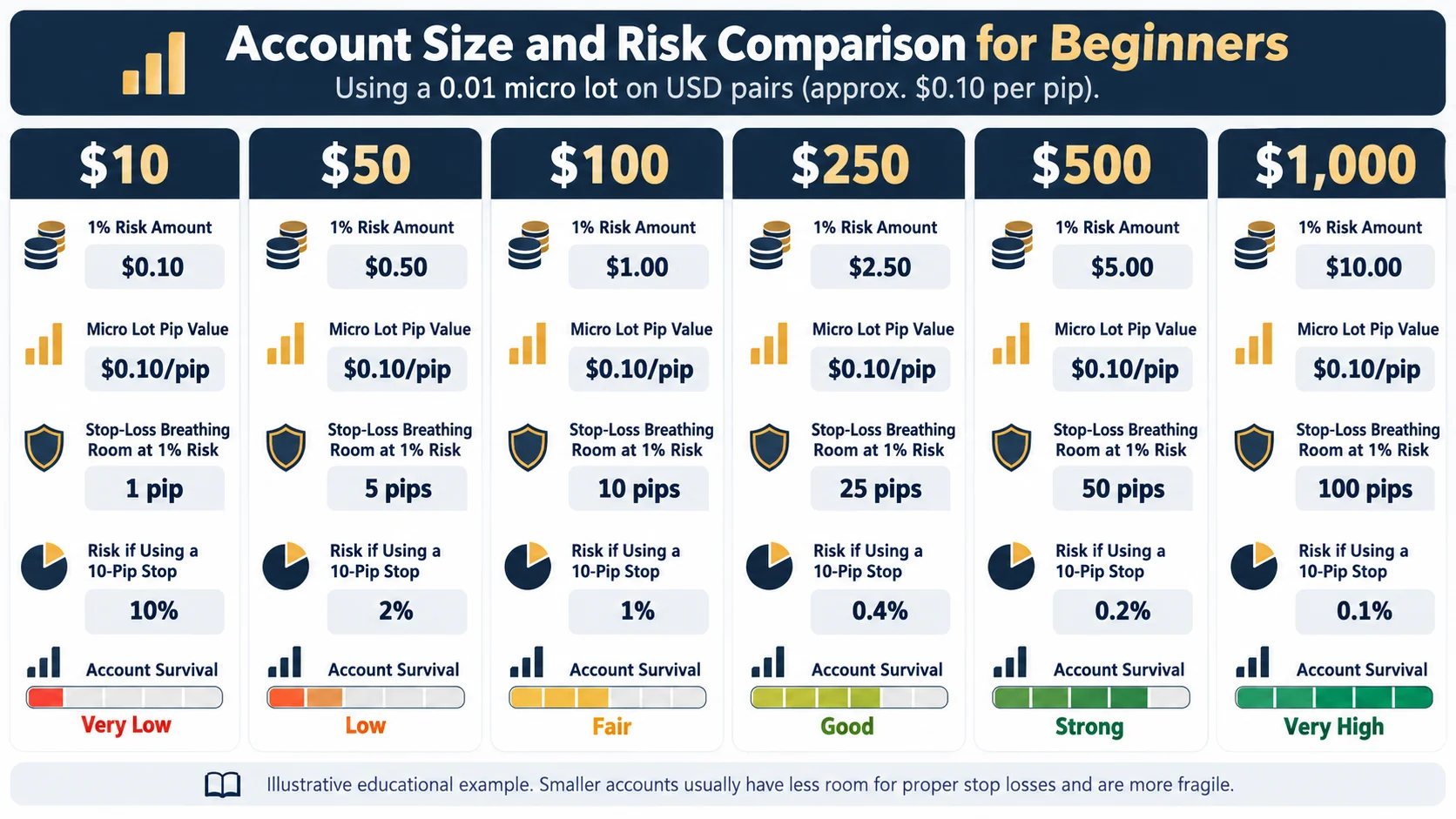
What they do not tell you is that the size of your account decides the size of your trades. A lot size is the amount of currency you buy or sell, and if your account is too small, you cannot control your risk. Imagine you have fifty dollars and you place a micro lot trade, so every time the price moves one pip, you gain or lose ten cents. A pip is the smallest move a price usually makes. If the market moves fifty pips against you, you lose five dollars, which is ten percent of your money in one go. That is not trading, it is a coin toss.
Fifty dollars went into my first account, money that came from selling my home furniture, after three months of learning and reading about forex. I thought I was being smart, but within two days three bad trades had wiped out half of it, and I was so angry that I doubled my trade size to win it back quickly and lost the rest within the day. What I learned is that you are not just funding a balance, you are buying room to survive. I also learned that you should never fund a trading account with a loan, borrowed money or by selling your things, because that is a bad start, and I would never advise anyone to start trading forex hoping to make quick cash to pay off debt.
This is where a sensible starting plan changes how you think about money. The market does not care about your account balance, because it moves on huge forces from all over the world. If your account is too small to handle the normal ups and downs of price, it will not last.
What Happens When You Trade a Ten Dollar Account
Let us look at the maths with a real example. You have twenty dollars and you want to trade EURUSD, and the smallest trade you can place is a micro lot, which equals one thousand units of currency. On this size, one pip is worth ten cents. You need a stop loss of thirty pips to give the trade room, and a stop loss is simply an order that closes your trade automatically if the price moves too far against you. Thirty pips times ten cents is three dollars, so you are risking three dollars out of twenty. That is fifteen percent of your account on one trade, which is far too much. The way trade sizes are built is explained slowly in What Is a Lot Size in Forex Trading?, and it makes these sums much easier to follow.
Experienced traders suggest risking only one or two percent. To risk two percent on a thirty pip stop, your pip value would need to be much smaller, and most brokers simply do not let you trade that small. This is the wall every beginner hits, because before you ever fight the charts, you are fighting basic maths. The stakes are real too, since Europe's markets regulator found that 74% to 89% of retail CFD accounts lose money (ESMA). Every number on this page rests on knowing what one pip is worth, so if that still feels shaky, spend ten minutes with What Is a Pip in Forex and How Do You Calculate It before you go further.
The Minimum Account Formula
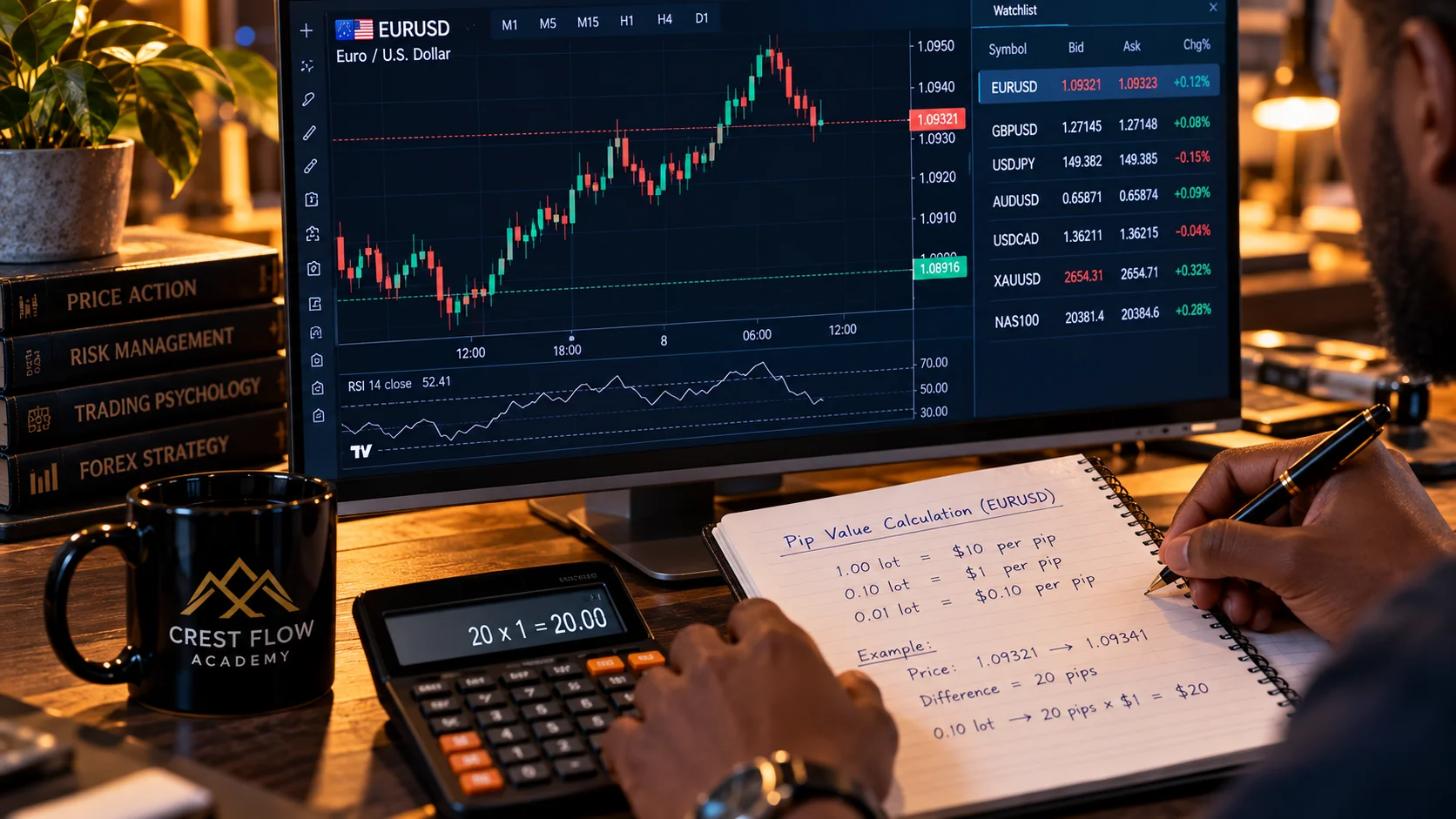
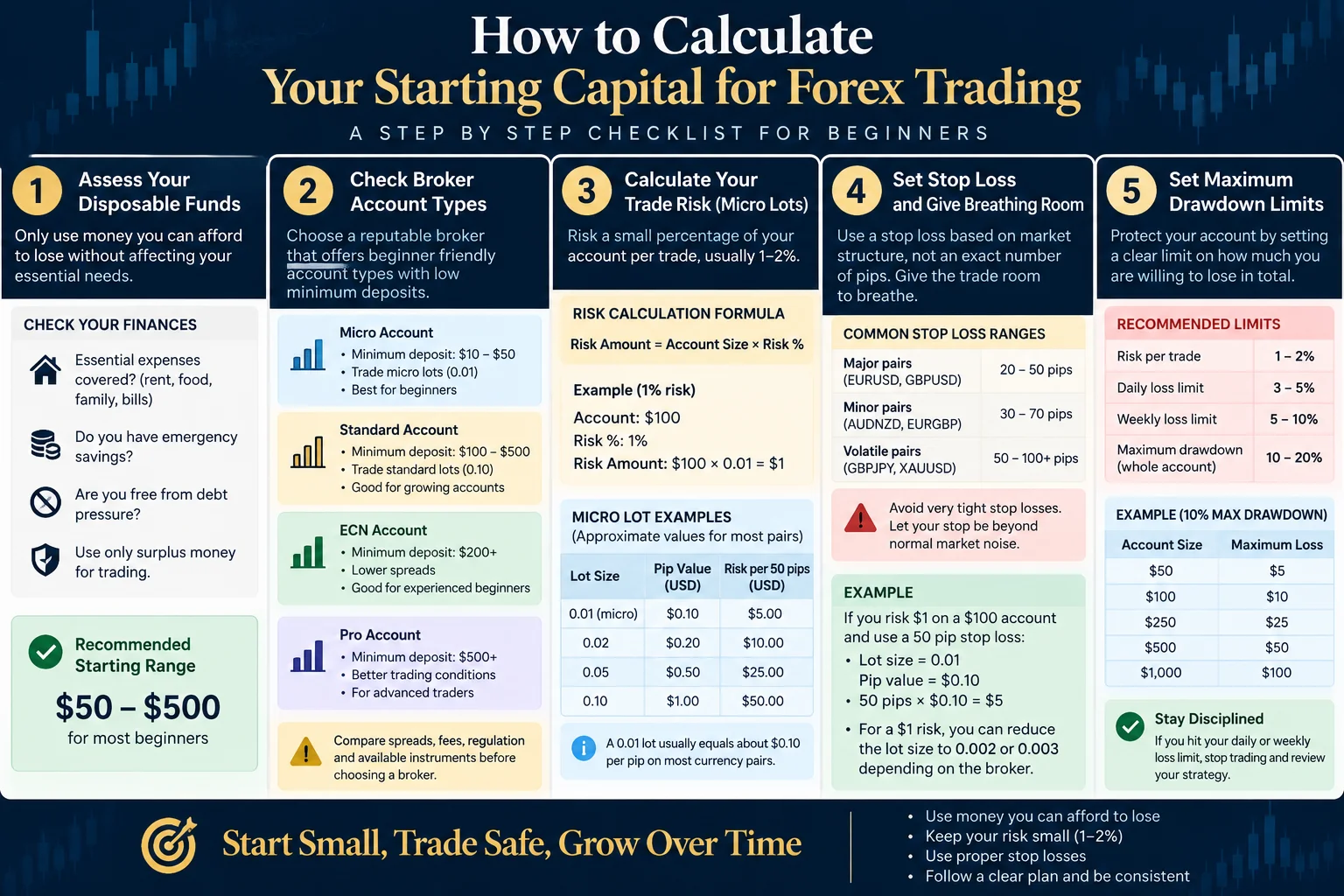
This is the simple rule I wish someone had given me on day one. On a normal account, the smallest trade most brokers allow is 0.01 lots, and on EURUSD that is worth about ten cents per pip. So the smallest amount you can risk on any trade is your stop loss in pips times ten cents.
If you want that smallest risk to be only one percent of your account, the account has to be one hundred times bigger, which gives you a quick formula:
Minimum account = your usual stop loss in pips × $10
That is all there is to it, because your trading style decides your starting number, not a broker's advert.
- 15 pip stop (fast intraday): smallest risk $1.50, so about $150 for 1% risk or $75 for 2%.
- 30 pip stop (normal day trade): smallest risk $3, so about $300 for 1% risk or $150 for 2%.
- 50 pip stop (wider day trade): smallest risk $5, so about $500 for 1% risk or $250 for 2%.
- 100 pip stop (swing trade): smallest risk $10, so about $1,000 for 1% risk or $500 for 2%.
Look at what this tells you. A swing trader with two hundred dollars cannot follow a one percent rule on a normal account, no matter how disciplined they are, because the maths will not allow it. A day trader using thirty pip stops needs about three hundred dollars. If your number is below this list, you have two honest choices, which are to use a cent account or to wait and save until you reach it.
Pip values change a little from one pair to another, and the pip lesson I mentioned earlier, What Is a Pip in Forex and How Do You Calculate It, shows you how to check the pair you trade. The idea stays exactly the same.
Cent Accounts as a Bridge
If you are below that list, you are not locked out. A cent account shows your balance in cents, so one hundred dollars appears as ten thousand, and each trade is one hundred times smaller in real money. That means the minimum account formula drops from dollars to cents, and suddenly one percent risk is possible again. If you want to see how this works in practice, I explain the full process in How to Start Forex Trading With $100 Step by Step.
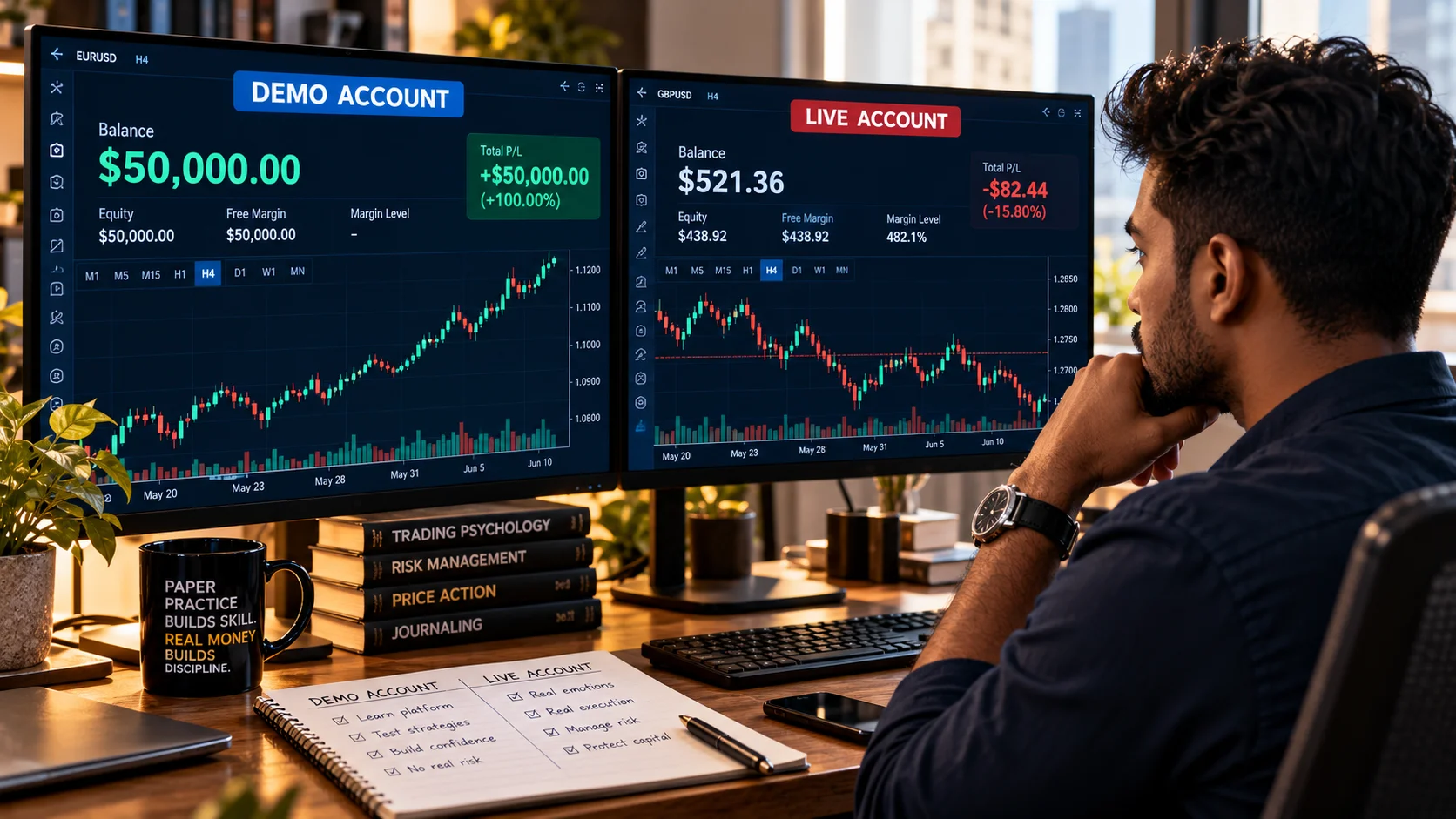
The trade off is simple, because your losses are tiny and so are your wins. That is fine, since at this stage you are buying experience, not income. If this is the road you are taking, I wrote out the whole plan, with exact lot sizes, in How to Start Forex Trading With $100. And if real money of any size still makes you nervous, Is Forex Demo Trading Worth It for Beginner Traders? can help you decide whether to practise first.
The Realistic Starting Amount for Proper Risk Management
If you want to trade normally, a better starting number is five hundred to one thousand dollars. With one thousand dollars, risking one percent means ten dollars per trade, so with a twenty pip stop loss you can trade 0.05 lots (five micro lots), where each pip is worth fifty cents. That gives you room for five or six losses in a row, which happens to every trader sooner or later, and you stay calm because no single loss takes a huge bite out of your account. Once your money side is sorted, the next thing to plan is your time, and How Much Time Do You Need Every Day to Trade Forex? helps you fit trading around the rest of your life.
When you are down sixty percent of your money, you get desperate, and desperate traders take revenge trades to win the money back fast. This is how accounts get destroyed. Money works like a cushion for your emotions, so the more you have, the calmer your decisions tend to be.
"Risk comes from not knowing what you're doing." (Warren Buffett)
This is so true in forex, where leverage acts like a magnifying glass for your mistakes.
How Leverage Changes the Capital Equation
Brokers offer leverage, which lets you control a large position with a small deposit. If you put in one hundred dollars and use 1:100 leverage, you control ten thousand dollars. Beginners treat this like a free lunch, which is another common mistake, when it is really just a tool. If the market moves one percent against you on that position, your one hundred dollars is gone. How such a small deposit can control so much is a question worth understanding properly, and What Is Leverage in Forex Trading and How Does It Work? answers it with plain examples.
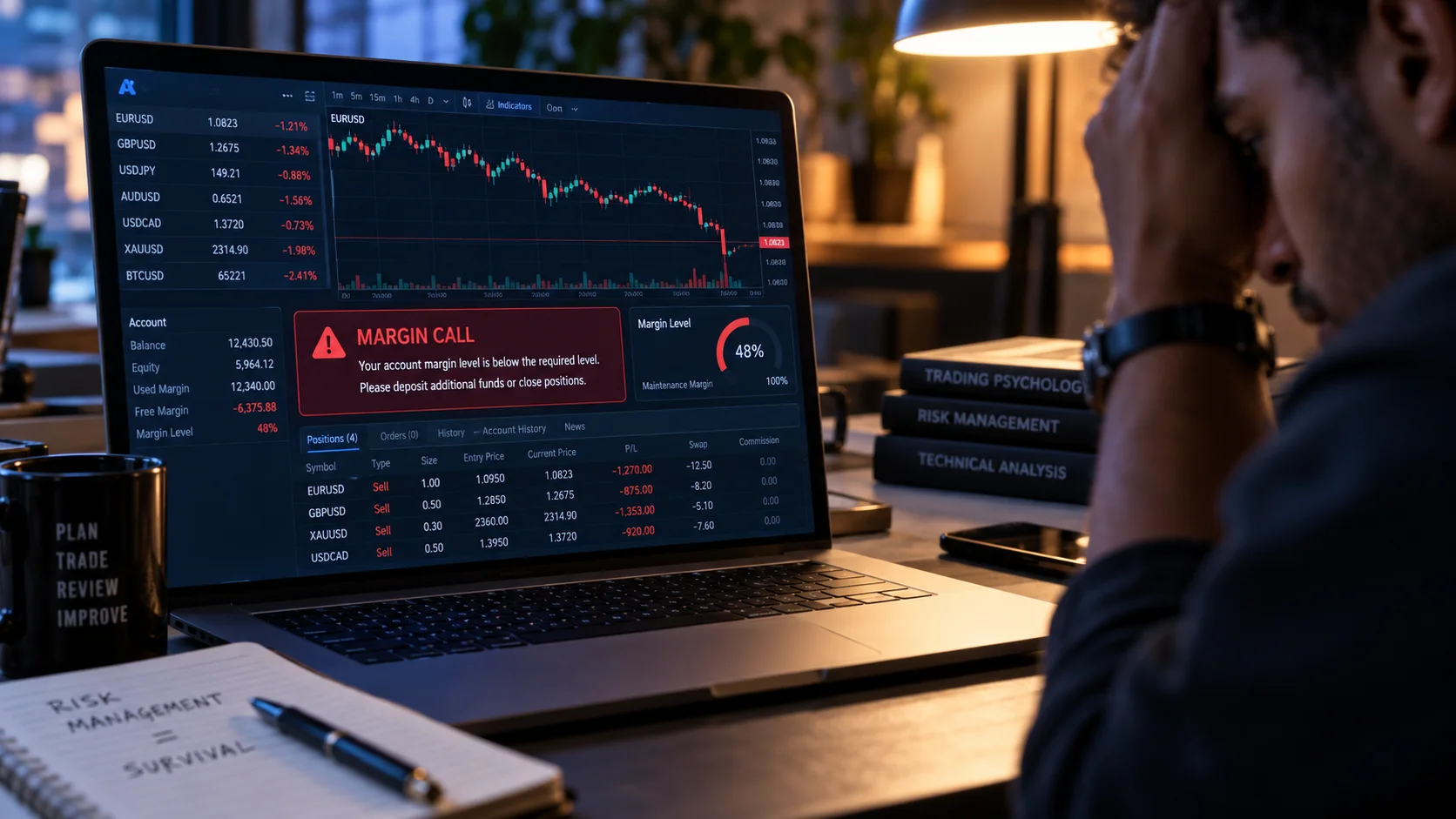
I am not talking from the outside here. I once used high leverage on a very small account, and when the trade went my way I felt on top of the world, like a genius, but my very next trade went against me. The broker sent a margin call, which is a warning that my account was running out of money, and soon my trades were closed. I felt sick, but I also realised that leverage is not a way to trade with less money, because it is really a way to lose faster if you are not careful. That sinking feeling is one I would rather you never had, which is why I wrote What Is Margin Call in Forex and How to Avoid It to show you the warning signs early.
When Should You Add More Money?
Most people top up their account at the worst possible moment, right after a loss, to "get back to where they were". That is not funding a plan, it is feeding a habit, and a deposit should be a reward for proof, not a fix for pain.
I like to think of the ladder below as a set of traffic lights on a long road, where you only move forward when the light turns green, and a red light means you wait, however much of a hurry you are in. This is the ladder I use and suggest:
- Practice stage. Demo or cent account. Goal: follow your rules on fifty trades in a row. Profit does not matter yet.
- Proof stage. A small real account that fits the minimum account formula for your stop size. Goal: three months where you never break your risk rule and your drawdown stays under ten percent.
- Growth stage. Only now add more money, in steps. Add at most what you already have, then trade the bigger account for another three months before the next step.
If you fail a stage, you go back one step, and there is no shame in that. Every rule you skip here comes back later with a bigger price tag.
Finding Your Own Starting Number
Ask yourself one honest question: can I afford to lose every cent of this money today without changing how I live? If the answer is no, do not deposit it, because trading is stressful enough without the fear of not being able to pay your rent. Start with an amount that feels like school fees, since you are paying to learn how the market works. If you protect your money and grow it slowly, you earn the right to put in more later. Building skill in the right order matters just as much as the deposit, and the path I would follow if I started again is in How to Learn Forex Trading Step by Step for Beginners.
Where To Read Next
To keep building your knowledge, these are the guides I would look at next:
- How to Start Forex Trading With $100 Step by Step
- How to Learn Forex Trading Step by Step for Beginners
- What Is Leverage in Forex Trading and How Does It Work?
- Is Forex Demo Trading Worth It for Beginner Traders?
- The Best Forex Brokers in 2026 and Which One to Use for What
- How to Trade Micro Market Structure on Lower Timeframes
Frequently Asked Questions
How much money do you need to start forex trading?
Multiply your usual stop loss in pips by ten dollars. That gives you the smallest normal account that lets you risk one percent per trade, and for most beginners it lands between three hundred and one thousand dollars.
Is $500 enough to start trading forex?
Yes, it is enough for day trading with stops up to about fifty pips. For swing trading with wider stops, five hundred dollars only works if you accept two percent risk or use a cent account.
Does a bigger account make you a better trader?
No, a bigger account only gives you room to follow good rules. If you do not follow them on a small account, a larger deposit just lets you lose more slowly.
Should I add money to my trading account every month?
Only add money if your last few months prove that you follow your risk rules. Topping up after losses usually just pays for the same mistakes again.
Why do small forex accounts usually fail?
They fail because the smallest possible trade is still too big for them. They are forced to risk five or ten percent per trade, and a normal losing streak wipes them out.
If this helped you, send it to a friend who is learning to trade.