I once assumed that all brokers were more or less the same, until I tried to withdraw my money from one and found a list of fees and delays that nobody had mentioned when I signed up. That experience taught me that the broker you choose matters long before your first winning trade, because it decides how safely your money is held, what each trade really costs, and how easily you can get your money back out.
If you want to know how to choose a forex broker as a beginner, the welcome bonus and the advert are the least useful places to look. What matters is the regulation of the specific company you sign up with, the real cost of trading, and how withdrawals work, and below I show you how I check each of those before I deposit anything.
How Market Makers and ECN Brokers Actually Work
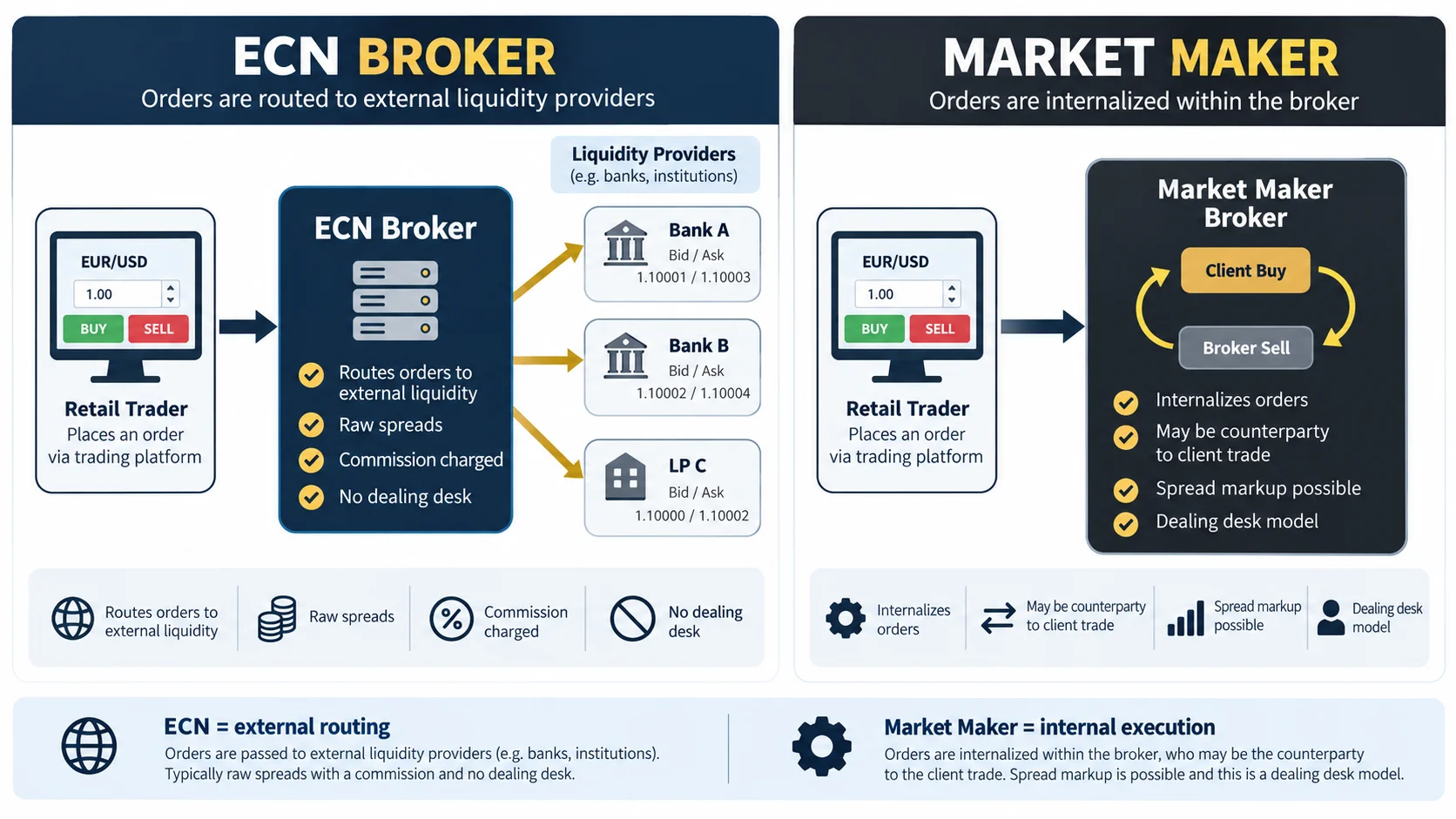
Many traders think a broker is just a neutral person standing in the middle, but that is not always true. Some brokers are "market makers", which means they take the other side of your trade. If you lose, they win, and if you win, they pay you out of their own pocket.
Imagine you buy one lot of EURUSD. An "ECN" broker (Electronic Communication Network) sends your order on to the big banks and charges you a small fee for doing it. A market maker, on the other hand, might just match your buy with another person selling inside its own system, so your order never reaches the real market at all.
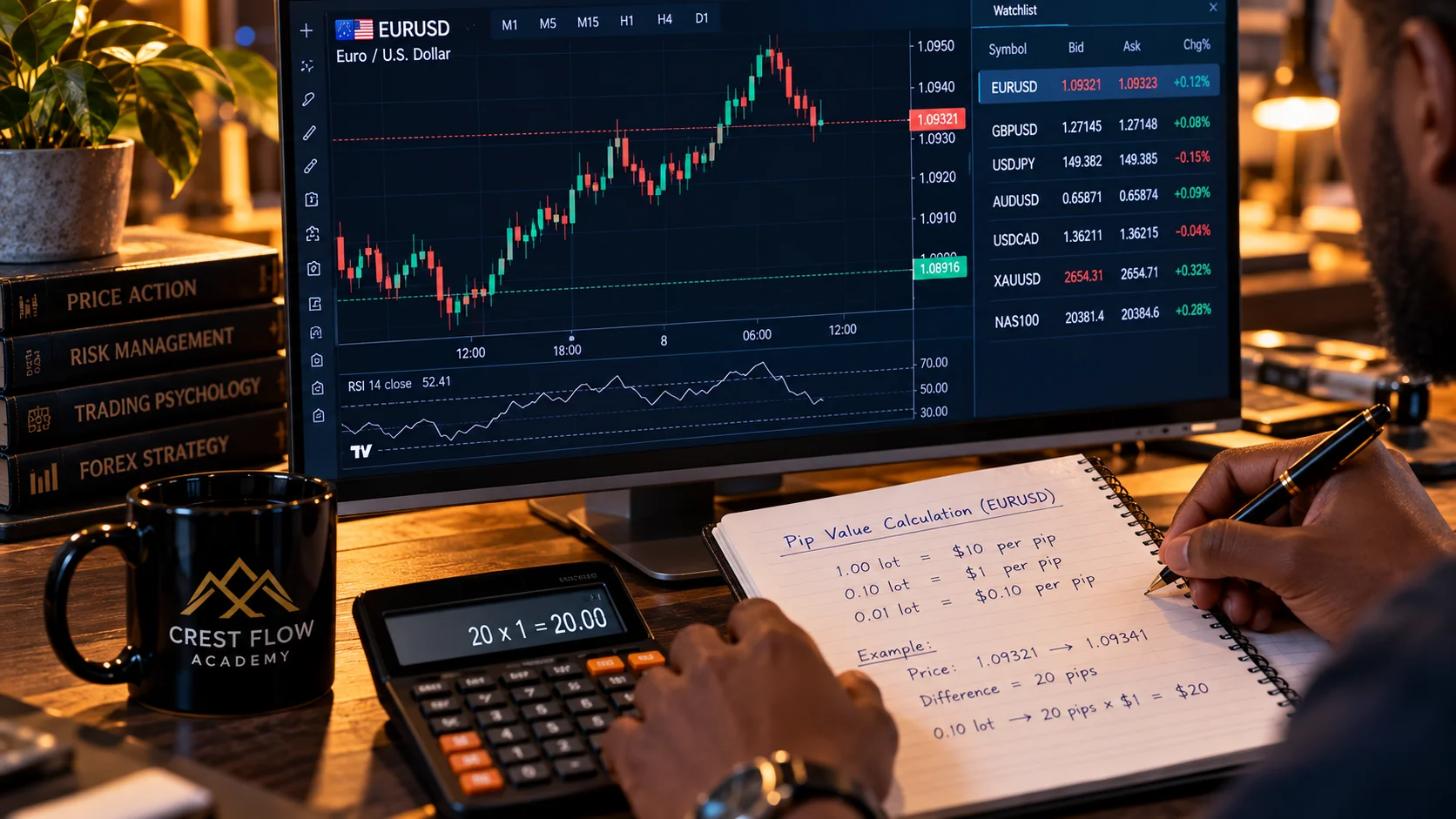
This creates a conflict. If the broker is the one you are betting against, it might widen the price gap to knock you out of your trade. That gap is called the "spread", and it is the difference between the price to buy and the price to sell. When a broker widens it on purpose, it takes your money while you lose your trade. Spreads are measured in pips, so the first thing I would learn is What Is a Pip in Forex and How Do You Calculate It, because then you can see in dollars exactly how much each widening costs you.
One broker I used, whose name I will not mention, seemed to widen the spread and slip my orders on purpose. It widened spreads by 10 pips right as a big news report came out, and my stop loss was hit in a split second. I was right about the direction, but the broker squeezed me out before the move happened. It was a painful lesson, and it is why choosing the right broker is one of the most important tools in your toolbox as a forex trader.
Why Regulation Is Your Only Real Safety Net
A nice website means nothing if the company is registered on a tiny island. When you deposit money, you are trusting them to give it back, and if they are not regulated by a big government agency, you have no backup. If they vanish, you simply cannot get your money back.
Look for agencies like the FCA in the UK or ASIC in Australia. They make brokers keep your money in a separate account, so if the broker goes bust, your money should stay safe. Unregulated brokers tend to offer huge bonuses and high "leverage" instead. Leverage is when you put in 100 dollars but the broker lets you control 10,000, and while that sounds good, it makes it very easy to lose everything. Big leverage numbers are the bait I see most often in adverts, so read What Is Leverage in Forex Trading and How Does It Work? before one of them tempts you.
Do not trust the logo on their site. Go to the regulator's real website and search for the company name there yourself. In the UK, the FCA tells people to use its Firm Checker before dealing with any financial firm, to confirm it is authorised and to compare its contact details so you do not fall for a clone firm. If the company is not on the list, do not send them a single cent.
Spreads, Commissions, and the Real Cost of Trading
Many beginners hunt for "zero spread" accounts. But let me tell you this, nothing is free. If a broker does not charge a spread, it hides the cost somewhere else, for example by charging you extra to keep a trade open overnight. That overnight charge is called a "swap".
The spread is your biggest silent cost. On a standard account the cost is hidden inside the price, while on a raw spread account the price is better but you pay a flat fee on every trade. For a small account, this difference matters a lot. Small deposits feel these costs the most, and How to Start Forex Trading With $100: A Beginner Guide shows how I would keep them under control when every dollar counts. If you are just beginning your journey, How to Start Forex Trading With $100 Step by Step shows how I keep these costs under control when every dollar counts.
Here is an example. You trade EURUSD with a 20 pip stop loss and a 60 pip goal. If your spread is 2 pips, you start the trade 2 pips in the hole, which is 10 percent of your risk gone before the trade even moves. A wide spread makes it very hard to win over time. If words like spread, swap and commission are still blurring together for you, What Do Forex Terms Mean for Beginners? lays them out one by one so the sums start to make sense.
Platform Stability and Execution Speed
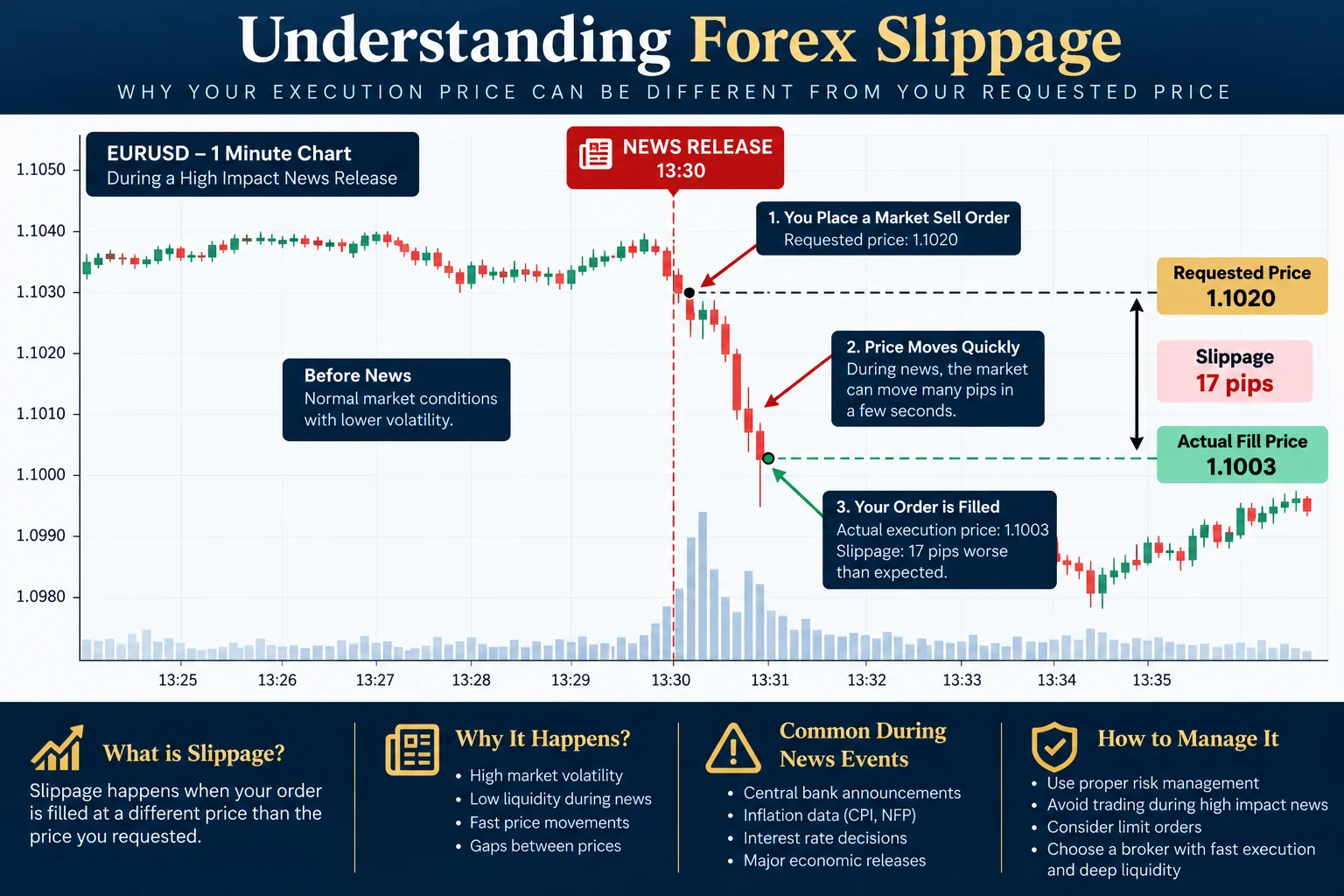
You can have the best plan in the world, but if your software freezes during the news, you will still fail. "Slippage" is when your trade fills at a worse price than the one you clicked. It happens when the market moves fast and the broker's server is too slow to keep up.
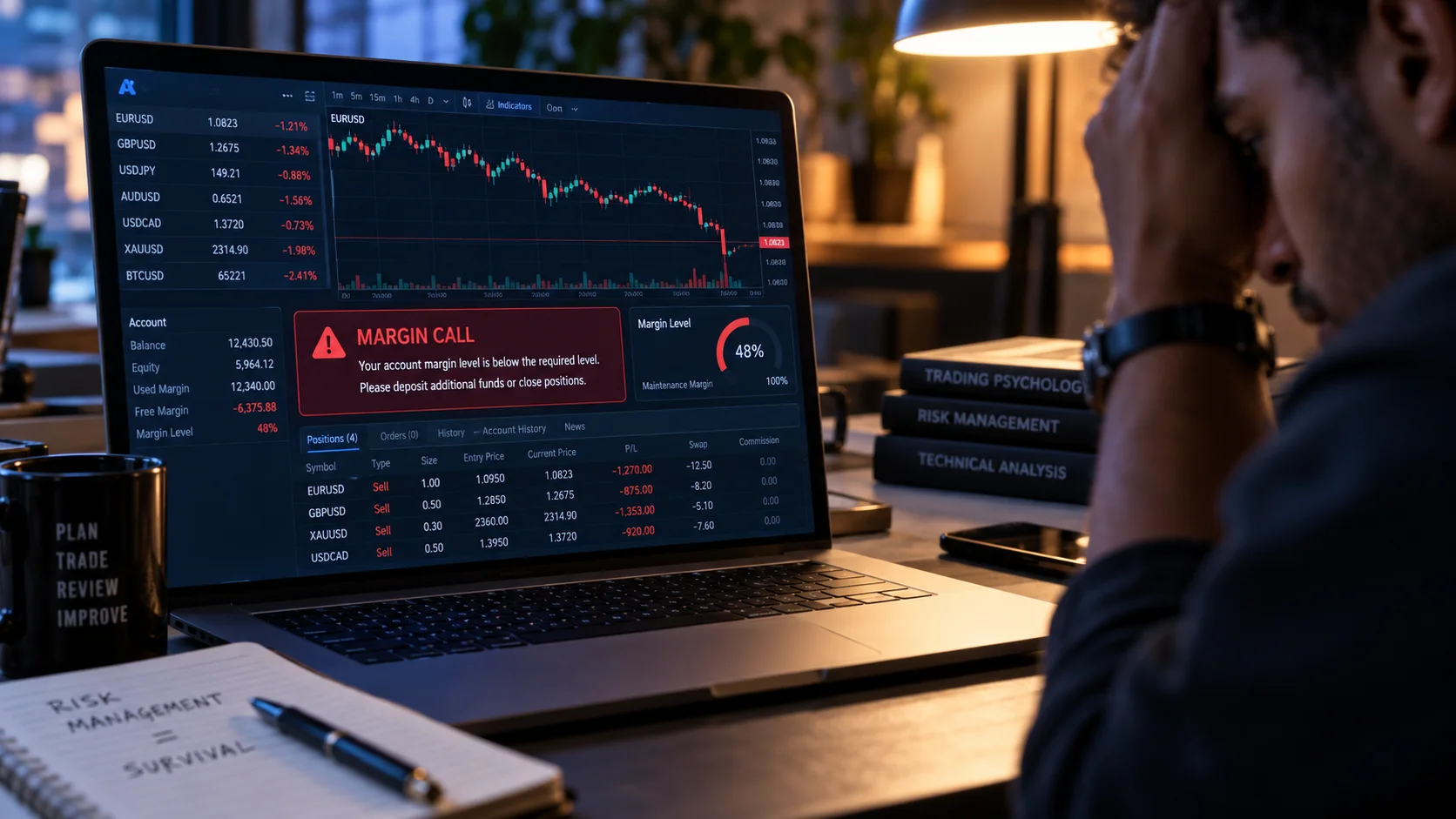
My order to sell at 1.1000 during the US CPI news release is a good example. The market moved quickly, and instead of filling me straight away, my broker filled me at 1.0980, a much worse price, and that 20 pip gap cost my account a lot of money. It happened because the broker had weak servers at a busy time, and worse, it was a market maker. Losses like that can eat into your account faster than you expect, so learn today what happens when your balance gets too low by reading What Is Margin Call in Forex and How to Avoid It.
Deposit Methods, Withdrawals, and Hidden Traps
Putting money in is always fast, and getting it out should be just as fast. Yet some brokers make it very hard, either by asking for ten different documents or by charging a huge fee for a bank transfer.
Avoid any company that pushes you to use crypto to deposit, because it is much harder to track your money that way. If they make it hard to take your profit, they are not a good partner. The US regulator also warns traders to be wary of promises of guaranteed returns and pressure to send money quickly, and to check a firm's registration before investing (CFTC forex fraud advisory).
How to Choose the Best Fit for Small Accounts
If you are starting with a small amount, you need a broker that lets you trade tiny sizes. Look for "micro lots", which let you risk very small amounts of money and keep you safe while you learn. Picking the right size for each trade is its own skill, and What Is a Lot Size in Forex Trading? is where I explain how I choose mine.
A 500 dollar minimum to withdraw was the rule at one broker I joined, and after a bad week I had only 400 dollars in my account, so I could not get my own money out. I had to trade more just to reach their limit, which led me to lose even more. My simple advice is never to pick a broker whose rules trap your money, and to read and understand those rules before you trust them with anything. It also helps to decide your starting amount calmly, and How Much Money Do You Need to Start Trading Forex can help you settle on a figure so you never feel forced to deposit more than you can afford.
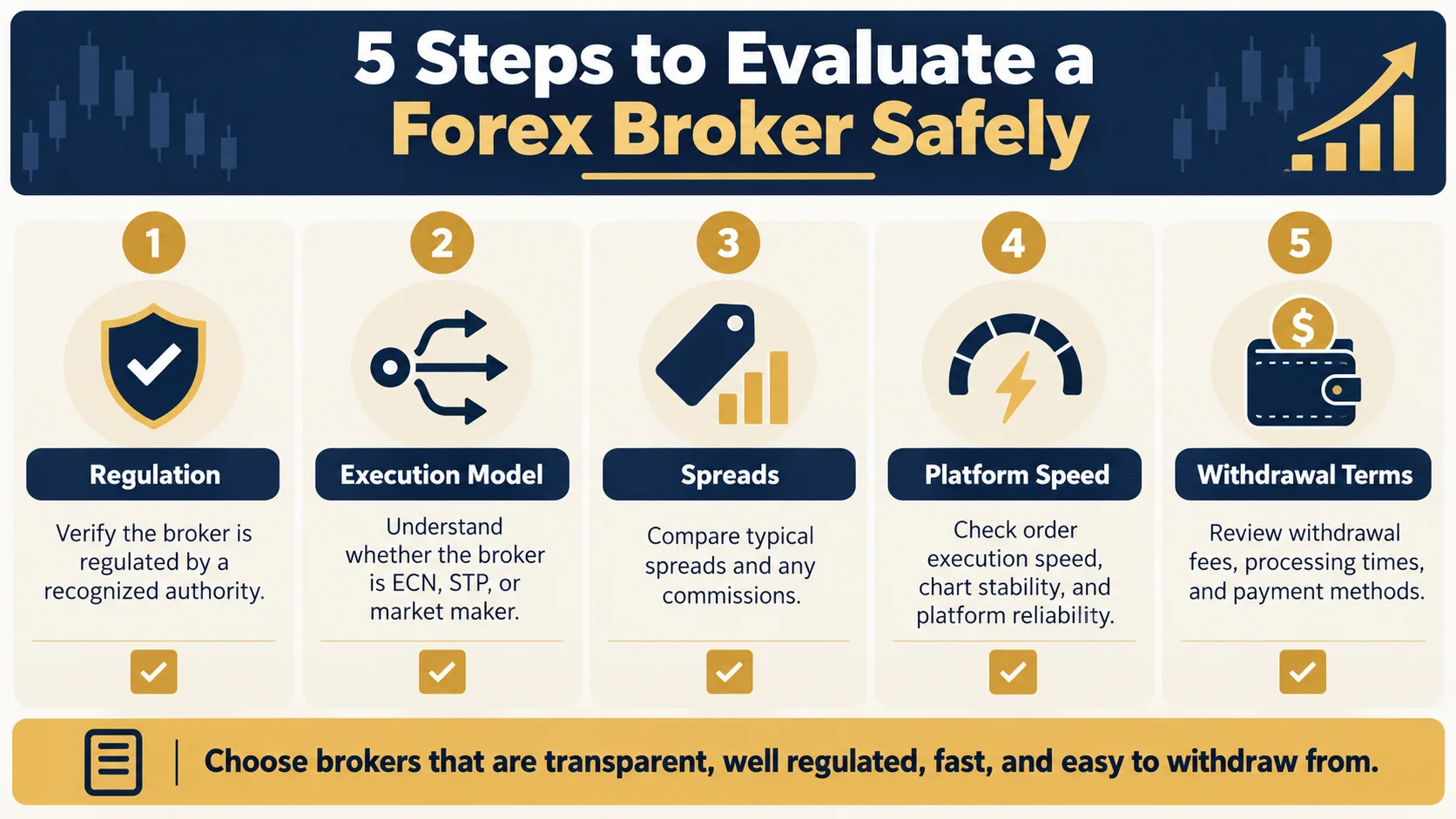
Make a list before you sign up. Is the broker regulated, are the fees fair, and can you get your money out easily? Take your time, because changing brokers later is a headache you do not want. Picking a broker is a bit like choosing the ground you build a house on, which matters a lot but is only the first step. Once that ground is sorted, How to Learn Forex Trading Step by Step for Beginners shows you what to build on it and in what order.
Where To Read Next
If you want to keep learning, these are the ones I would read next.
- How to Start Forex Trading With $100 Step by Step
- How to Learn Forex Trading Step by Step for Beginners
- What Is Leverage in Forex Trading and How Does It Work?
- Is Forex Demo Trading Worth It for Beginner Traders?
- The Best Forex Brokers in 2026 and Which One to Use for What
- How to Read Forex Market Structure on a Raw Chart
Frequently Asked Questions
How do I choose a forex broker as a beginner?
Look for a strong licence from a top government regulator, and check whether the broker is a market maker or an ECN. Test their platform with a demo account to see if it freezes, and always read the withdrawal rules before you deposit.
Is it safe to use offshore forex brokers with high leverage?
No, because these brokers often have very few rules to follow. If they decide to keep your money, you have no one to call for help, and high leverage is usually a trap for new traders.
What is the difference between a market maker and an ECN broker?
An ECN broker sends your trades to the real market for a small fee. A market maker keeps your trade inside its own books, which means it makes money when you lose.
How do broker spreads affect a small trading account?
A wide spread is a cost you pay on every single trade. If you have a small account, these costs add up fast and can make it impossible to stay profitable.
Can I withdraw my money easily from any forex broker?
Not always, because some bad brokers make it very hard to take your money out. They use long delays and hidden fees to stop you, so check reviews for "withdrawal issues" before you sign up.
If this helped you, send it to a friend who is learning to trade.