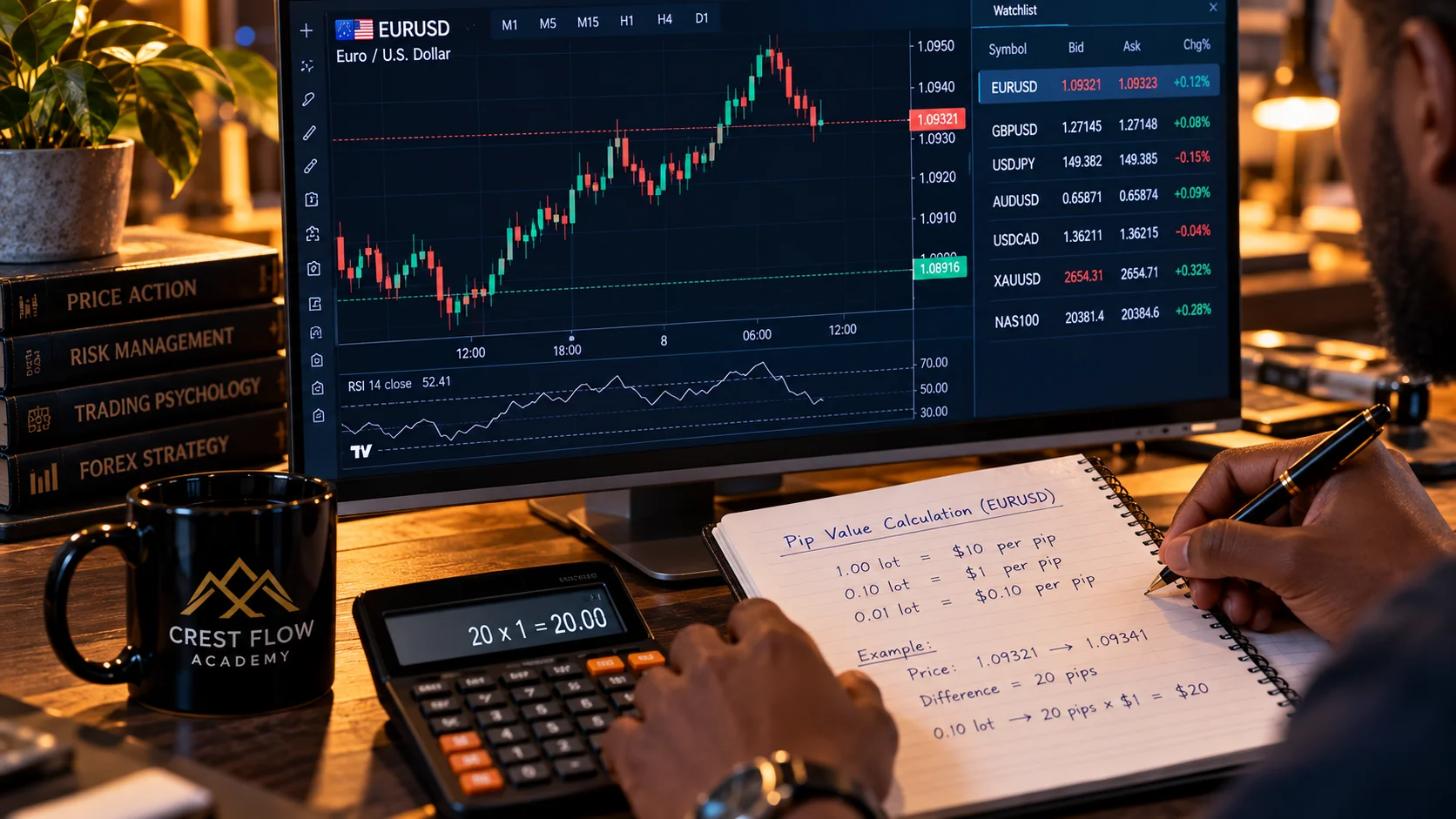
When I placed my first trades in 2018, I thought buying EUR/USD simply meant buying euros, and it took me a while to understand that every forex trade is really two trades at once, because you buy one currency and sell another at the same time. That single idea explains how currency pairs work, why the same piece of news can move EUR/USD and GBP/USD in completely different ways, and why you always have to think about both sides of the pair. If you have ever wondered who is actually sitting on the other side of your trade, What Is the Forex Market and Who Trades It answers that clearly.
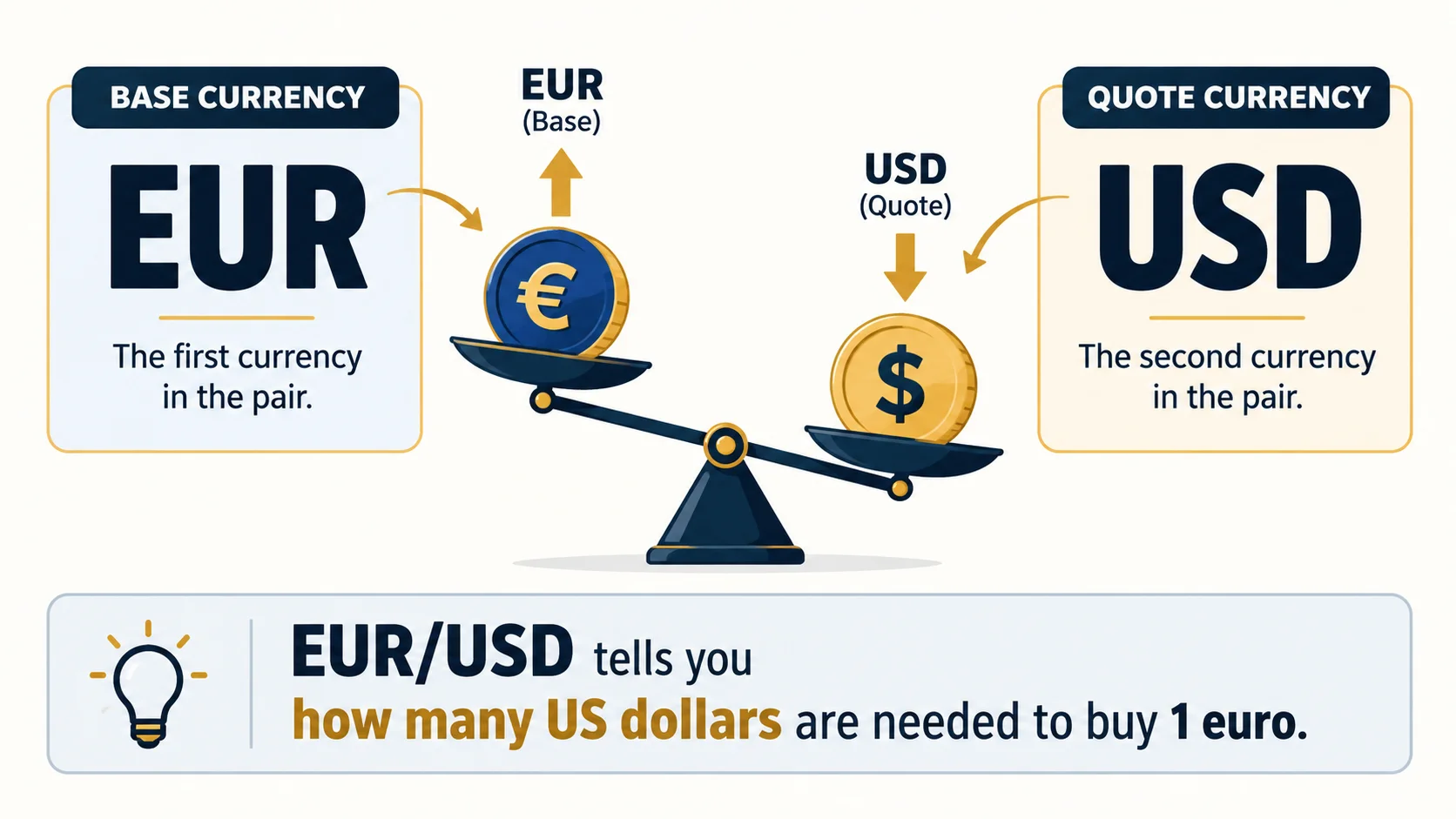
Imagine a weighing scale with the Euro on the left and the US Dollar on the right. When you buy the pair called EURUSD, you are betting that the Euro side will get heavier, and you are using Dollars to buy Euros. If the Euro gets stronger, your trade makes money.
The first currency is called the base and the second is called the quote. You always buy the base and sell the quote, so if the price goes up, the base is winning. It really is that simple.
My first week of trading back in 2018 was spent thinking I was simply buying the Euro, and I ignored the Dollar side of the pair completely. I got lucky, but I had no idea why it worked. Now I understand that every trade is like a football match between two countries, and if you only watch one team you are missing half of what moves the score. The right way to start is to see each pair as a living relationship between two economies. You can watch these matches play out without putting real money at risk, and Is Forex Demo Trading Worth It for Beginner Traders? helps you decide whether a demo account is the right first step for you.
Why You Never Trade a Currency Alone
Think about changing money at an airport. You hand over your local cash and you walk away with foreign cash, so you never leave with just "money", you leave with a pile of one particular currency. Forex works the same way, because you must always hold one currency against another. You cannot simply hold the Euro on its own, you hold it against something else.
This matters because the news affects both sides. You might see good news for the US Dollar and think you should buy the Dollar, but if the Euro is doing even better at the same time, a trade against the Euro will still lose money. That is why you have to look at the pair as a whole. The big players behind these moves are a story of their own, and What Is the Forex Market and Who Trades It introduces the banks and funds who do most of the pushing.
What Actually Moves a Currency Pair
A pair only moves when one side gets stronger or weaker compared with the other. That sounds obvious, but it changes how you read the news. Interest rates, inflation, jobs numbers and central bank speeches all give one team or the other a push, and the price shows you the result of both teams playing at once. To truly grasp why these big players move the charts, read What Is the Forex Market and Who Trades It to understand the giants behind the price.
So before a trade I ask two questions, not one: what is pushing the first currency, and what is pushing the second? If the US Dollar is strong but the Yen is getting stronger faster, USDJPY can still fall. Most beginners only ask the first question, and that is why "good news" trades so often go the wrong way.
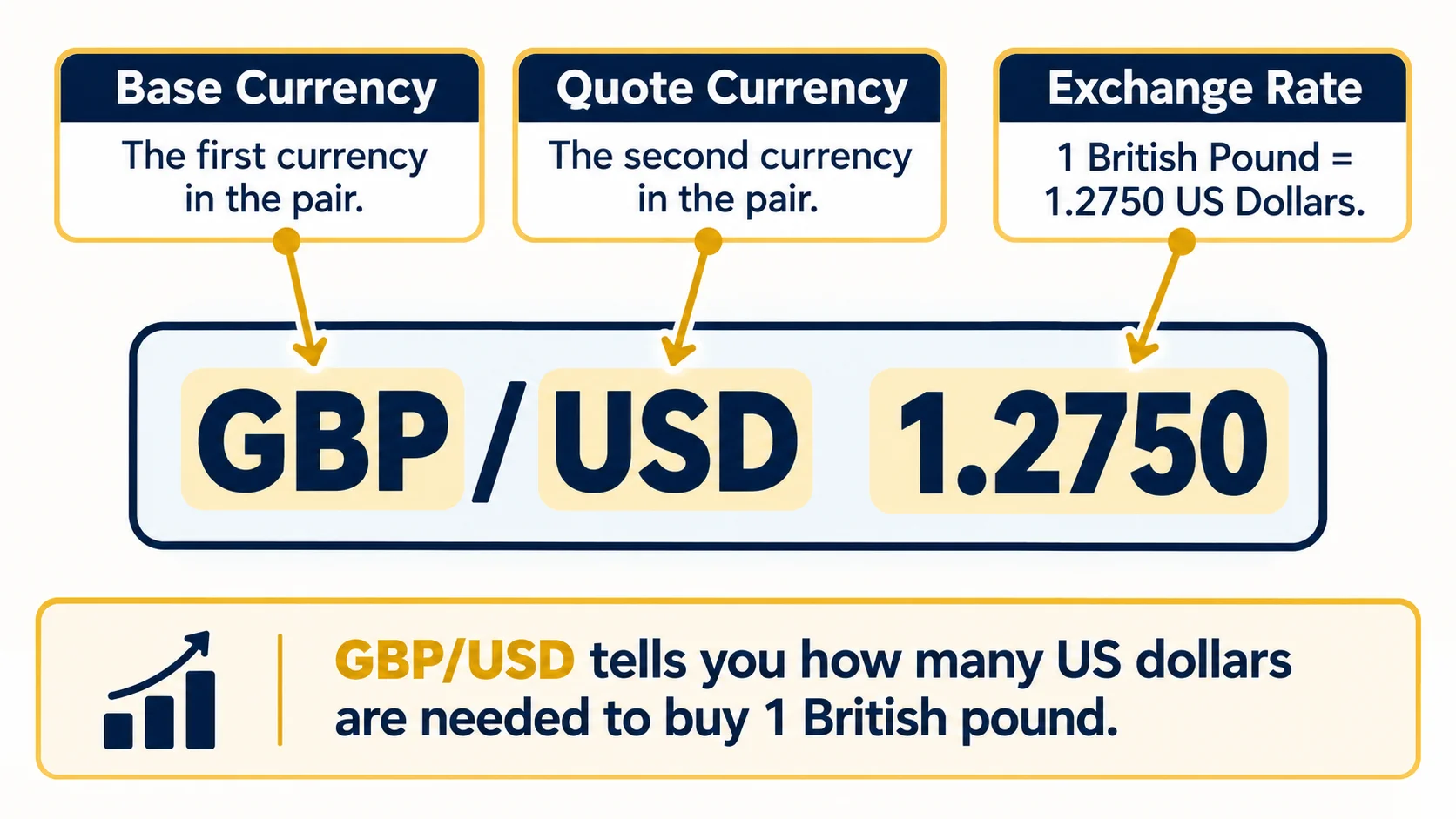
Some people are still unsure which currency is which in a symbol, or what the price number means, so I wrote a separate piece that goes through every letter and number in it: What Do the Letters in a Forex Pair Mean?
One practical detail is that your profit is first counted in the second currency of the pair. If you trade USDJPY, your result starts life in Yen, and your broker then changes it into your account currency for you. That is why the same fifty pips can be worth a slightly different amount on different pairs. You might also wonder how a small account can control such a large position at all, and What Is Leverage in Forex Trading and How Does It Work? explains that borrowing side of trading in simple terms.
The Three Main Groups of Currency Pairs
We put pairs into three groups. First are the Majors, which always include the US Dollar, like EURUSD or USDJPY, and they are easy and cheap to trade. Second are the Crosses, which do not include the Dollar at all, like EURGBP or AUDNZD, and they can be a bit wilder.
Third are the Exotics, which pair a major currency with the currency of a smaller economy, like the Mexican Peso or the South African Rand.
When I trade an exotic pair, I check the cost first. The spread is often huge, so I look at the price before clicking buy to make sure I am not losing money the moment I enter. Most of the time, stick to the Majors, because they are the best place to learn. Once all of this feels clear and you want to start for real with a small amount, How to Start Forex Trading With $100: A Beginner Guide is the route I would take to begin carefully. If you are ready to apply these lessons with a small account, How to Start Forex Trading With $100 Step by Step shows you how to begin safely.
How Spread and Cost Work Inside a Pair
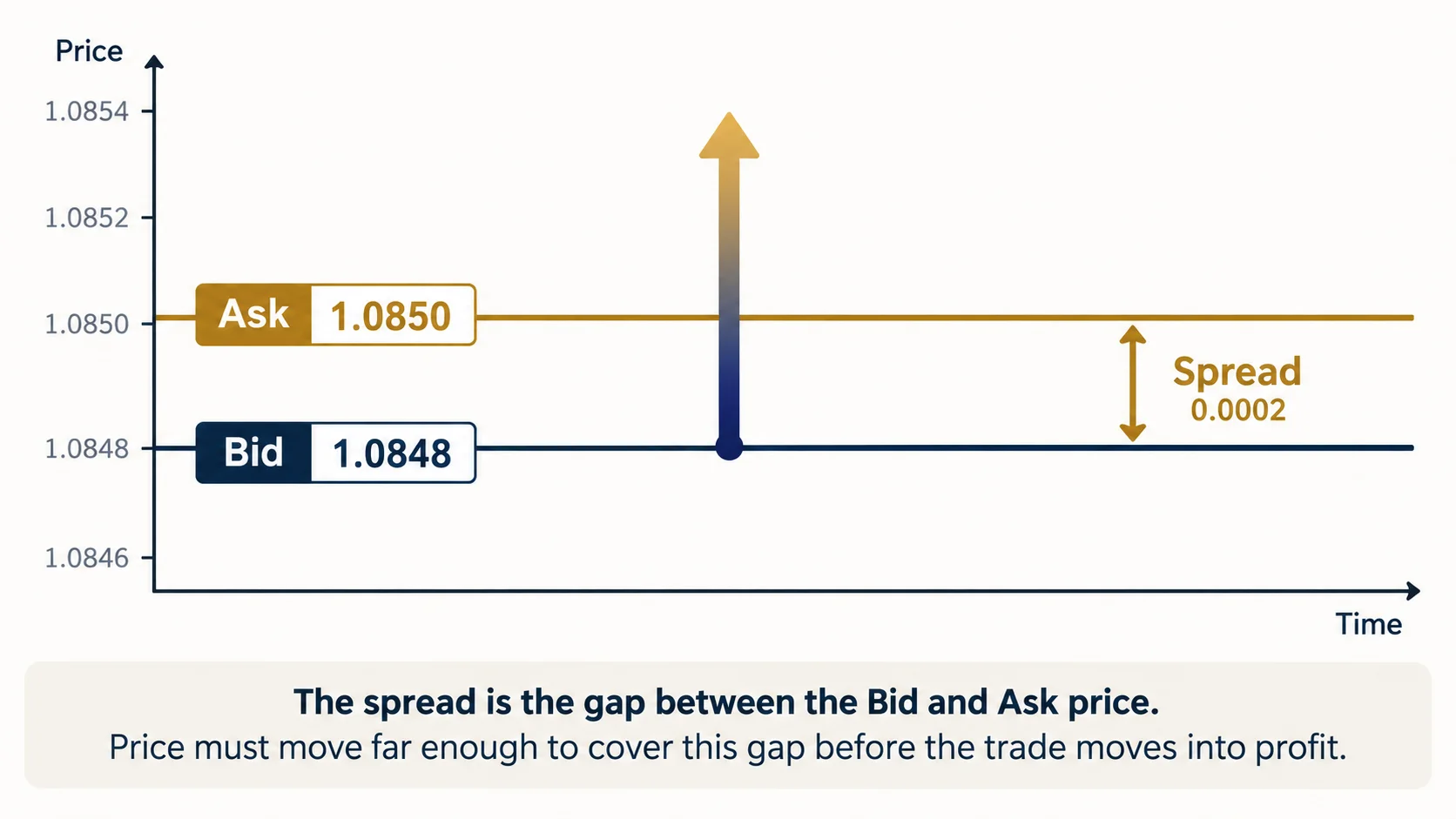
Every trade starts slightly in the red, and the reason is the spread. IG explains that the spread is the gap between the two prices you are shown, where the offer (buying price) is always higher than the bid (selling price). It is the broker's fee for the trade.
Since every platform charges its own fees, it pays to compare before you open an account, and How to Choose a Forex Broker for Beginners lists the things I would check so you are not paying too much.
Think of it like a toll road where you have to pay to get on. If you trade a popular pair, the toll is cheap, but if you trade a rare pair, the toll is expensive and the market has to move further before you see any profit. Keeping that toll low matters over hundreds of trades, which is why I wrote Best Forex Brokers With Low Spreads, Fast Withdrawals and Flexible Accounts in 2026: 5 Brokers Compared to show you the platforms I use myself. Once you know which pairs to trade, you can find a reliable partner in The Best Forex Brokers in 2026 and Which One to Use for What.
Pairs That Move Together
Nobody told me this early on, but many pairs are really the same trade in disguise. EURUSD and GBPUSD often move in the same direction, because both are priced in US Dollars, so when the Dollar weakens, both tend to rise together. EURUSD and USDCHF often move in opposite directions for the same reason, with the Dollar sitting on different sides.
This is called correlation, and it quietly doubles your risk. Say you buy EURUSD and buy GBPUSD, each risking one percent. You think you have two separate trades, but in reality you mostly have one big bet against the Dollar, risking close to two percent. If the Dollar jumps on a news release, both trades lose at the same moment.
My simple rule is this: if two of my trades share a currency and point the same way, I count them as one position and split the risk between them. That rule alone would have saved me from my worst week as a beginner.
Why Majors Move Differently Than Crosses
Major pairs like EURUSD behave like heavy ships, moving slowly and following the big news from central banks. Cross pairs like GBPJPY are more like speedboats, because they can turn fast and jump around a lot.
Not long after I started trading, I put a tight stop loss on a pair that moved a lot. A stop loss is an order that closes your trade once you lose a certain amount, and on that day mine was simply too close. The price wiggled a tiny bit, hit my stop, and then moved in exactly the direction I had wanted, so I lost money only because I had not given the trade room to breathe. That is how I learned that different pairs need different rules. If you are still learning how to manage these moves, Is Forex Demo Trading Worth It for Beginner Traders? explains how to practice without risking real money.
This is why you should always check how much a pair moves in a day and set your risk to match it, because a speedboat should never be handled like a cargo ship. Stops and leverage are closely linked, and if you are nervous about your account being squeezed when trades go against you, my guide What Is Margin Call in Forex and How to Avoid It shows how to keep that from happening.
Check a Pair's Daily Range Before You Trade It
Before I trade a pair I have not traded in a while, I check how far it usually moves in a day. Most charting platforms have an indicator called Average True Range, or ATR, and if you put it on the daily chart with the standard 14 setting, it tells you the average daily movement in price.
Then I use that number in two ways:
- Stop size. If a pair moves 120 pips on a normal day, a 10 pip stop is not a plan, it is a donation. The stop has to sit beyond the normal noise.
- Trade size. A wider stop means a smaller position, so the money at risk stays the same. Busy pairs get smaller trades, and calm pairs get larger ones.
This takes thirty seconds, and it stops you from treating every pair as if it behaves like EURUSD.
Where To Read Next
Now that you know how do currency pairs work, you can study more here:
- How to Start Forex Trading With $100 Step by Step
- How to Learn Forex Trading Step by Step for Beginners
- What Is Leverage in Forex Trading and How Does It Work?
- Is Forex Demo Trading Worth It for Beginner Traders?
- The Best Forex Brokers in 2026 and Which One to Use for What
- How to Find Daily Bias in Forex Without Forcing Direction
Frequently Asked Questions
How do currency pairs work in forex trading?
You swap one currency for another. Buying a pair means buying the first currency and selling the second, and the price moves when one side gets stronger or weaker compared with the other.
Why is the US dollar involved in almost every major forex pair?
It is the world's main reserve currency and is used in most global trade. That makes Dollar pairs the busiest and the cheapest to trade.
Can I trade two pairs that both include the US dollar at the same time?
You can, but treat them as one position if they point the same way. EURUSD and GBPUSD often move together, so two one percent trades can behave like one two percent trade.
Why is my profit on USDJPY a different amount than on EURUSD for the same pips?
Because the profit is first counted in the second currency of the pair and then changed into your account currency. Different quote currencies give slightly different pip values.
Why do I start every forex trade in a negative profit?
Because of the spread, which is the gap between the buy and sell price. It is the broker's fee, and the market has to move past it before you are in profit.
I am not your financial adviser, this is only what worked for me.
If this helped you, send it to a friend who is learning to trade.