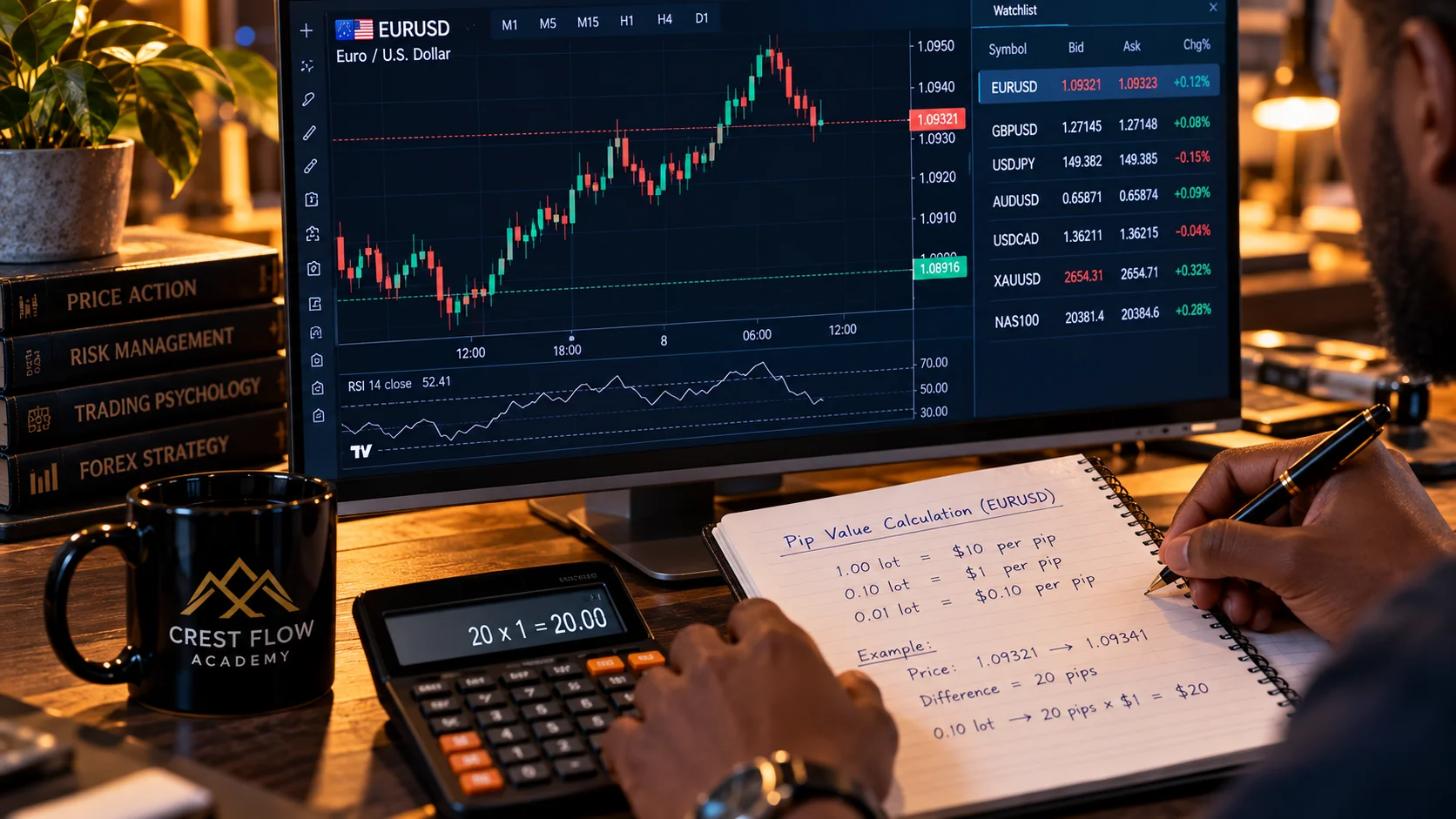
A hundred dollars will not make you rich in forex, but it is enough to learn properly, with real money and real emotions, as long as you treat it as the cost of your education and not as a lottery ticket. You can start forex trading with $100 if you trade very small sizes and protect the account from the mistakes that empty it in a few trades. If you are still unsure whether this amount is enough, I go through the real money question in How Much Money Do You Need to Start Trading Forex, while this page is the practical side: what to open, how big to trade, and what to do in your first thirty days.
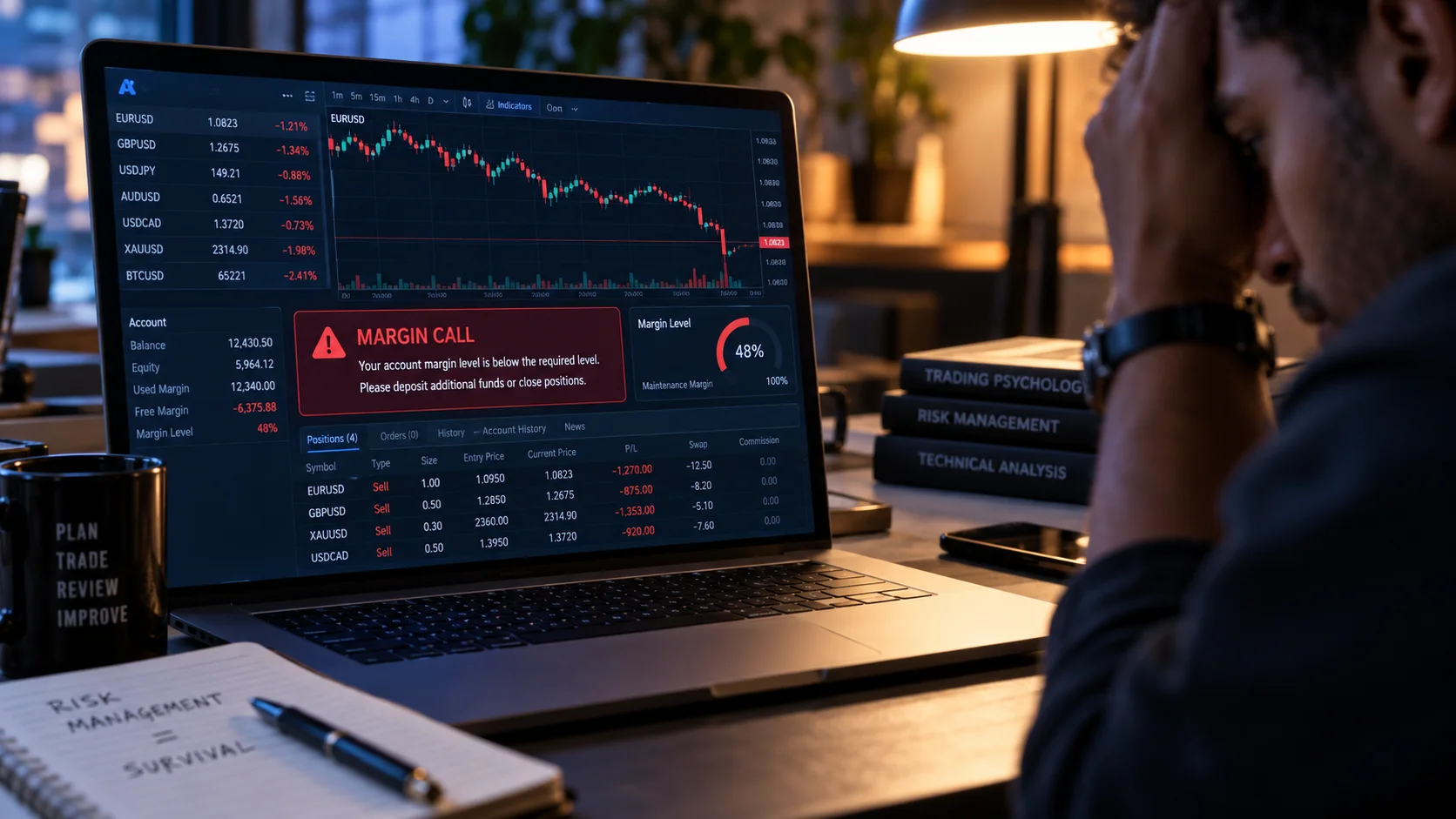
The problem is not the small amount of cash. The problem is treating a small account like a lottery ticket, trying to double it in a week or using too much borrowed money from the broker, which is called leverage, and that often ends with everything gone after three bad trades. Leverage is also what leads to the broker closing your trades for you, and What Is Margin Call in Forex and How to Avoid It explains how that happens and how to stop it from happening to you.
I want to show you a better way, which is a slow and calm way to build your skills before you ever risk a larger sum. If you would like the bigger picture of what to learn and in what order, How to Learn Forex Trading Step by Step for Beginners lays out the foundation I wish I had been given at the start.
The Reality of Trading on a Small Account
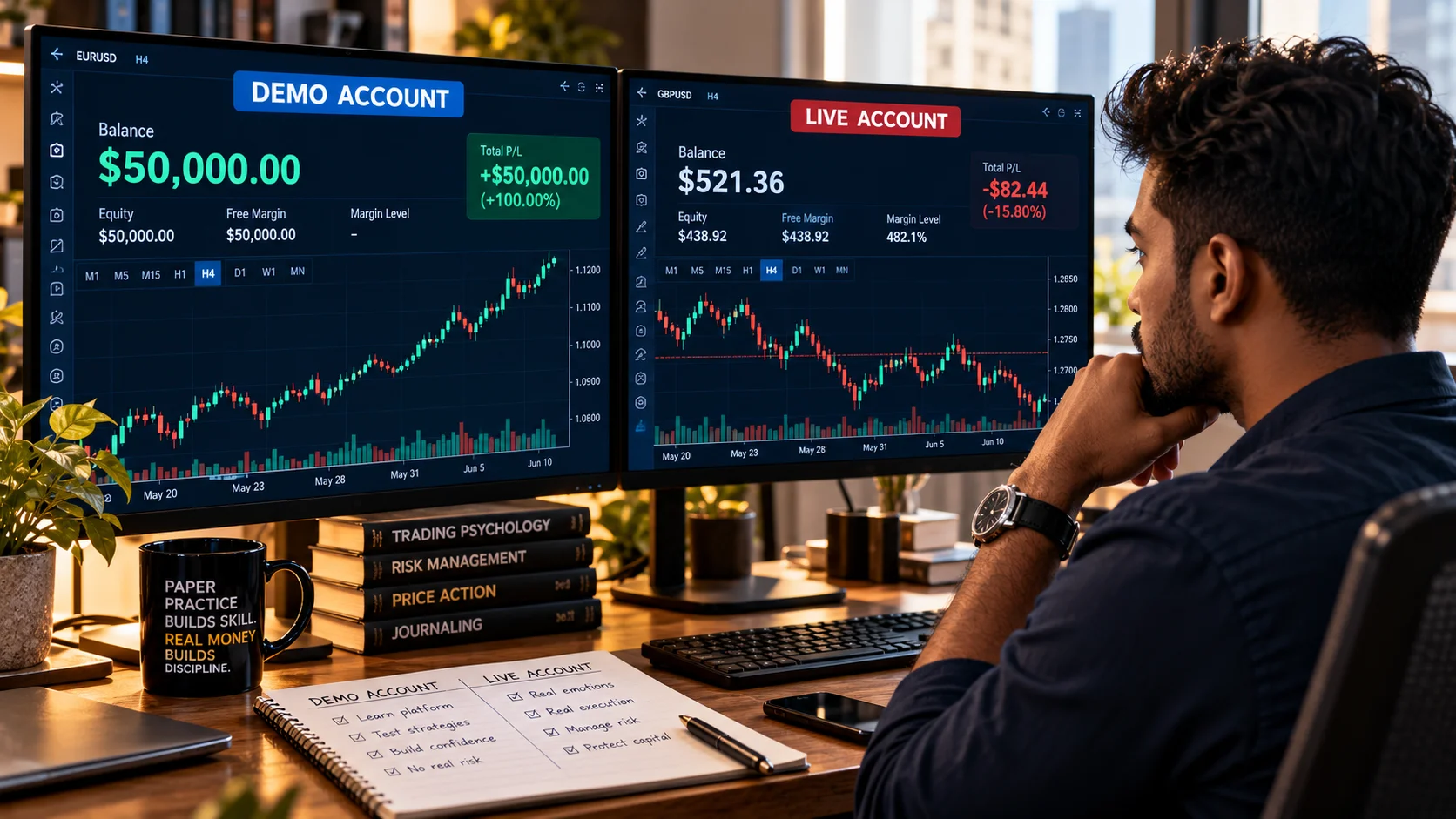
Let us be honest about a $100 account, because it is not a way to get rich quickly but a live classroom. When you use a practice account, the numbers are fake and you feel nothing when you lose virtual money. That is dangerous, because it hides the stress that comes with real trading. Plenty of beginners ask me whether practice accounts are worth the time at all, and I give my honest answer in Is Forex Demo Trading Worth It for Beginner Traders?, including where they fall short.
Once you put a real $100 on the line, everything changes. Your heart beats faster when a trade goes red, and you feel the urge to move your stop loss, which is the "exit door" you set to close a losing trade automatically. You feel real greed and real fear.
With my first live account, I felt like a genius whenever I won and panicked whenever I lost. That $100 account taught me more in a month than a year of fake trading ever did, because it forces you to be disciplined while keeping the danger low. To help you find a broker that allows these tiny deposits, I wrote this Deriv Review 2026 for Beginners With a Small Balance based on my experience.
Step 1: Open a Cent Account, Not a Standard One
This is the single most important choice you make with one hundred dollars. On a standard or micro account, the smallest trade is 0.01 lots, which is worth about ten cents per pip on EURUSD. With a thirty pip stop, that is three dollars of risk, or three percent of your account on one idea before you have learned anything, and that is too much. Since not every broker handles small accounts the same way, I compared a few side by side in Best Forex Brokers With Low Spreads, Fast Withdrawals and Flexible Accounts in 2026: 5 Brokers Compared so you can see the differences for yourself. To help you find a partner that treats your small capital with respect, I compiled The Best Forex Brokers in 2026 and Which One to Use for What.
A cent account fixes this problem. Your one hundred dollars shows as ten thousand cents, and every lot is one hundred times smaller in real money, so now you can size a trade to risk one dollar, or even fifty cents. That is the only way a hundred dollar account can follow a proper one percent rule. One broker I have used and looked at closely is covered in IC Markets Global Review 2026: Accounts, Spreads, Withdrawals, Platforms, Regulation and My Experience, if you want a real example of what to check before you sign up. If you want to see how those tiny costs add up, IC Markets Review 2026 and What a Trade Really Costs breaks down exactly what you pay per trade.
When you open it, there are three things to get right:
- Choose the cent account type (sometimes called "micro" or "nano"), and check that the account currency shows USC or cents.
- Pick the lowest leverage the broker offers that still lets you open trades, because you do not need 1:500 to risk one dollar.
- Deposit the hundred dollars only and say no to bonus offers, since bonuses often come with rules that lock your money in.
Step 2: Pick a Broker That Treats Small Accounts Fairly
Not every broker offers cent accounts, and not every broker that does is safe. Choosing one is a bit like reading a map before a long road trip, because a few minutes of checking at the start saves you from ending up somewhere you never wanted to be. The checks I run before trusting a broker with any money are all in How to Choose a Forex Broker for Beginners.
Always pick a broker with a good reputation, and look for one regulated by a strong authority, like the FCA in the UK, whose Firm Checker lets you confirm a broker is authorised before you send any money. Then open the cent account on a demo first if they offer it, so you can check the spreads and see how the lot sizes feel. If a broker promises massive bonuses or huge leverage for a tiny deposit, stay away, because those offers are often traps.
Step 3: Size Every Trade So You Risk One Dollar
One percent of one hundred dollars is one dollar, and that is your maximum loss per trade, on every trade, with no exceptions. The only question left is how big the trade can be for the stop loss you need. I go deeper into this exact part in How to Learn Forex Trading Step by Step for Beginners, with a full example.
On a cent account, 1.00 lot on EURUSD moves about ten cents per pip, so the sum below is all you need. Costs like spreads change a little from broker to broker, and you can see how they look on a real account in JustMarkets Review 2026: Accounts, Spreads, Withdrawals, Platforms, Regulation and My Experience, which is one of the brokers I tested. If you want to see how these real costs look on a live account, JustMarkets Review 2026 From a Trader Who Has Used It for Seven Years explains everything.
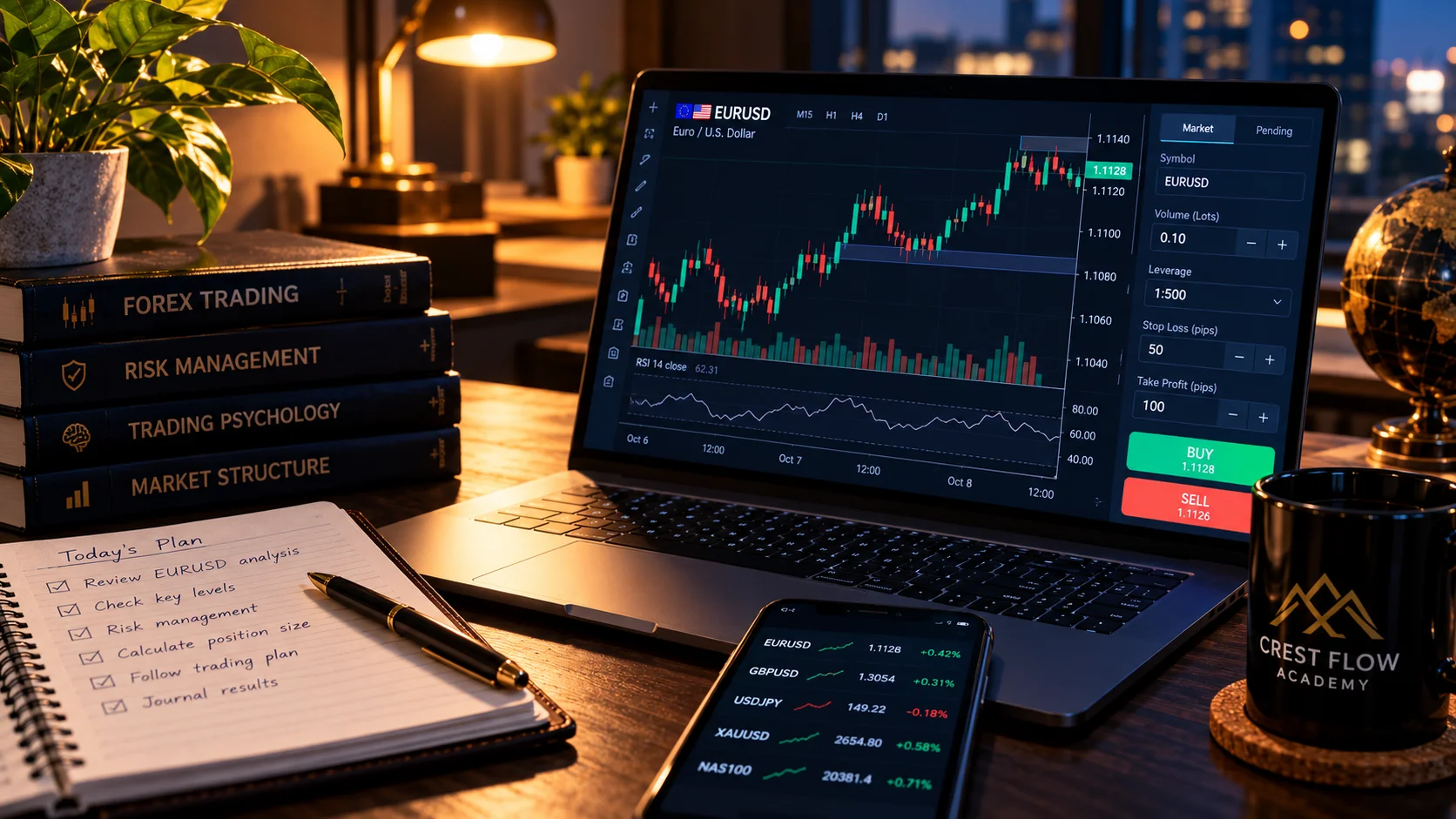
Lot size = $1 ÷ (your stop loss in pips × $0.10)
- 10 pip stop: 1.00 lot, so a loss of $1.00 if the stop is hit.
- 20 pip stop: 0.50 lots, so a loss of $1.00.
- 30 pip stop: 0.33 lots, so a loss of about $0.99.
- 50 pip stop: 0.20 lots, so a loss of $1.00.
Notice that a wider stop means a smaller trade, not a bigger risk, and that is really the whole skill. Decide where your idea is wrong first, put the stop there, and then size the trade to fit, never the other way round. Pip values are a little different from pair to pair, so check yours in What Is a Pip in Forex and How Do You Calculate It, and if lots still feel confusing, What Is a Lot Size in Forex Trading? takes them slowly, one size at a time.
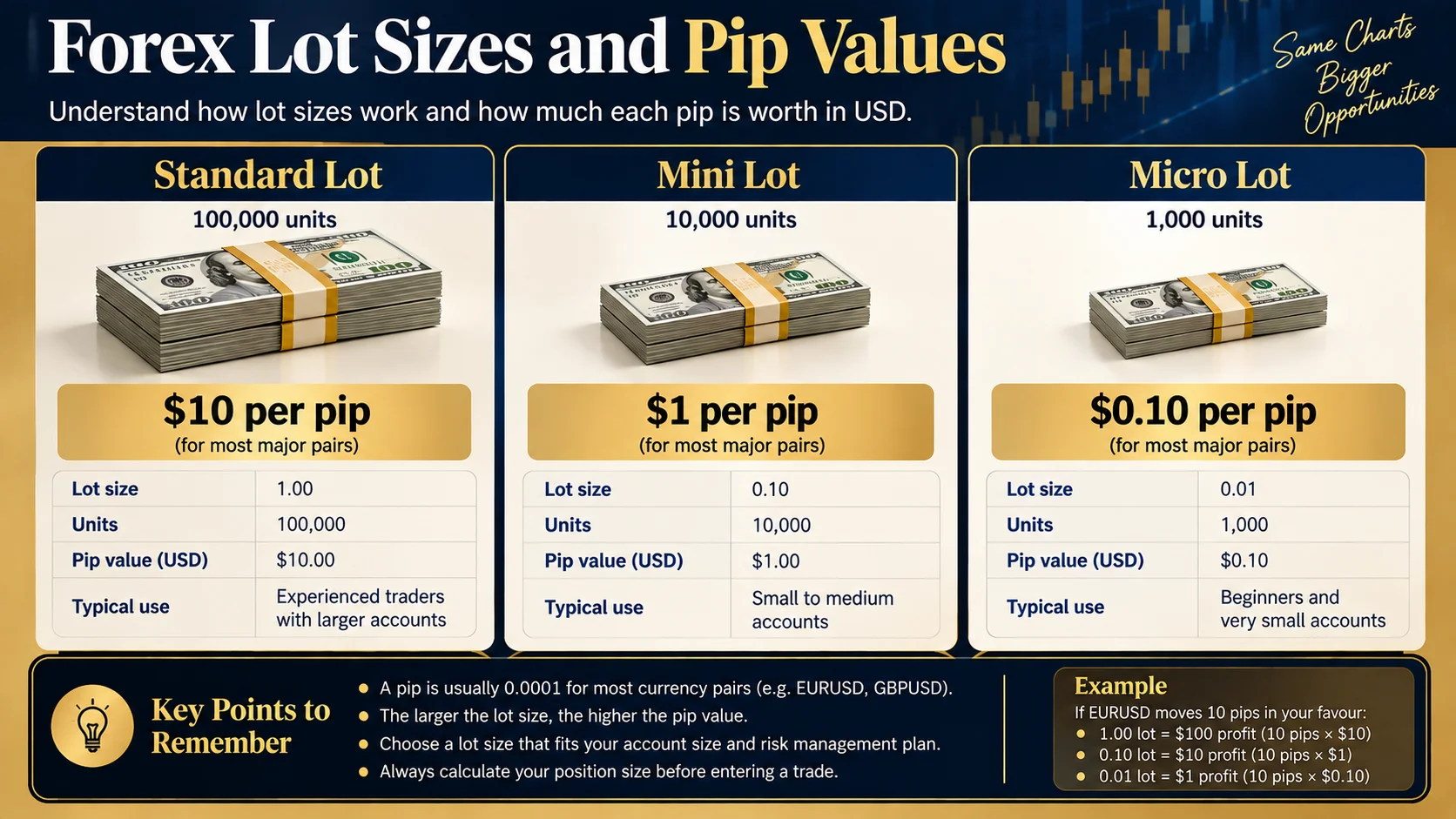
Leverage does not change any of this. It only decides how big a trade the broker lets you open, not how much you should be willing to lose. Small accounts are the ones hurt most by high leverage, and the reason why is spelled out in What Is Leverage in Forex Trading and How Does It Work? with simple numbers.
Risk Management Rules That Actually Keep You Alive
Risk management is not exciting, but it is what keeps you in the game. I once tried to turn $100 into $1,000 in a week by risking 20% on every trade, and after two bad days my account was gone, which was a painful lesson. When you choose a broker, you should know who handles your trades, so I wrote What Is a Liquidity Provider in Forex and Why Does It Matter.
My rule now is to never risk more than 1% or 2% of your account on a single trade. With $100, that is one or two dollars per trade, and the list above shows you exactly how to keep it there. When the balance starts to shrink, the danger of the broker closing trades for you grows, so it is worth going back to What Is Margin Call in Forex and How to Avoid It and making sure the warning signs are clear in your head.
When you only risk a dollar, you can stay calm. If you lose, you do not panic, because you simply look at why it happened and move on to the next idea. If this part is new to you, Is Forex Demo Trading Worth It for Beginner Traders? takes it slowly, step by step.
Your First 30 Days on $100
This is the plan I would follow if I had to start again tomorrow with one hundred dollars, and it is boring on purpose. Think of it like a long bus ride across the country, where the driver does not race in the first hour but keeps a steady speed so the bus actually reaches the end. Before you begin, it is worth checking one more broker option in FxPro Review 2026: Accounts, Spreads, Withdrawals, Platforms, Regulation and My Experience, because the right account makes this plan far easier to follow. Once your account is set up, you can see how I manage my own trades in FxPro Review 2026 and Why I Use It for Trading Gold.
- Week 1: No trades. Pick one pair, EURUSD. Each day, mark where price turned before and write one sentence about what you think happens next, then check yourself the following day.
- Week 2: Tiny trades only. Take at most one trade a day, risking no more than fifty cents, because the goal is to practise the routine of plan, stop, size and wait.
- Week 3: Full one dollar risk. Keep the same rules at normal size, and stop for the day after two losses.
- Week 4: Review your work. Take no new trades until you have read your journal and written down your three most common mistakes.
Keep a simple journal for every trade with the date, the pair, why you entered, where your stop was, the lot size, the result, and how you felt. It takes two minutes, and after a month it shows you patterns that no indicator ever could. You do not need to watch the screen all day for any of this, and How Much Time Do You Need Every Day to Trade Forex? shows how little time it really takes once you have a routine.
Avoiding the Biggest Traps That Catch New Traders
The internet is full of "get rich" traps, so be very careful with robots, signals and fancy indicator packages. Most of them do not deliver what they promise, and the US regulator warns traders to be wary of anyone promising guaranteed returns (CFTC forex fraud advisory). If a robot could make money easily, the seller would simply keep it for themselves.
Another trap is "revenge trading", which is when you lose money and try to win it back straight away. This is how you turn $100 into $0 in ten minutes. If you lose two trades, stop and walk away from the screen, because your brain is not working properly when you are angry. I explain this properly in How Do Currency Pairs Work in Forex Trading?, so read it when you are ready.
Reality Check
Most people will read this and then ignore their own rules by Tuesday. Reading is not enough, because you have to do the work, and it takes a long time. Expect to spend six months just practising on this small account before you even think about adding more money. When you do reach that point, the funding ladder in How Much Money Do You Need to Start Trading Forex is how I decide whether a top up makes sense or should wait. I am not your financial adviser, this is only what worked for me.
Where To Read Next
If you want to keep learning, these are the ones I would read next.
- How to Learn Forex Trading Step by Step for Beginners
- What Is Leverage in Forex Trading and How Does It Work?
- Is Forex Demo Trading Worth It for Beginner Traders?
- What Is Margin Call in Forex and How to Avoid It
- How Much Money Do You Need to Start Trading Forex
- What Is a Pip in Forex and How Do You Calculate It
- How Do Currency Pairs Work in Forex Trading?
- What Do Forex Terms Mean for Beginners?
- How to Choose a Forex Broker for Beginners
- What Do the Letters in a Forex Pair Mean?
- What Is a Lot Size in Forex Trading?
- How Much Time Do You Need Every Day to Trade Forex?
- What Is the Forex Market and Who Trades It
- JustMarkets Review 2026 From a Trader Who Has Used It for Seven Years
- IC Markets Review 2026 and What a Trade Really Costs
Frequently Asked Questions
Can I really start forex trading with $100?
Yes, you can, as long as you use a cent account. It lets you size trades so each one risks about one dollar, while on a normal account the smallest trade is usually too big for a hundred dollar balance.
What lot size should I use with $100?
Work it out from your stop loss every time. On a cent account, divide one dollar by your stop in pips times ten cents, so a thirty pip stop gives about 0.33 lots.
Should I use a cent account or a micro account with $100?
Use a cent account. A micro account still makes the smallest trade worth about ten cents per pip, which forces you to risk two to five percent on normal stops.
What is the best currency pair for a beginner with $100?
I would start with EURUSD. It is cheap to trade, very busy with buyers and sellers, and calmer than exotic pairs, so your small stops are not hit by random spikes.
When should I move from a cent account to a normal account?
Move when you have followed your risk rules for at least three months and your balance plus any new deposit meets the minimum for your stop size.
If this helped you, send it to a friend who is learning to trade.