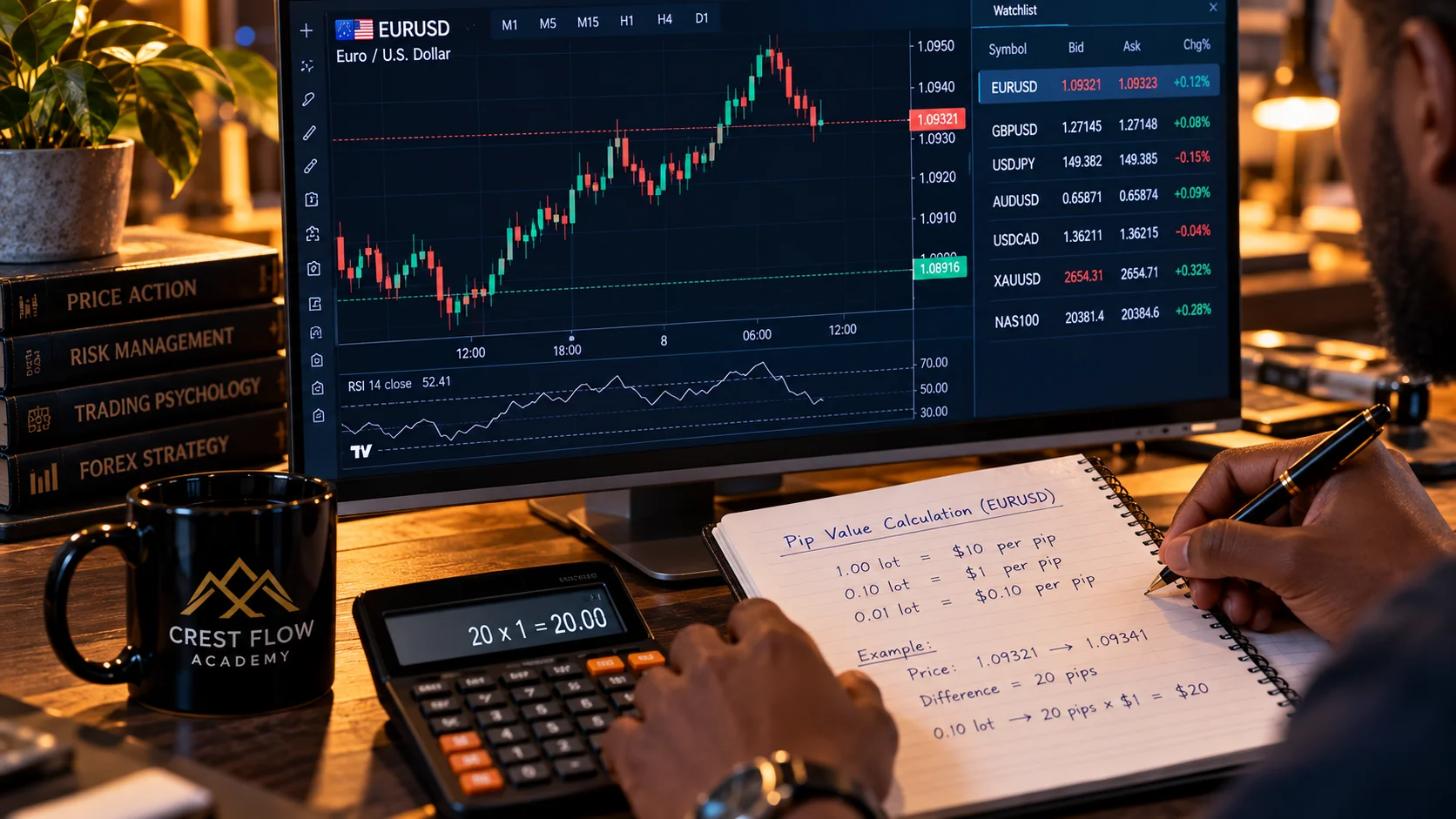
The volume box in MetaTrader looks like the least important part of the order window, but it decides how much every pip is worth. On EUR/USD a lot size of 0.01 makes each pip worth about ten cents, while 0.10 makes each pip worth about a dollar, so the same 30 pip stop loss costs $3 in one case and $30 in the other, on the same chart with the same idea.
That is why I want you to have the lot size in forex explained properly before you place another trade. Below I show you what a lot actually is, how I work out the right size for an account from the stop loss and the amount I am willing to risk, and the simple check that stops one extra zero from doing serious damage.
What a Forex Lot Actually Represents
When you go to a shop for eggs, you do not buy them one by one. You buy a carton of six or twelve, and the currency market works in the same way.
You do not trade single dollars or euros, you trade in bundles called lots. Understanding these bundles is the first real step to building a safe plan with a small account.
A lot is just a set size for your trade. If you buy the EUR/USD pair, you are buying the first currency in the name, which is the euro, and you are buying it in these set bundles. If some of these words still feel strange to you, What Do Forex Terms Mean for Beginners? goes through the everyday language traders use, so keep it open while you read.
Without these bundles the market would be a mess, because everyone needs to agree on the size of the "carton" before they can trade smoothly with each other.
The lot size is how your small trade joins the big global market. Big banks trade in huge blocks of 100,000 units, and your broker bundles your tiny trade together with other people's trades to match this. When you pick a micro lot, you are controlling 1,000 units of currency. The broker handles the maths, so you can trade a small slice of that big pie. A fair question at this point is how a small deposit can control a position that size, and What Is Leverage in Forex Trading and How Does It Work? answers exactly that.
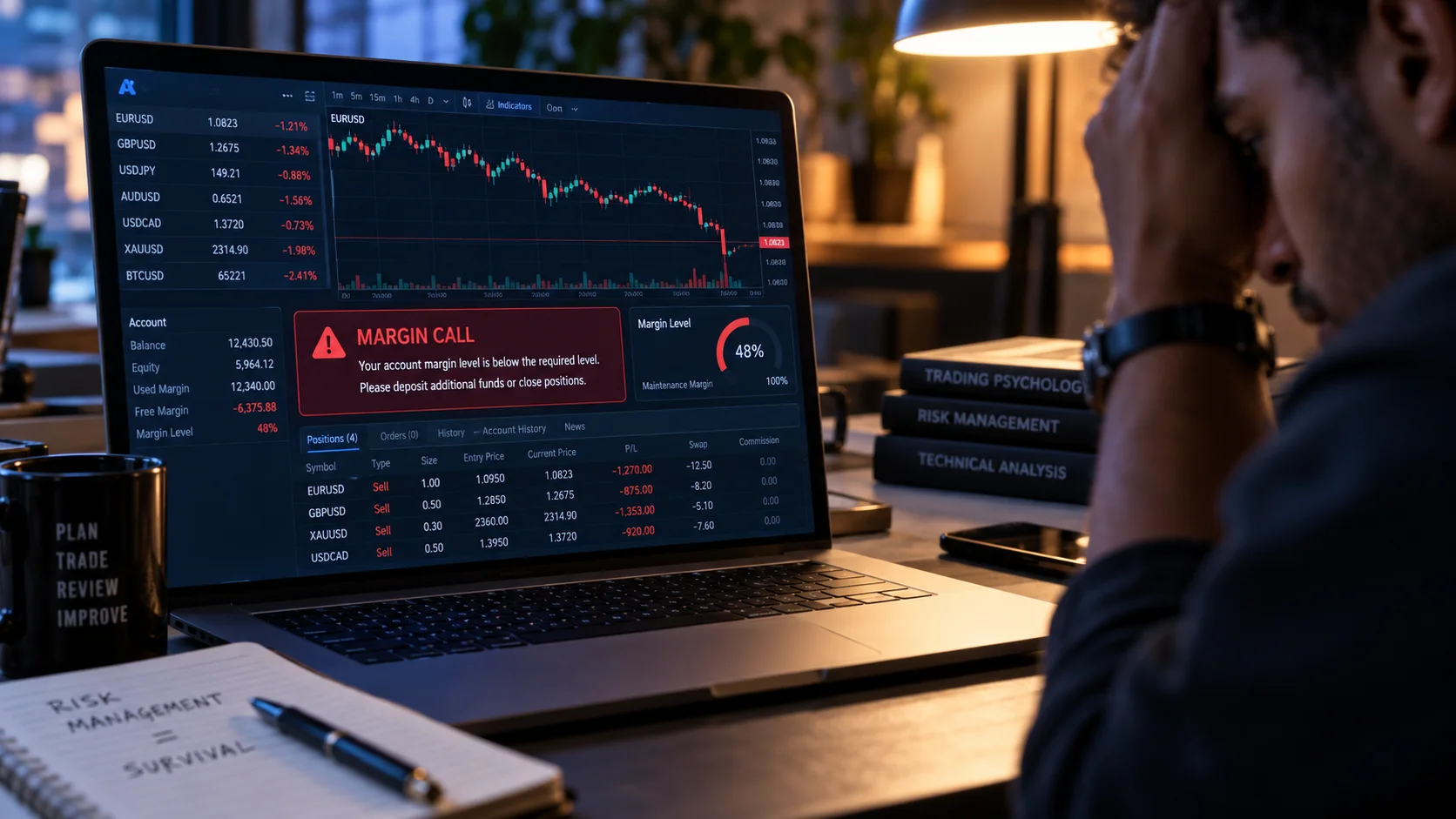
Forgetting to check my volume once put a whole account at risk. I only wanted to risk a few dollars, but I had left my size at 1.00 by accident, and although the price moved in my favour and handed me a profit I never planned for, I could have lost the whole account if it had gone the other way. Ever since then, I double check my size every single time. When your volume is too big for your balance, the broker can start closing your trades for you, and What Is Margin Call in Forex and How to Avoid It explains how quickly that can happen.
Standard, Mini, and Micro Lots: The Simple Maths
There are three main sizes you need to know, and every broker uses these same names for them.
Standard Lot (1.00): 100,000 units of currency, the full block the banks trade.
Mini Lot (0.10): 10,000 units of currency, which is one tenth of a standard lot.
Micro Lot (0.01): 1,000 units of currency, the smallest size most beginners use.
Look closely at the decimals. 0.01 is one hundredth of a full lot and 0.10 is one tenth, and these numbers stand for real money you are moving in the world market.
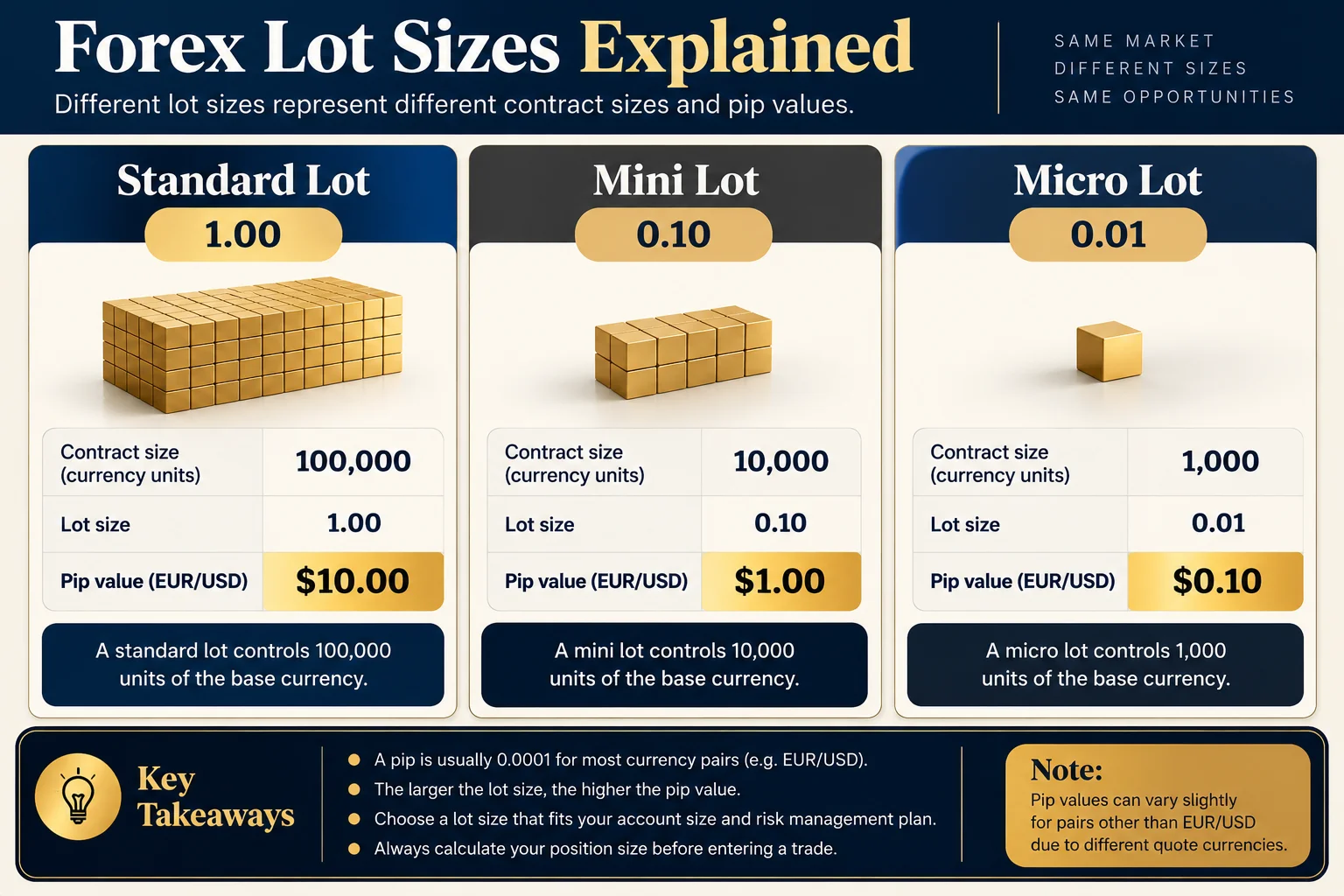
Mistaking 0.10 for 0.01 makes your risk ten times bigger, so never rush when you type in that box.
How Lot Sizes Decide Your Pip Value in Real Money
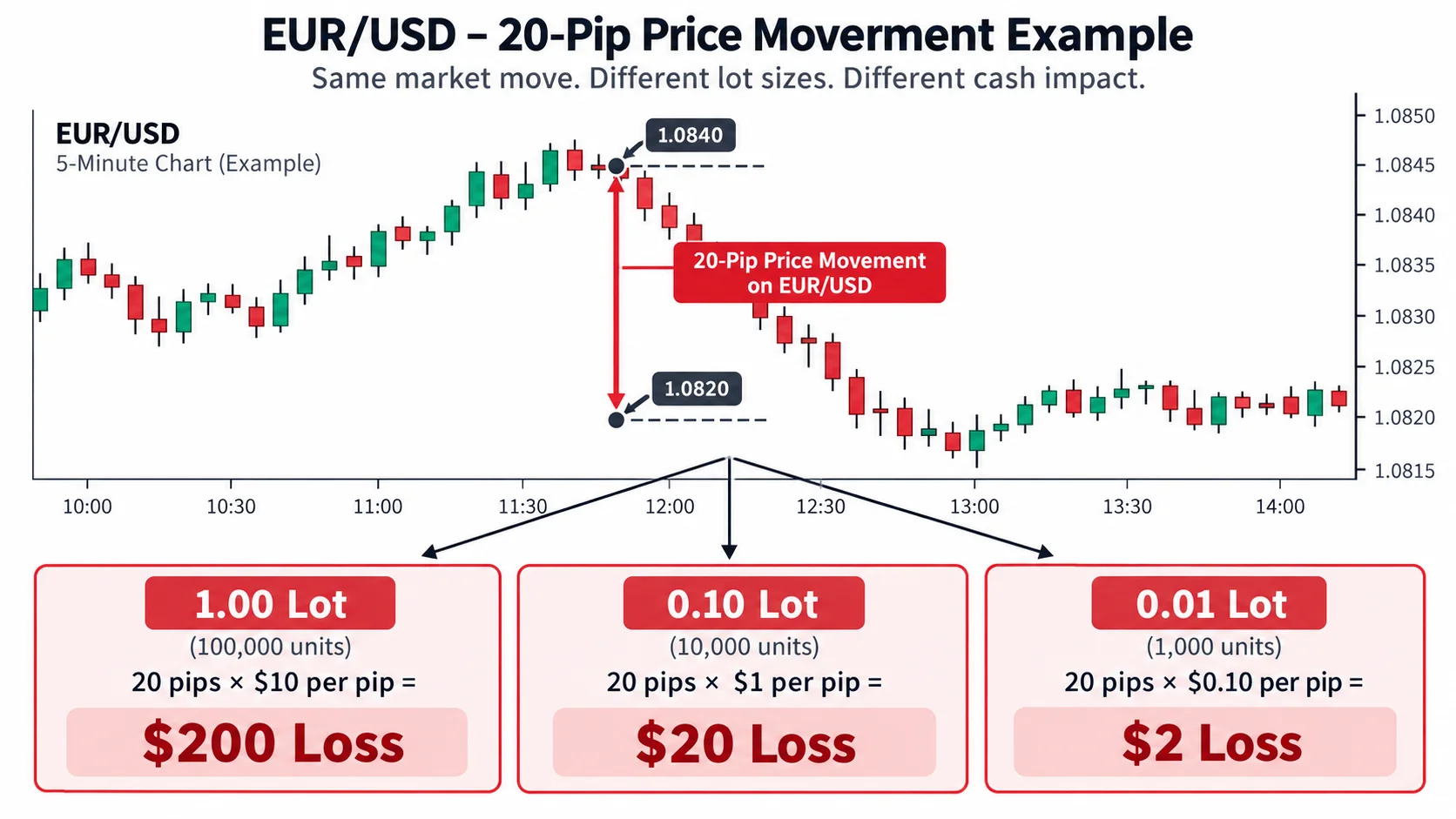
A pip is the smallest normal move that price makes. If you and I want to know how much one pip is worth, we have to look at our lot size first. The values below are for pairs that end in USD on a dollar account; for other pairs and account currencies, What Is a Pip in Forex and How Do You Calculate It takes you through the full working.
Standard (1.00): One pip is worth $10.00 to you.
Mini (0.10): One pip is worth $1.00 to you, which feels small but adds up.
Micro (0.01): One pip is worth $0.10, about ten cents.
If price moves twenty pips against you, that is a normal move on any day. On a standard lot you lose $200, but on a micro lot you only lose $2. The chart looks exactly the same, but your wallet feels a very different pain.
The Maths of Position Sizing on a $100 Account
With $100, you have no room for big mistakes. I aim to risk 2% per trade, which is $2, so if my trade loses, I only lose $2 and I am still in the game. A small balance needs its own plan from day one, and How to Start Forex Trading With $100: A Beginner Guide is the one I would hand you for those first steps. If this all sounds a bit overwhelming, How to Start Forex Trading With $100 Step by Step helps you set up your account properly so you can trade safely.
Say my plan needs a thirty pip stop loss. Then I cannot use a mini lot, because 30 pips at $1 per pip is $30, and that is 30% of my account gone in one go. Even a micro lot, the smallest normal size, makes the loss $3, which is still over my 2% limit. This is the wall every small account hits sooner or later. The way through it is a cent account, where every lot is a hundred times smaller in real money, so you can size a trade to risk exactly $1 or $2. I go through how to set that up in How to Start Forex Trading With $100.
I hated micro lots when I started, because making forty cents on a win felt like a waste of my time. Those tiny wins, though, were what taught me how to stay in the game, and they showed me that you have to value the process more than the cash. A boat with a good anchor does not drift away in the first rough wave, and small, steady sizes do the same job for a new account. When you are ready to follow a proper order of lessons instead of guessing, How to Learn Forex Trading Step by Step for Beginners puts them in the order I wish I had followed.
Why Most Retail Traders Choose Lot Sizes Backwards
Most beginners pick a lot size based on how much money they want to win. They think, "I want $100, so I will trade big," and this is the fastest way to end up quitting trading.
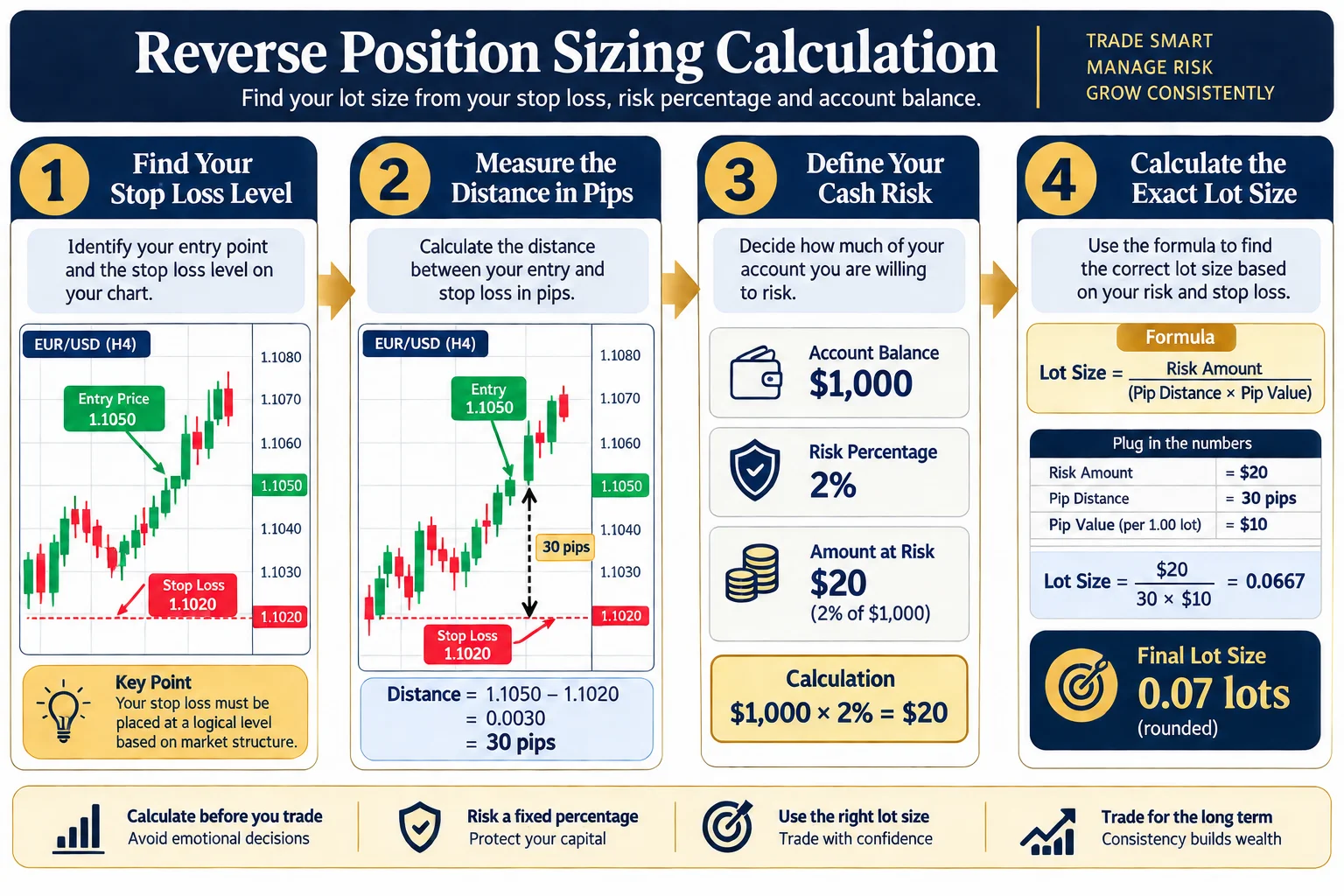
Experienced traders work backwards. They look at the chart first and find where their stop loss belongs, and only then do they work out how much they can risk. The same habit of ignoring the chart is behind a lot of losing trades, and Why Do Candlestick Patterns Fail Without Context in Forex? shows how it plays out when risk rules get forgotten.
Find your entry point on the chart before anything else.
Find the level where your stop loss makes sense.
Measure the number of pips between the entry and the stop.
Pick your cash risk limit (like $2).
Calculate the lot size that fits those numbers.
The formula is: Lot Size = Cash Risk / (Stop Loss Pips x Pip Value). Use it every time, even when you feel sure about a trade.
Check Your Broker's Lot Rules
The formula gives you the ideal size, but your broker decides what you can actually type into the box. Before your first trade on any account, open the contract specifications for your pair and check three numbers:
- Minimum lot: usually 0.01. On a cent account the same 0.01 is a hundred times smaller in real money.
- Lot step: the smallest change allowed, usually 0.01. If your formula says 0.037, you round down to 0.03, never up.
- Maximum lot: this is rarely a problem for small accounts, but it is still worth knowing.
Some platforms show size in units instead of lots. The conversion is simple: 1,000 units is 0.01 lots, 10,000 units is 0.10 lots, and 100,000 units is 1.00 lot. If you trade a pair that does not end in USD, like GBPJPY, the pip value per lot changes, so take it from your platform or from the pip guide before you size the trade. Those six letter codes can look like a puzzle at first, and What Do the Letters in a Forex Pair Mean? breaks them down in plain words.
Two Worked Examples
Here is the formula at work, using a $1,000 account that risks 1 percent, which is $10 per trade:
- EURUSD, 20 pip stop. One standard lot is worth $10 per pip. Lot size = $10 ÷ (20 × $10) = 0.05 lots. If the stop is hit, you lose 20 × $0.50 = $10.
- EURUSD, 50 pip stop. Lot size = $10 ÷ (50 × $10) = 0.02 lots. A wider stop means a smaller trade, and the loss is still $10.
Notice that the risk never changes, only the size does. That is the whole point of sizing from the stop instead of from the profit you hope to make.
The Reality of Lot Sizing in 2026
Trading is not about being clever, it is about being boring. It is typing 0.01 into the box day after day, and keeping your losses small enough that you can come back tomorrow and trade again.
I stopped trying to get rich quick after I nearly wiped out my account twice. Once I accepted that my first job was to protect my money, everything changed for me. You are not a gambler, you are a risk manager, and the lot size box is where that job starts.
Where To Read Next
If you want to keep learning, these are the ones I would read next.
- How to Start Forex Trading With $100 Step by Step
- How to Learn Forex Trading Step by Step for Beginners
- What Is Leverage in Forex Trading and How Does It Work?
- Is Forex Demo Trading Worth It for Beginner Traders?
- The Best Forex Brokers in 2026 and Which One to Use for What
- Why Do Candlestick Patterns Fail Without Context in Forex?
Frequently Asked Questions
What is the best lot size for a $100 forex account?
On a normal account, 0.01 is the smallest size and it is often still too big for proper risk. A cent account lets you size trades to risk $1 or $2 on a $100 balance.
Can you trade standard lots with a small balance?
No, you cannot do it safely. A standard lot makes one pip worth $10, so a normal 20 pip stop would cost you $200.
How do I calculate lot size from my stop loss?
Lot size = cash risk ÷ (stop loss in pips × pip value of one standard lot). For EURUSD, risking $10 with a 20 pip stop gives $10 ÷ (20 × $10) = 0.05 lots.
What is the difference between a mini lot and a micro lot?
A mini lot is 10,000 units (0.10 lots) and a micro lot is 1,000 units (0.01 lots). The micro lot is ten times smaller than the mini lot.
What is the minimum lot size in forex?
It is usually 0.01 lots, or 1,000 units. Check your broker's contract specifications, and always round any calculated size down to the allowed lot step.
If this helped you, send it to a friend who is learning to trade.