Pip, lot, spread, leverage, margin: you can learn the definition of every one of these and still have no idea what any of them means for your money once a trade is open. The problem is not the words themselves. The problem is that they are usually taught as a list in a glossary, when really they are the handful of numbers that decide what a trade will cost you and how much it can lose.
So below I explain the forex terms beginners need, using real examples on real pairs, so that each word connects to something you can actually see on your trading platform. You do not need to memorise a whole dictionary to start trading safely. You need to understand about twenty terms well, and these are the ones.
Why Book Definitions of Forex Terms Fail You on Real Charts
Most traders learn these words the wrong way. They memorise a dictionary and then get a shock when the chart looks nothing like the book. I find it is a bit like a student who learns every formula by heart but freezes in the exam, because nobody showed them how the formulas are used on a real question. On a chart you are not just looking at lines, you are watching a huge market where banks and ordinary people swap money all day long.
Take the spread. A book will tell you it is the gap between the buy price and the sell price, and that is true, but it misses the point. The spread is a toll. It is the cost you pay to enter the market right now, and you pay it every single time you press the button. If you ignore it, you will lose money on every trade you open, which is why I want you to understand from the start how these basic pieces control your account balance.
1. Pip
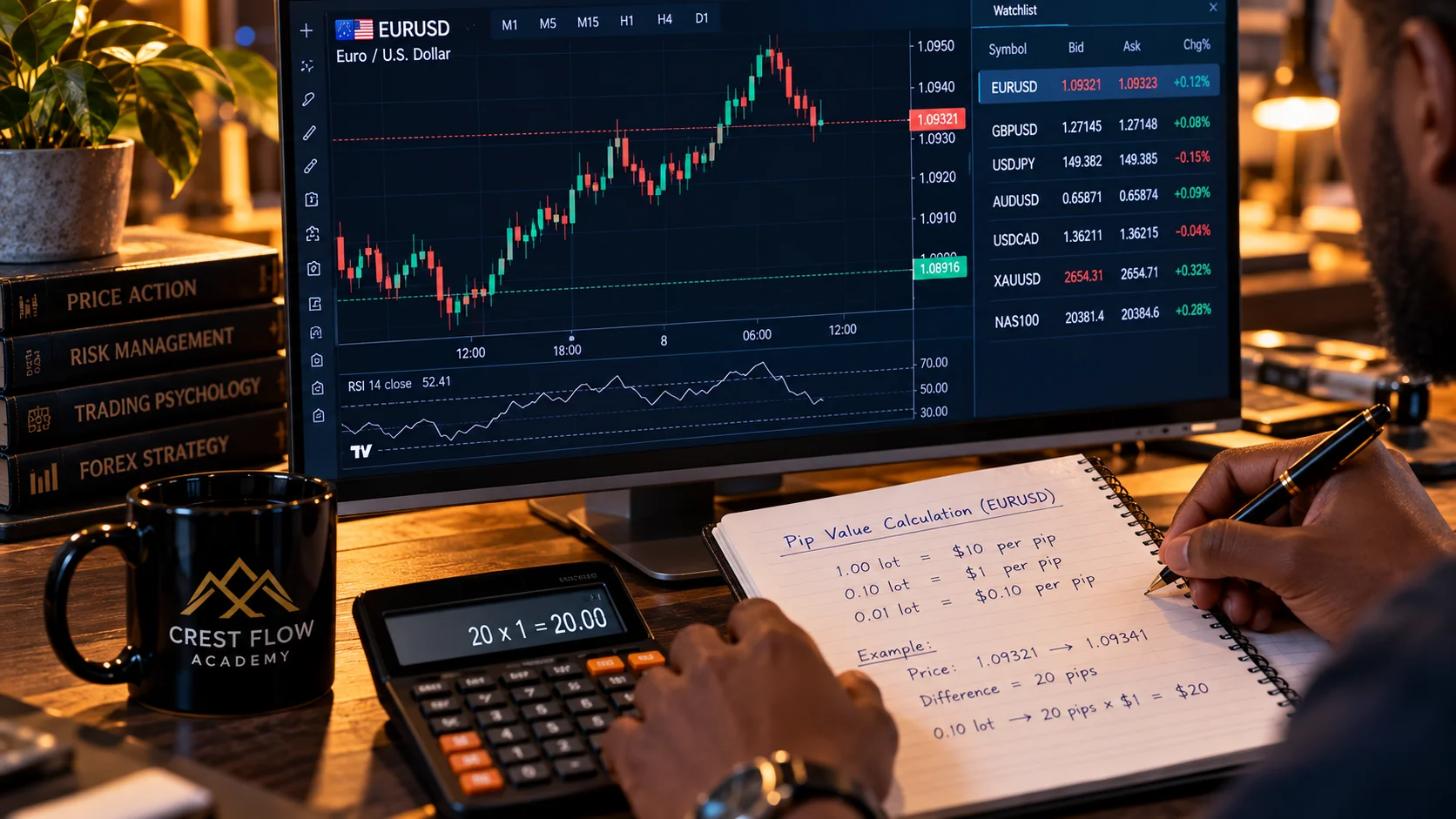
A pip is simply a unit of distance that measures how far the price has moved. On EURUSD it is the fourth number after the decimal point, so if the price goes from 1.0850 to 1.0851, that is one pip. Before you risk your hard-earned money, spend some time with What Is a Pip in Forex and How Do You Calculate It, because the maths there is the maths behind every trade you will ever take.
People often think a pip is a fixed amount of money, but it is not, because its value depends on how much you are trading. One pip on a small trade might be worth ten cents, while on a large trade it could be worth ten dollars.
2. Lot Size
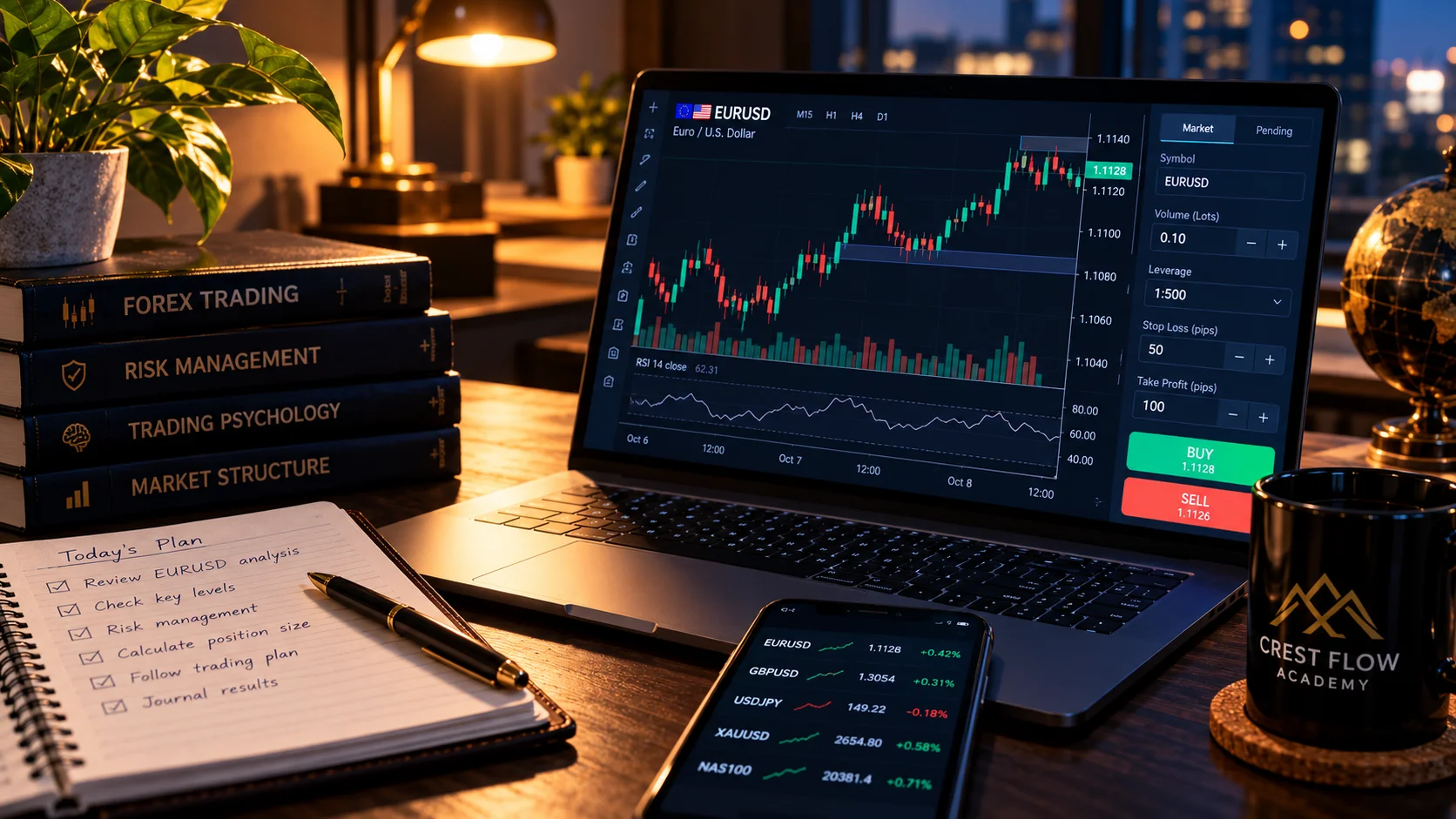
Think of lot size like the volume knob on a radio, because it controls how much risk you are taking. A lot is just the size of your trade. If you would like to see the actual sums for working out a safe position, What Is a Lot Size in Forex Trading? takes you through them one step at a time.
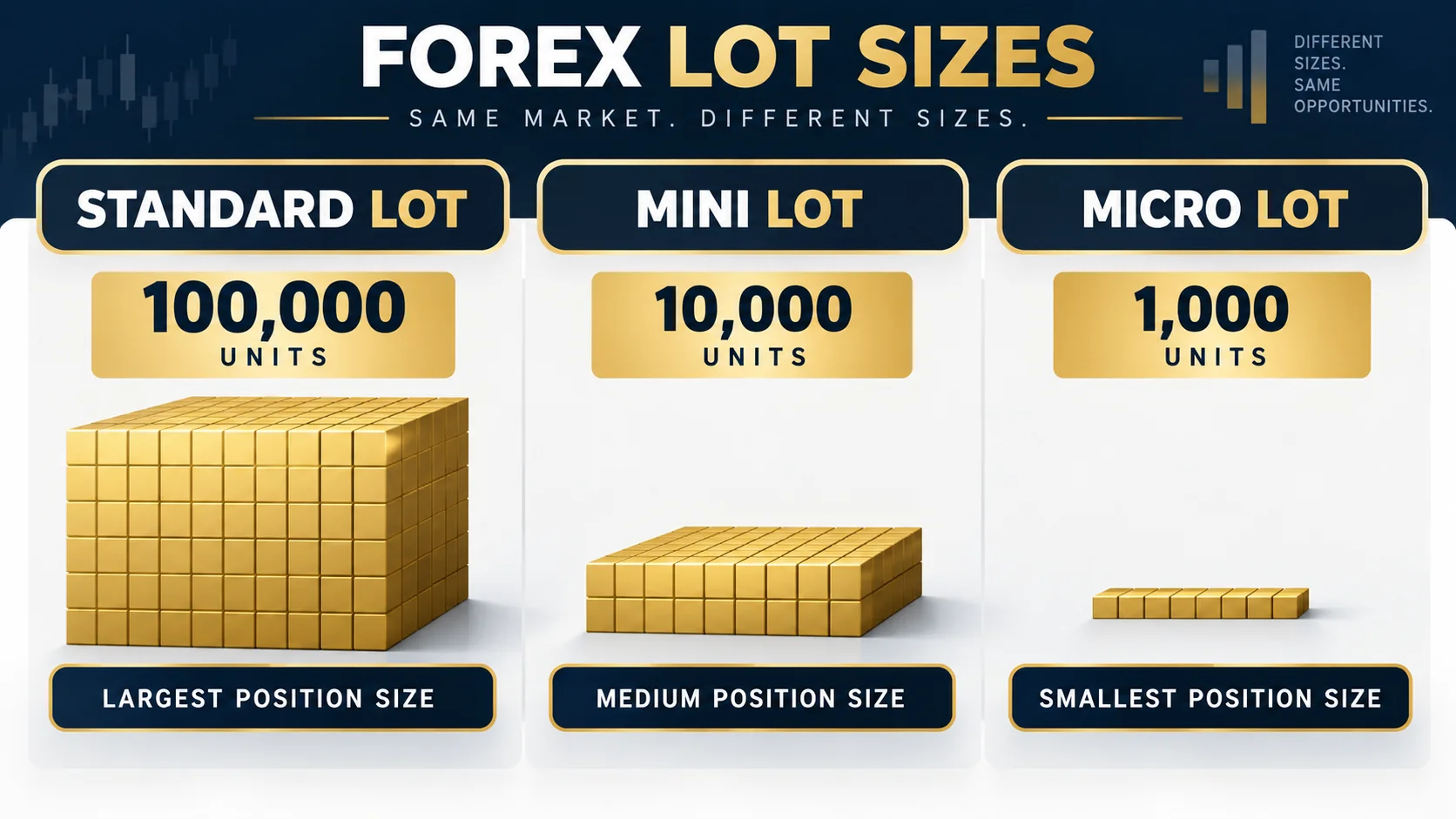
A standard lot is 100,000 units and a micro lot is 1,000 units. New traders often use big lots on small accounts because they want to get rich fast, and when the winning trades do not come, many of them end up calling forex a scam. They usually have nothing left within a few days. If you have 200 dollars, a standard lot is far too big, so you must match your lot size to the money you actually have. For anyone starting out with very little, How to Start Forex Trading With $100: A Beginner Guide is the lesson I would read before placing a first live trade. If you want to learn how to manage your small account properly, How to Start Forex Trading With $100 Step by Step shows you the right path forward.
3. Leverage and Margin
Leverage is borrowed power from your broker, so if you have 100 dollars and 1:100 leverage, you can trade 10,000 dollars. Margin is the small piece of your own money that the broker locks away so you can use that power. With very low leverage you could only open small positions, which is why brokers lend you extra buying power, and that borrowed power is what we call leverage. It still confused me for a long time how so little cash could control so much, and What Is Leverage in Forex Trading and How Does It Work? is where I lay the whole thing out plainly.
High leverage is not a shortcut to wealth. It makes your mistakes bigger, so if you use too much of it, a tiny move against you will close your trade almost instantly. Leverage cuts both ways, because it can grow your account or wipe it out.
4. Spread
The spread is the gap between the price you buy at and the price you sell at, and it is how the broker makes money. If EURUSD shows a sell price of 1.0800 and a buy price of 1.0801, the spread is one pip. The buying price is always the higher one, as IG's trading glossary explains, so you start your trade one pip in the red. During big news events this gap can get huge, and it can eat into your stop loss before price has even moved.
5. Bid and Ask Price
You will always see two prices on your screen. The bid is what someone will pay you for your currency, and the ask is what you must pay to buy it. You buy at the higher price and sell at the lower one, and that gap is the reason every trade starts in a small loss. Those prices sit next to a pair name like EUR/USD, and if the letters themselves still look strange, What Do the Letters in a Forex Pair Mean? tells you what each of those letters stands for and why the order matters.
6. Bull Market and Bear Market
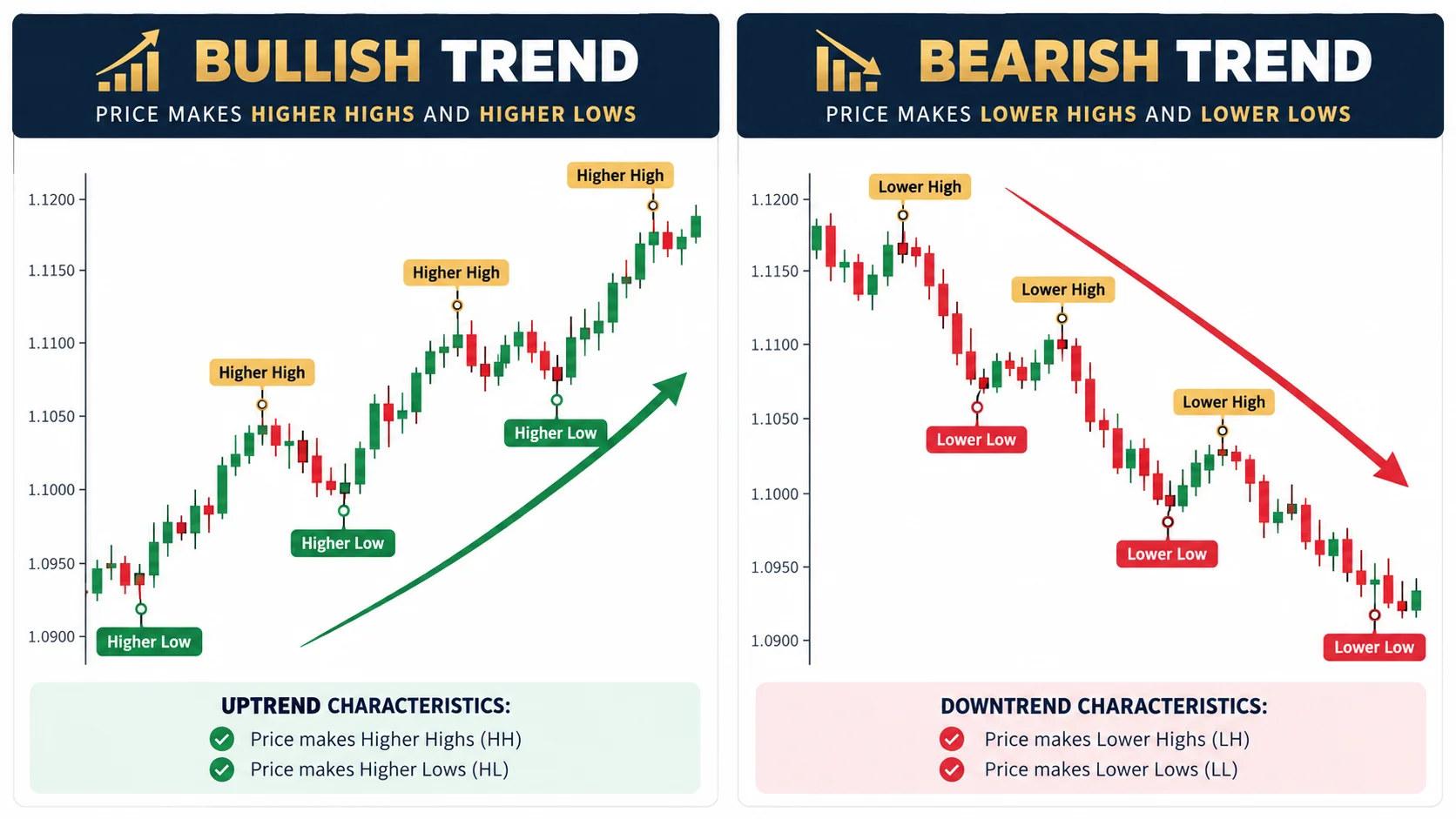
A bull market means prices are moving up, and a bear market means prices are moving down. Think of a bull pushing upwards with its horns and a bear swiping downwards with its paws. You can make money in both directions, because all you need to know is whether the price is more likely to rise or fall.
7. Margin Call and Stop Out
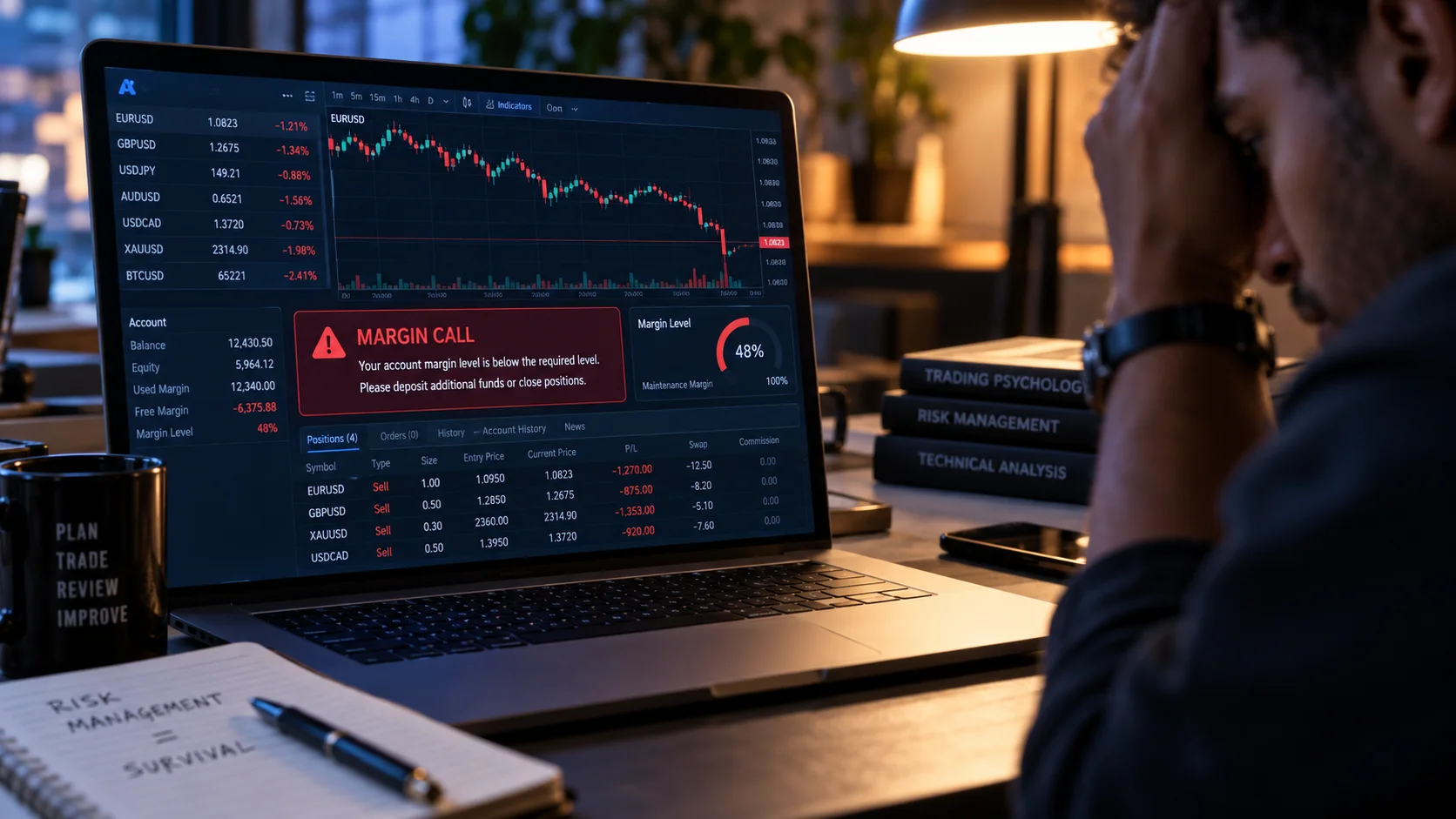
A margin call is a warning that you are running out of money to keep your trades open. A stop out is when the broker closes your trades for you because your margin has dropped too low. In Europe, brokers must start closing a retail client's trades when margin falls to 50% of the required minimum (ESMA).
My first margin call came from putting far too much size on GBPUSD, because I thought I could simply wait for the price to turn around. Then my platform suddenly went quiet, since the broker had closed everything, and I watched my account balance disappear in seconds. It was a painful way to learn that I was not in control, the maths was. The habits that would have saved me that day are all in What Is Margin Call in Forex and How to Avoid It, and I would read it before you ever use leverage.
8. Support and Resistance
Books make these sound like special lines where price has to stop, but they are not. They are just areas where many people have placed their orders, with sellers often waiting at old highs and buyers waiting at old lows. It is an auction, not a law of physics. Seeing a level is one thing and knowing how price behaves there is another, which is exactly what How to Combine Candlesticks With Support and Resistance teaches with real candles.
9. Slippage
Slippage is when you click "buy" at one price but end up getting a different one. It happens when the market is moving fast, and if no one is selling at your price, the system skips to the next price that is available. You can think of it as the cost of speed.
10. Drawdown
Drawdown is the dip in your account balance after a few losing trades. If you have 2,000 dollars and it drops to 1,600, that is a drawdown, and every trader goes through them. The experienced trader stays calm and lowers their size, while the beginner panics and tries to win it all back with even bigger trades.
How to Stop Letting Jargon Cost You Money
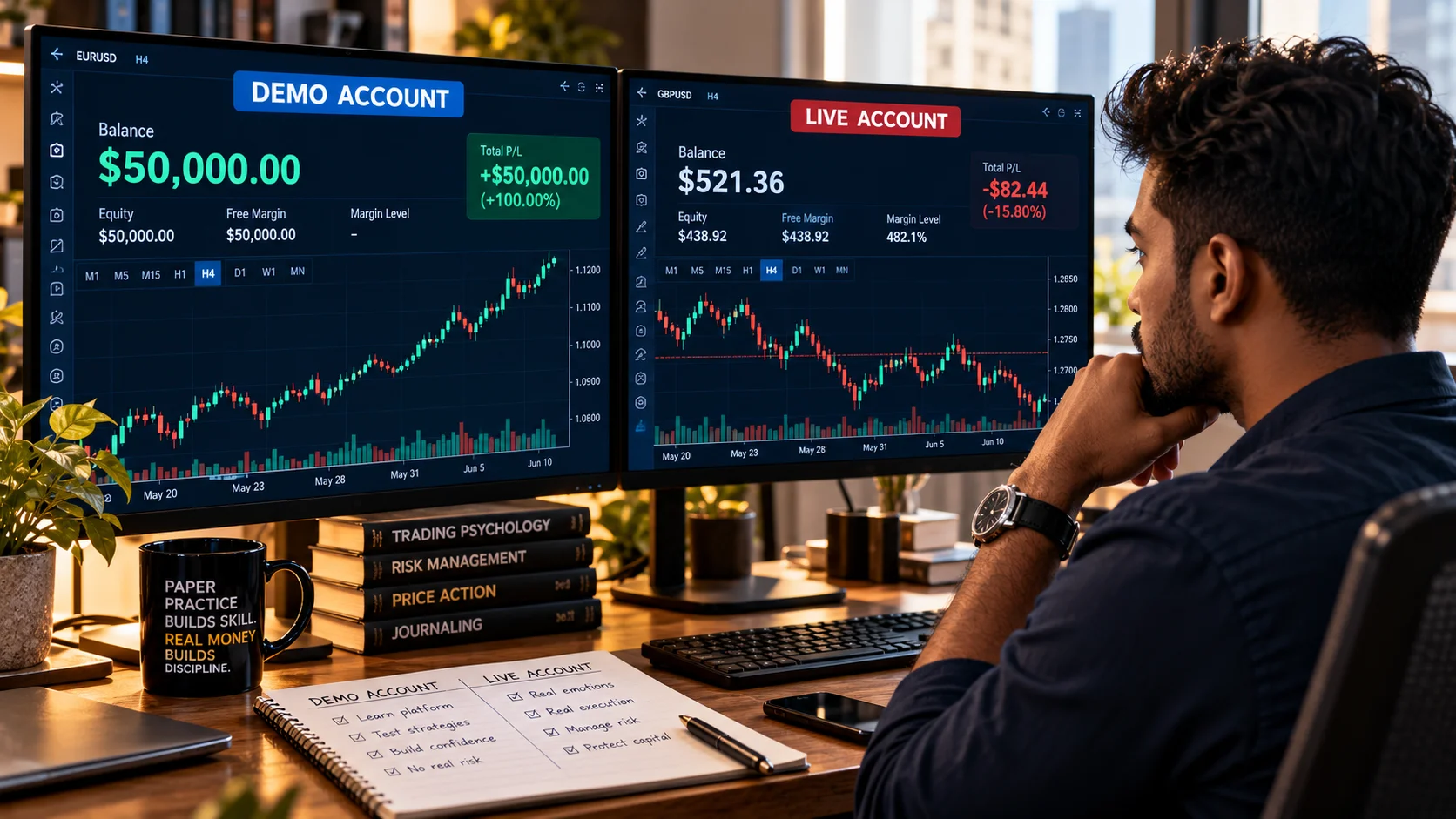
Knowing the words is not enough, because you must see how they work on a real chart. Open a demo account and watch the spread for a while, then see how your balance changes when you change your lot size. It is like homework in maths class, where the teacher gives you sums to practise until the method feels normal, and you should not go live until these things feel normal too. When you are ready to turn this vocabulary into a plan, How to Learn Forex Trading Step by Step for Beginners lays out the order I would learn things in.
Where To Read Next
If you want to keep learning, these are the ones I would read next.
- How to Start Forex Trading With $100 Step by Step
- How to Learn Forex Trading Step by Step for Beginners
- What Is Leverage in Forex Trading and How Does It Work?
- Is Forex Demo Trading Worth It for Beginner Traders?
- The Best Forex Brokers in 2026 and Which One to Use for What
- How to Draw Market Structure on Forex Charts Step by Step
Frequently Asked Questions
What are the essential forex terms for beginners to learn first?
Start with pips, lot sizes, leverage, margin and the spread. These five things affect your money directly every time you trade.
What is a pip in forex trading with a real example?
A pip is a unit of price change. If EURUSD moves from 1.0800 to 1.0810, that is a ten-pip move, and how much you make from it depends on your lot size.
Why do my trades always start in negative profit when I open them?
You start in the negative because of the spread. You pay the higher price to buy, so the market has to move in your favour just to cover that fee.
What is the difference between leverage and margin?
Leverage is the power your broker gives you to trade larger amounts. Margin is the small part of your own money you keep in the account to hold those trades open.
Can retail traders make consistent money starting with a small account?
Yes, but you have to be disciplined, using micro lots and small risk. Most people fail because they use too much leverage and trade far too big.
If this helped you, send it to a friend who is learning to trade.