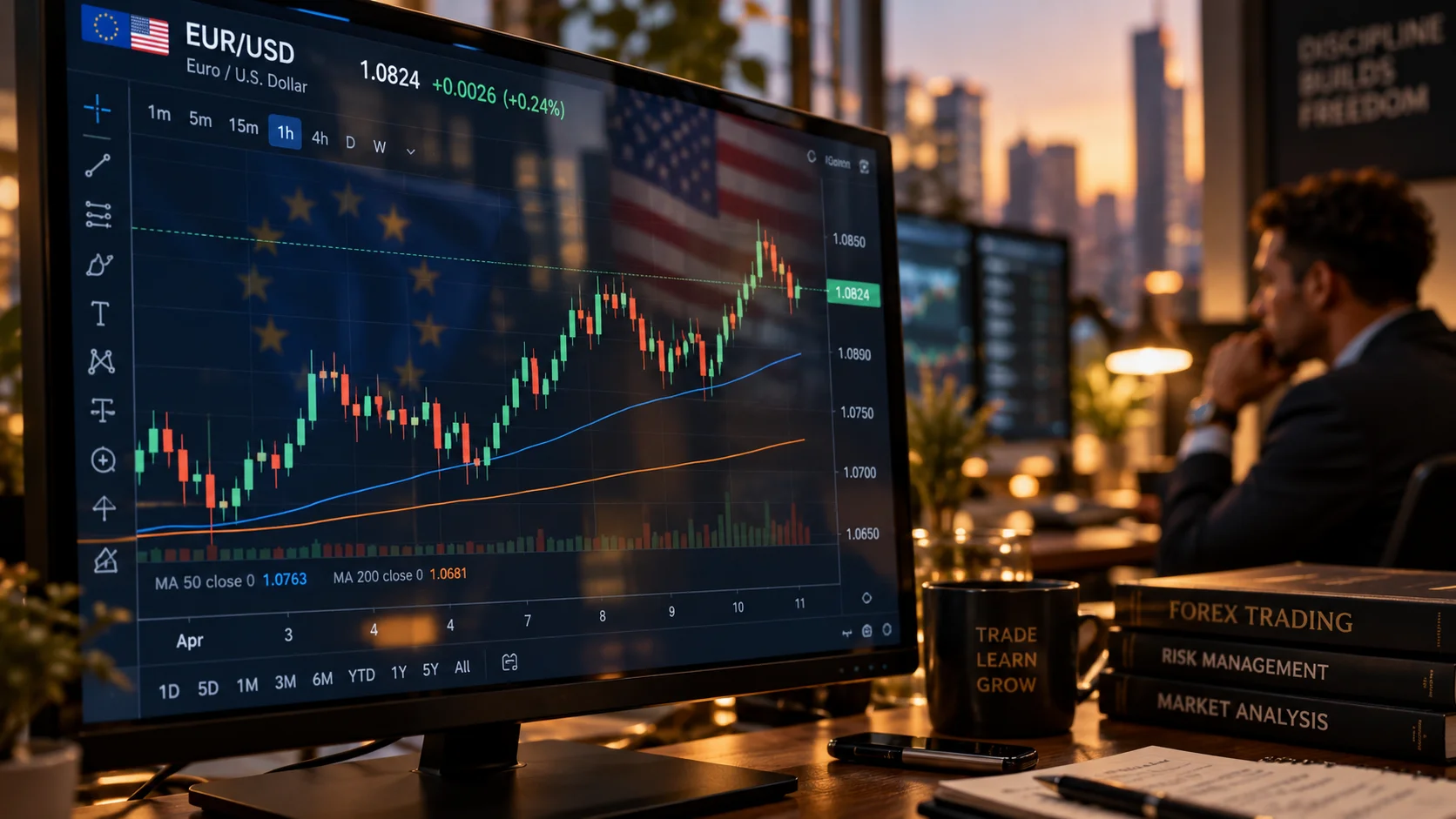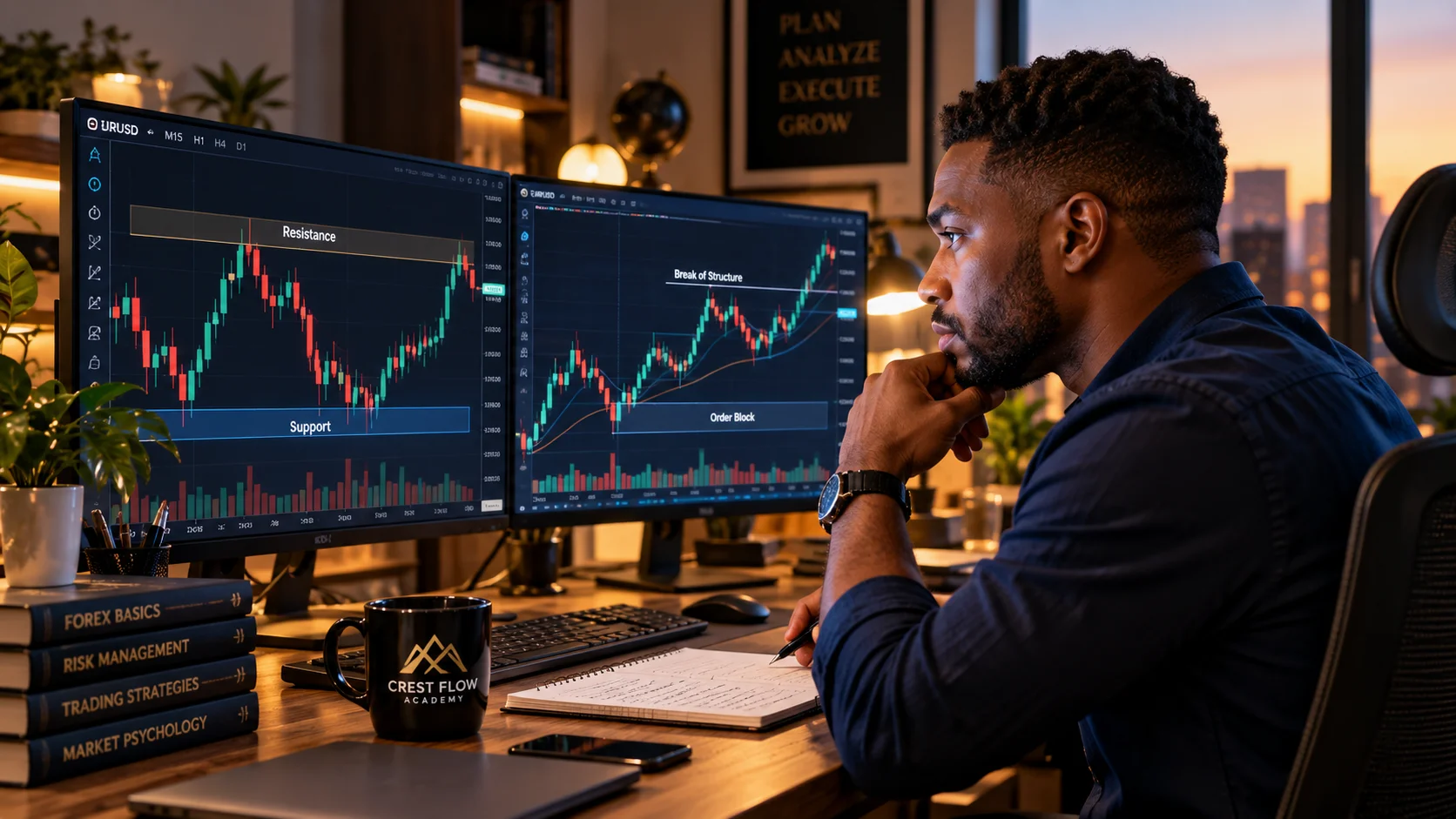
If a friend asked me how to start learning forex, I would not hand them a strategy first. I would hand them an order to learn things in, because jumping between videos, indicators and tips without any of it connecting is the slowest and most expensive way to learn, and most of the money beginners lose early is really the cost of learning things in the wrong order.
What follows is that order. If you want to learn forex trading step by step, I show you which skills come first, how long to spend on each one, and how to practise them without risking your balance before you are ready. It is the path I would follow if I were starting again today.
What the Market Actually Is
Most people see a currency pair like EURUSD as just a picture on a screen, while others treat it the same way they treat gambling. It is neither of those things, because it is a live auction where banks, big companies and funds are all buying and selling at once. The letters in the name are the first thing to make sense of, and What Do the Letters in a Forex Pair Mean? explains in plain words what each part of a pair stands for.
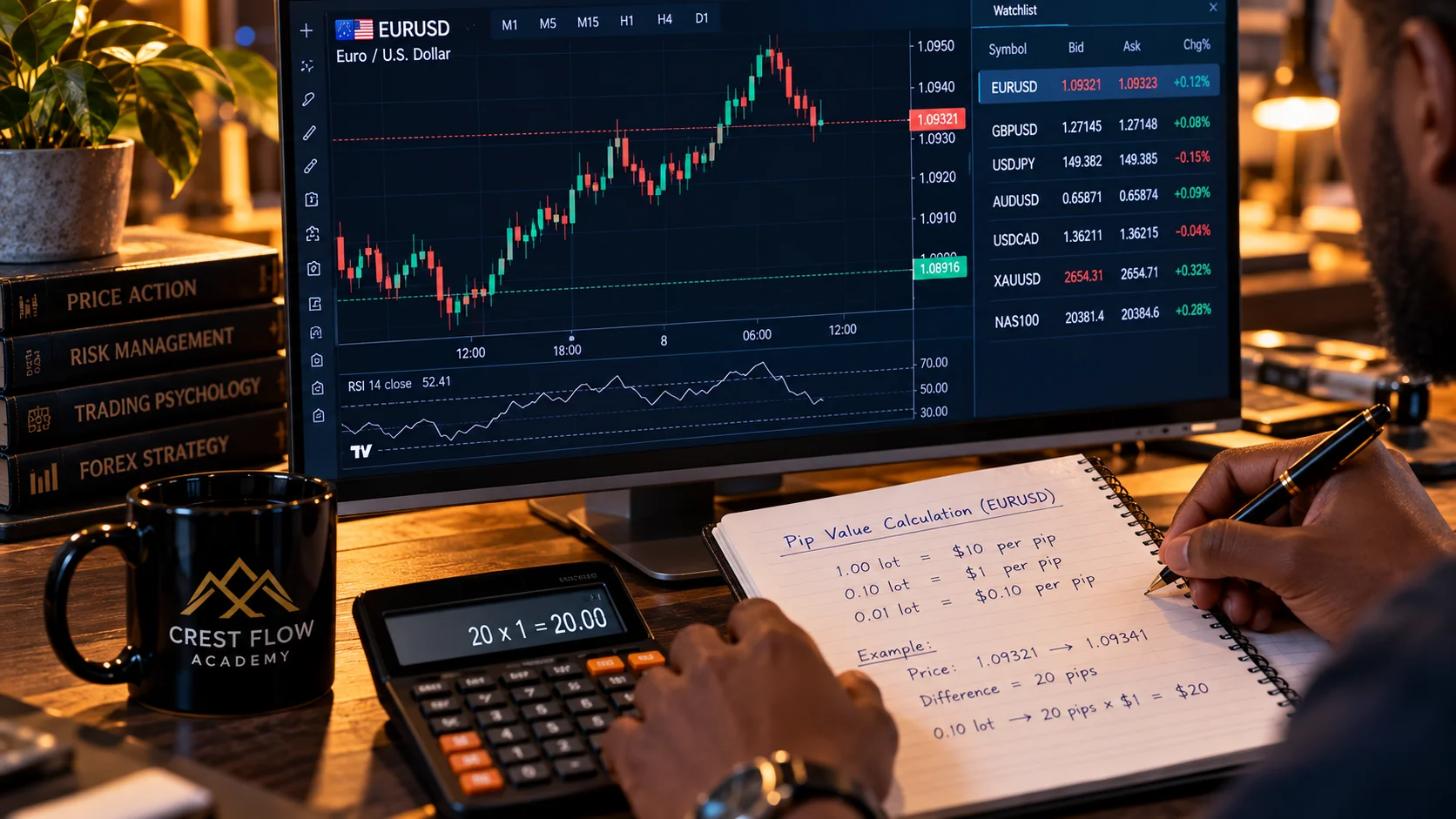
When you buy a pair, you buy the first currency and sell the second at the same time. The price moves because people want one money more than the other at that exact second, and this steady flow of orders creates every pip. A pip is the smallest unit of price change, usually the fourth number after the dot. Once you know what a pip is, the next question is what each one is worth in dollars, and What Is a Pip in Forex and How Do You Calculate It shows you that sum with simple numbers.
If you do not see the market as a battle for orders, you will treat charts like a video game. The market does not care about your drawing tools, because it only cares where the big orders are waiting. Somebody is always on the other side of your trade, and I think it helps a lot to know who that is, which is exactly what What Is the Forex Market and Who Trades It covers.
Step 1: Learn the Rules and Words
Do not draw lines yet, because you need to learn the language first. Think of it like building a house, where you would never start laying bricks before the foundations are dug. One of the first words you need is "lot size", which is simply the number of units you buy. If you buy 10,000 units, even a small move makes a big difference to your pocket. When the words start piling up and none of them stick, What Do Forex Terms Mean for Beginners? is a good place to keep open beside your charts.
You also need to understand "leverage". Imagine you have 100 dollars and your broker lets you control 10,000 dollars worth of currency with it. That borrowed power is leverage, and while it can make you money, it can also wipe you out in seconds. It took me a while to really feel how dangerous that is, and What Is Leverage in Forex Trading and How Does It Work? has worked examples that make it real.
Before you put real money in, learn how these basic pieces of trading fit together. I once opened a position that was far too big because I did not understand how much money I needed in my account to keep the trade open. It was a painful lesson, although it also taught me more than any video ever did. If your starting balance is small, read How to Start Forex Trading With $100: A Beginner Guide before you fund anything, because it shows how to begin with very little. If you are ready to put these lessons into practice, How to Start Forex Trading With $100 Step by Step shows you how to begin safely.
Step 2: Read Price, Not Pictures
Indicators are maths formulas that look at what has already happened, so they cannot tell you what happens next. That reminds me of my first year, when I was obsessed with the moving lines on my screen and believed they were special signals. They were not, and I can see now that I was using them to hide from what the chart itself was telling me.
You need to read the candles instead, because a single candle shows the fight between buyers and sellers. Look at a 4 hour chart on GBPUSD. If a candle ends near its low with a long tail on top, the sellers won that fight and pushed the price down, and that is real information you can use. Reading candles also gets easier once you are clear on what the pair itself means, so if GBPUSD still feels like a strange code to you, How Do Currency Pairs Work in Forex Trading? will make the whole thing clear.
Deleting every single indicator from my chart felt like walking without a crutch, and I was scared when I did it. Looking back, though, that was the day I actually started to see the market.
Step 3: Build a Simple Edge
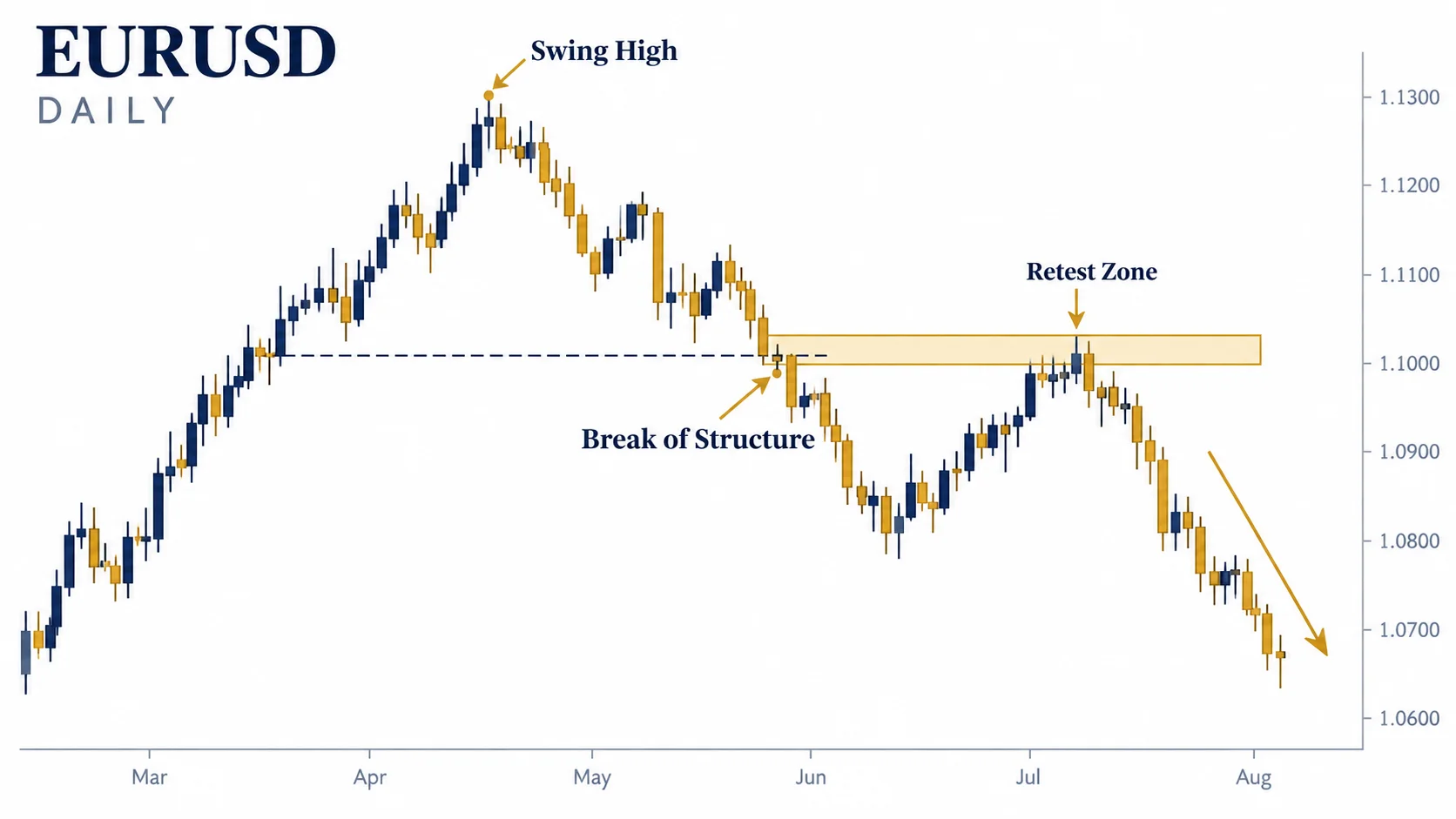
An edge is just a setup that shows up often and, over many trades, makes you more than you lose. Most beginners fail because they change their plan every three days and never give one idea a fair chance.
You must test one idea many times. Take a simple trend setup and test it on 100 trades, because if you judge it by the last three trades, you are just gambling. A builder checks a wall with a plumb line from top to bottom, not by looking at one brick, and a setup needs the same kind of patient check before you trust it.
Step 4: Learn Risk Before Strategy
I could give you a great entry method right now, and you would still lose money if your maths is bad. Risk management is how you stay alive when you are wrong, and you will be wrong often. Australia's financial regulator puts it plainly: exchange rates move a lot and are hard to predict, and leverage turns small price moves into big gains or losses (ASIC's Moneysmart). Measuring your risk starts with counting pips properly, so go back to What Is a Pip in Forex and How Do You Calculate It if those sums still feel heavy.
The best traders lose almost half the time, and the difference is that they lose a tiny amount when they are wrong. If you risk 1 percent of your account, you can lose 10 times in a row and still have most of your money.
Here is an example. You have 1,000 dollars and you risk 10 dollars (1%) with a stop loss 20 pips away, so if the price hits your stop, you lose 10 dollars and that is it. You survive for another day. Most people do not do this, because they move their stops when they are scared to be wrong. I did that for years, and it cost me two accounts. One more thing before your first trade is to be sure you know exactly what the symbols on your screen stand for, and What Do the Letters in a Forex Pair Mean? is a short read that settles it.
Step 5: Test on a Demo Account
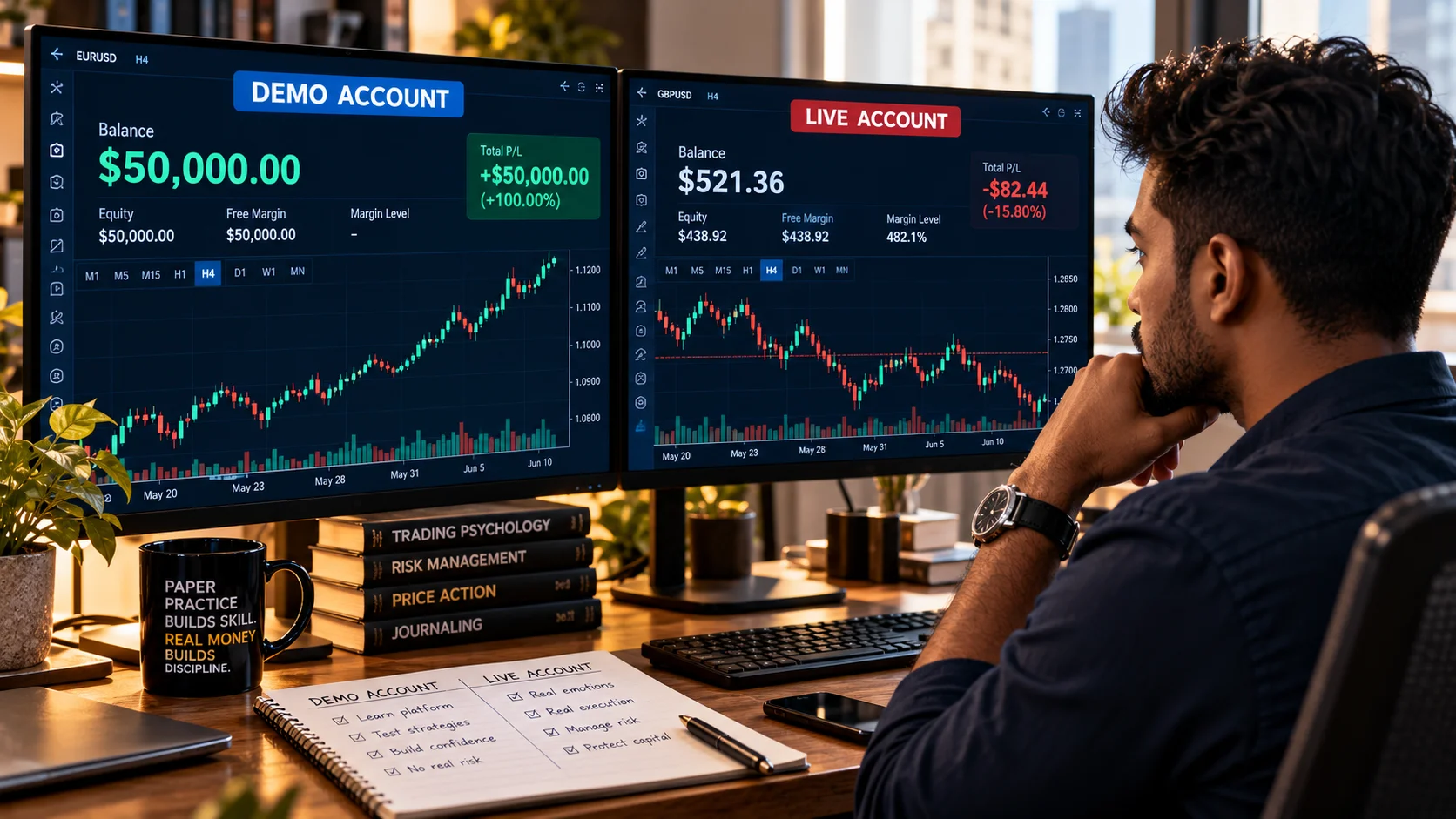
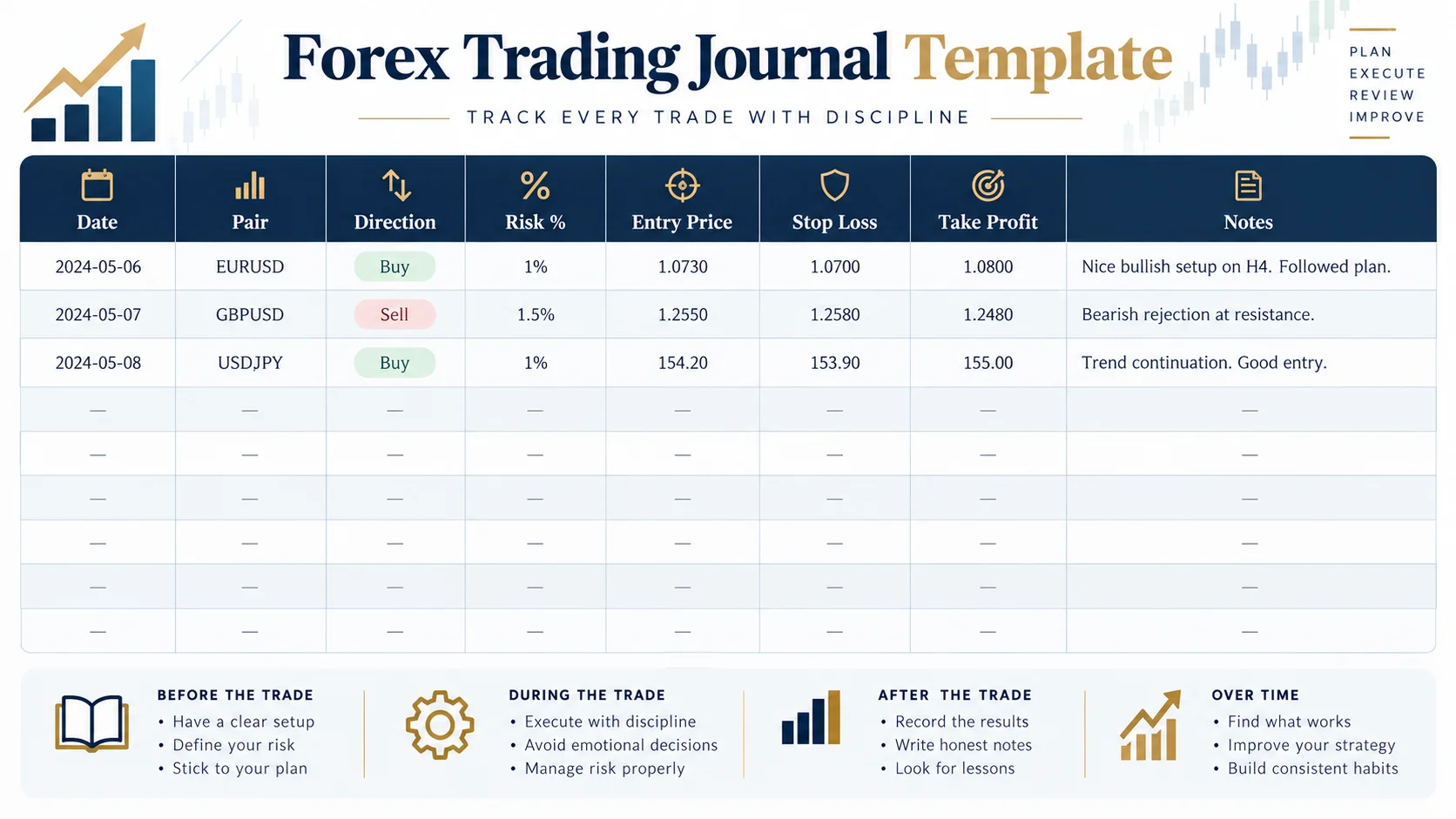
Use a demo account to test your process, and do not worry about "winning" while you are there. The real point is to prove that you can follow your own rules, because if you cannot follow a plan with fake money, you will almost certainly fail with real money. The broker you pick matters too, since that is who holds your hard-earned US dollars, and How to Choose a Forex Broker for Beginners goes through what I look at before I trust one.
Step 6: Go Live With Tiny Sizes
Real money feels different, and even a small loss can feel like a disaster. To get past this, use the smallest size your broker allows. Your goal is not to get rich, but to stay calm when the numbers turn red. Working out those tiny positions is easier than it sounds, and What Is a Lot Size in Forex Trading? shows you how to pick a size that keeps your risk small.
If you can trade with tiny money and not feel your heart racing, you are ahead of most people. Emotional control is like a muscle, and you build it by doing the same thing over and over.
Where To Read Next
If you want to keep learning, these are the ones I would read next.
- How to Start Forex Trading With $100 Step by Step
- What Is Leverage in Forex Trading and How Does It Work?
- Is Forex Demo Trading Worth It for Beginner Traders?
- What Is Margin Call in Forex and How to Avoid It
- The Best Forex Brokers in 2026 and Which One to Use for What
- How to Draw Market Structure on Forex Charts Step by Step
Frequently Asked Questions
How to learn forex trading step by step without getting overwhelmed?
Focus on one thing for a few weeks at a time. Start with the words, then price, then risk, and do not try to learn everything at once.
Is forex trading actually profitable?
It can be, but most people lose because they do not manage their risk. Treat it as a business, not a way to get rich quick.
How much money do I need to start?
You can start with 100 dollars if your broker allows small trades. Starting small is the best way to protect yourself while you learn.
What is a pip?
It is the smallest move in a price. If EURUSD goes from 1.0850 to 1.0851, that is one pip.
Should I use indicators?
Keep it simple, because indicators lag behind the price. Learning to read the price itself is much better.
How long does it take to become profitable?
It often takes one to three years. Anyone promising you fast results is not telling you the truth.
If this helped you, send it to a friend who is learning to trade.