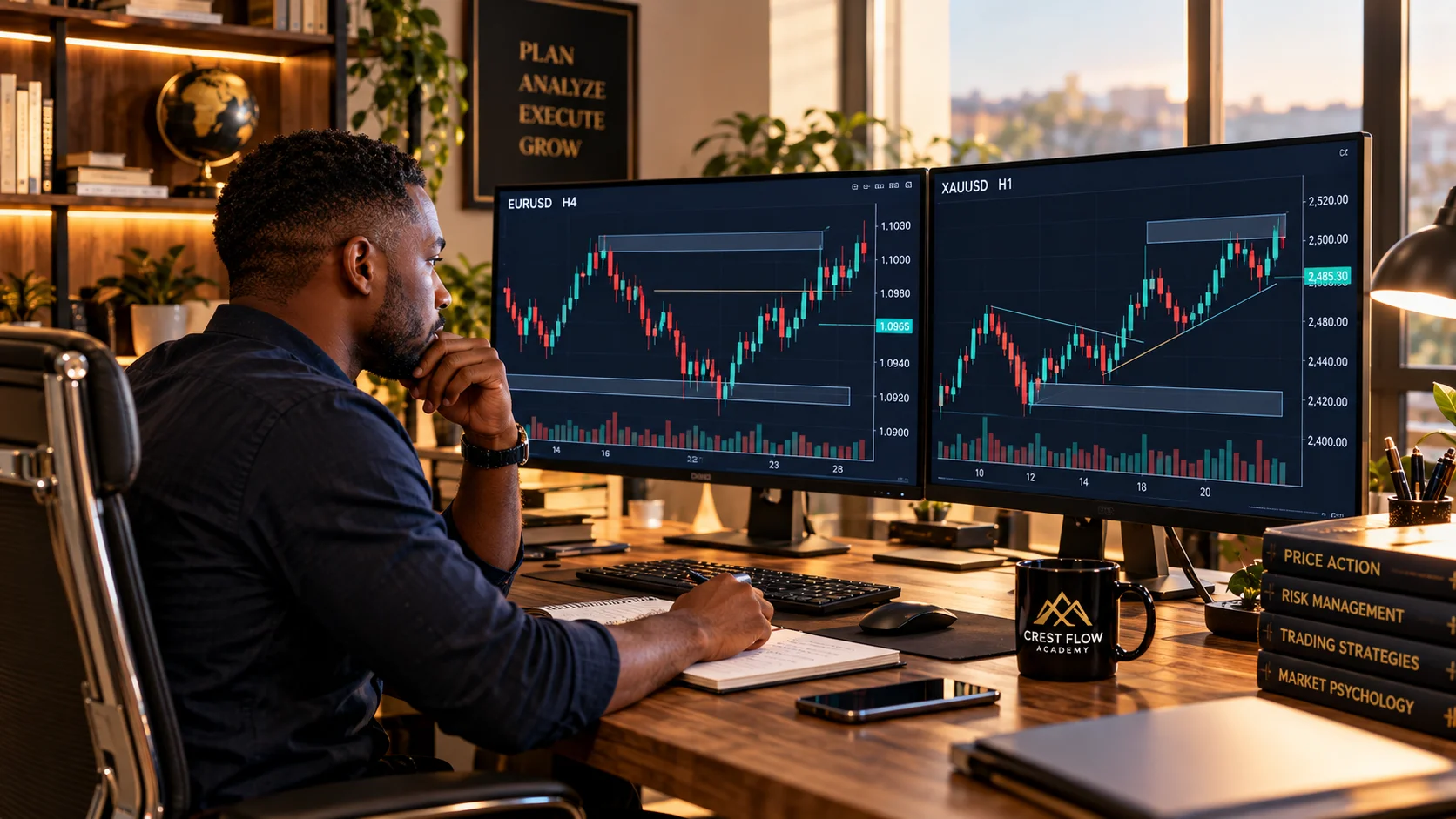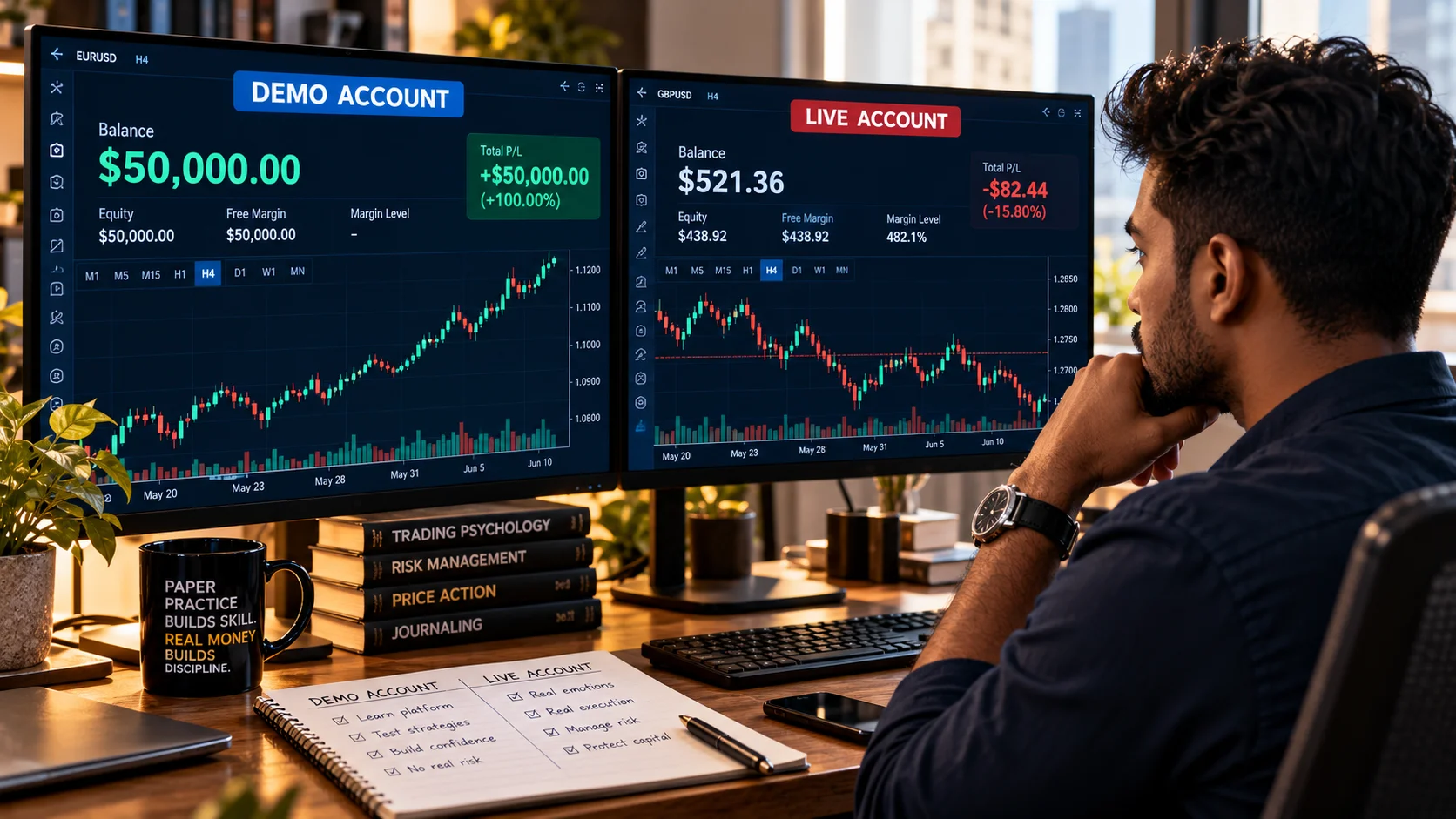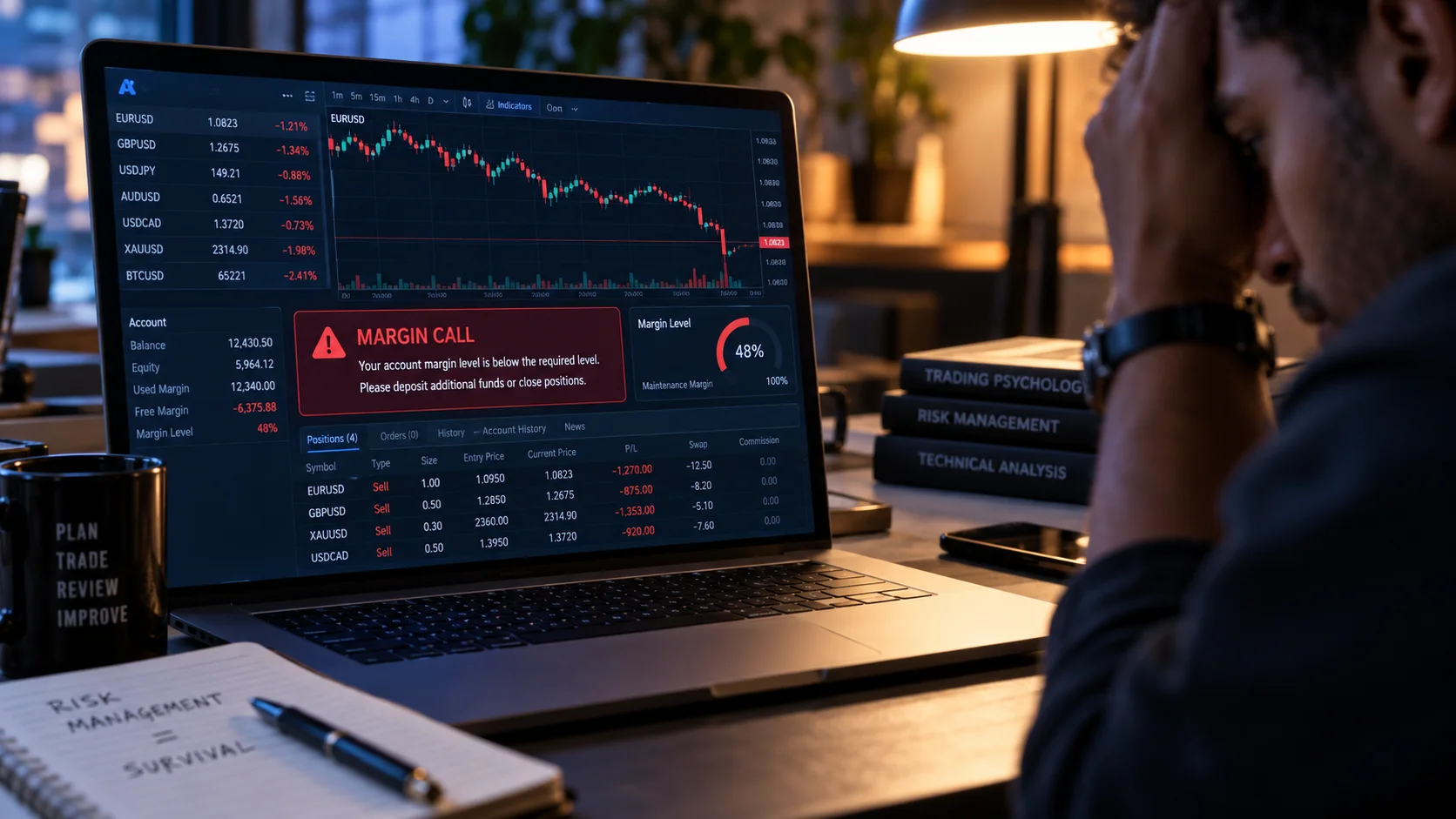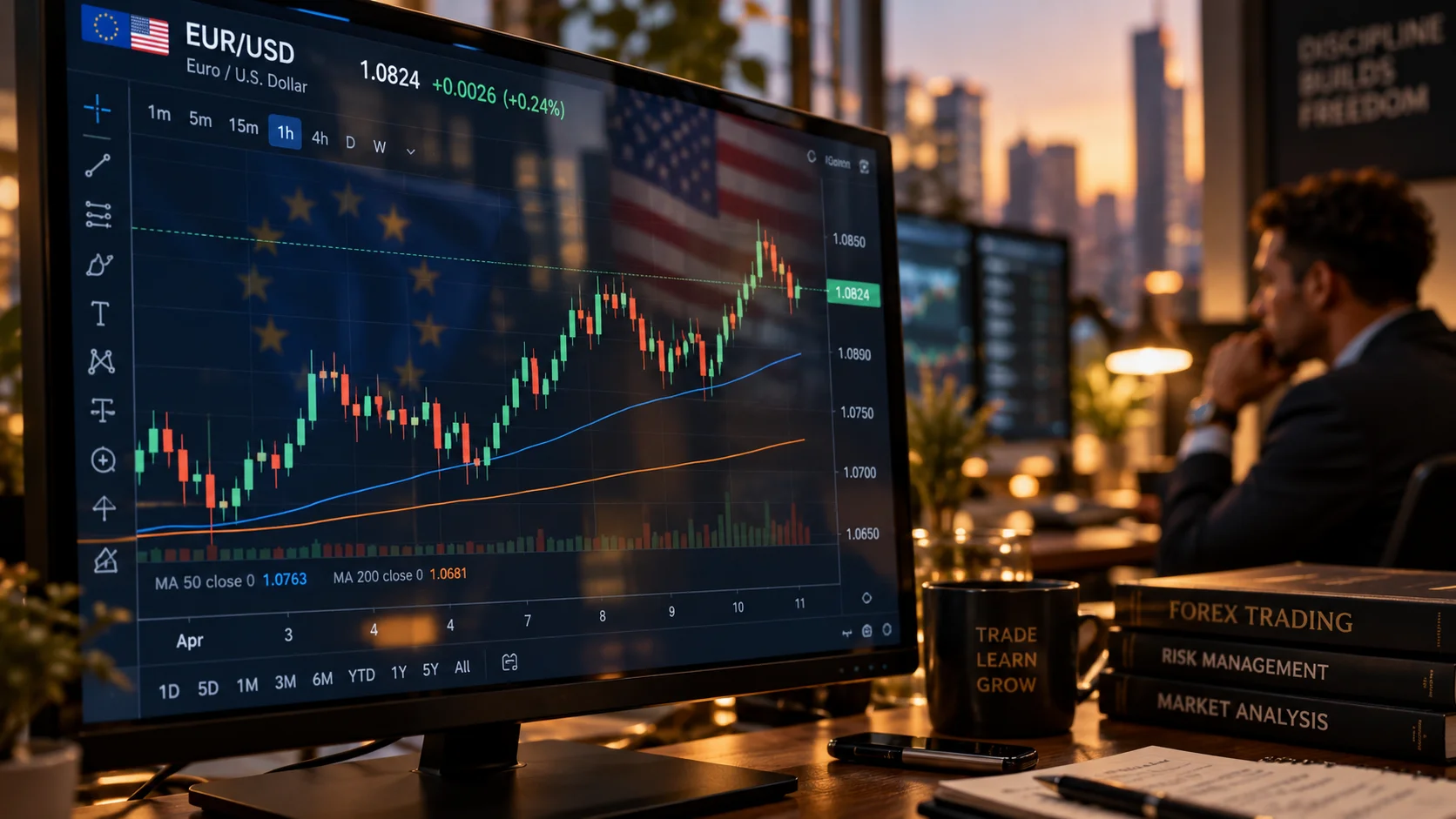
If EUR/USD moves from 1.0850 to 1.0870, that is a move of 20 pips, and on a 0.10 lot it is worth about $20 to you, while on a 1.00 lot it is worth about $200. Knowing that before you click buy is the difference between choosing your risk and finding out what it was afterwards. So here I explain what a pip in forex is, how to calculate pip value for different pairs and lot sizes, and why I work it out before every trade I take.
What Is a Pip and Why Does It Matter for Your Trading Account?
The market does not measure its movement in dollars or pounds, it uses pips. A pip is the smallest standard unit of price change. Imagine a runner on a track, where the pip is the smallest step that runner can take.
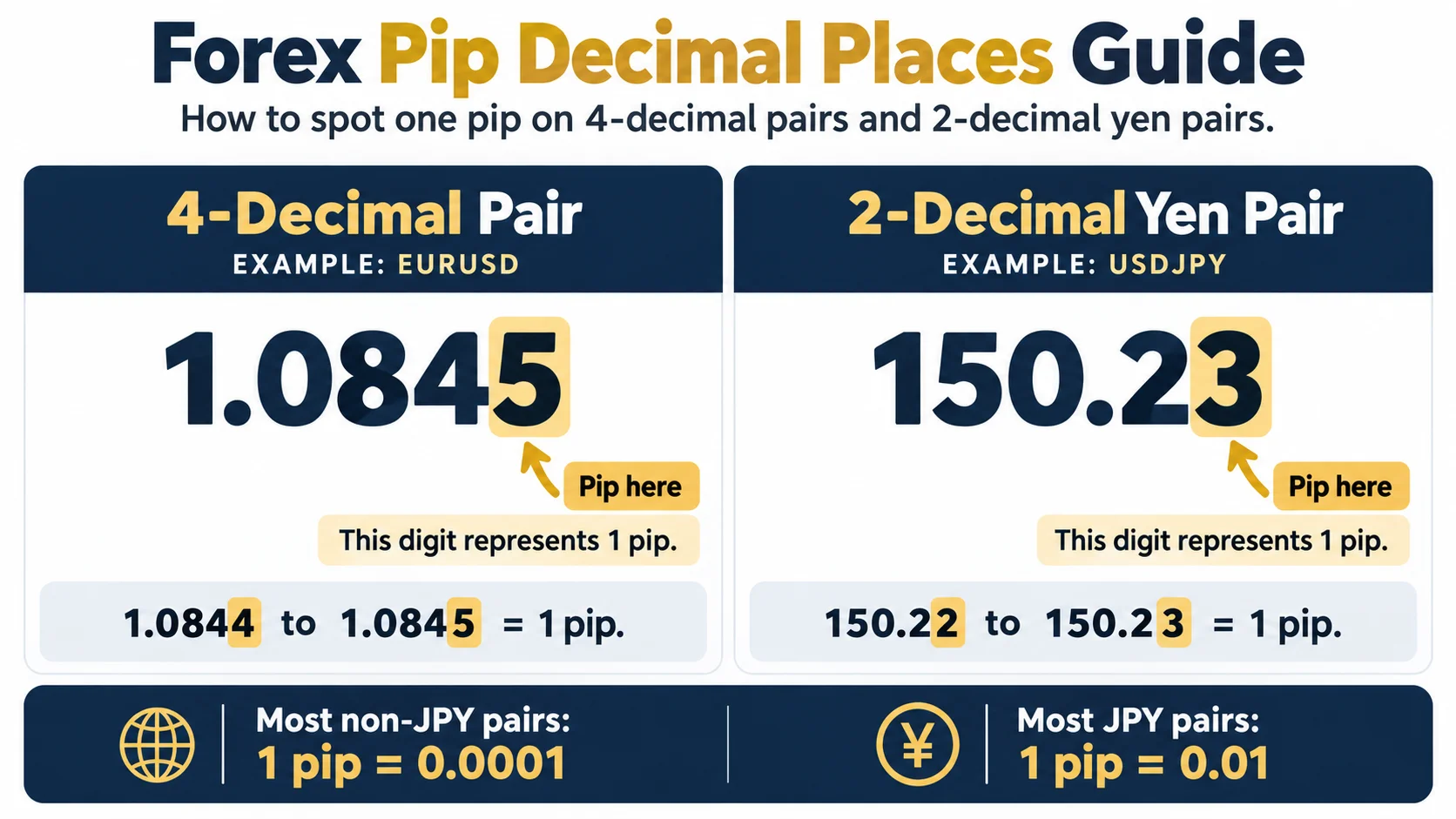
If EURUSD moves from 1.0850 to 1.0851, that tiny shift at the end is one pip. Most pairs use four decimal places, and the fourth digit is your pip. Some brokers show a fifth digit, which is a tiny part of a pip, and I suggest you ignore that fifth digit for now and focus on the fourth one, because that is where your money moves.
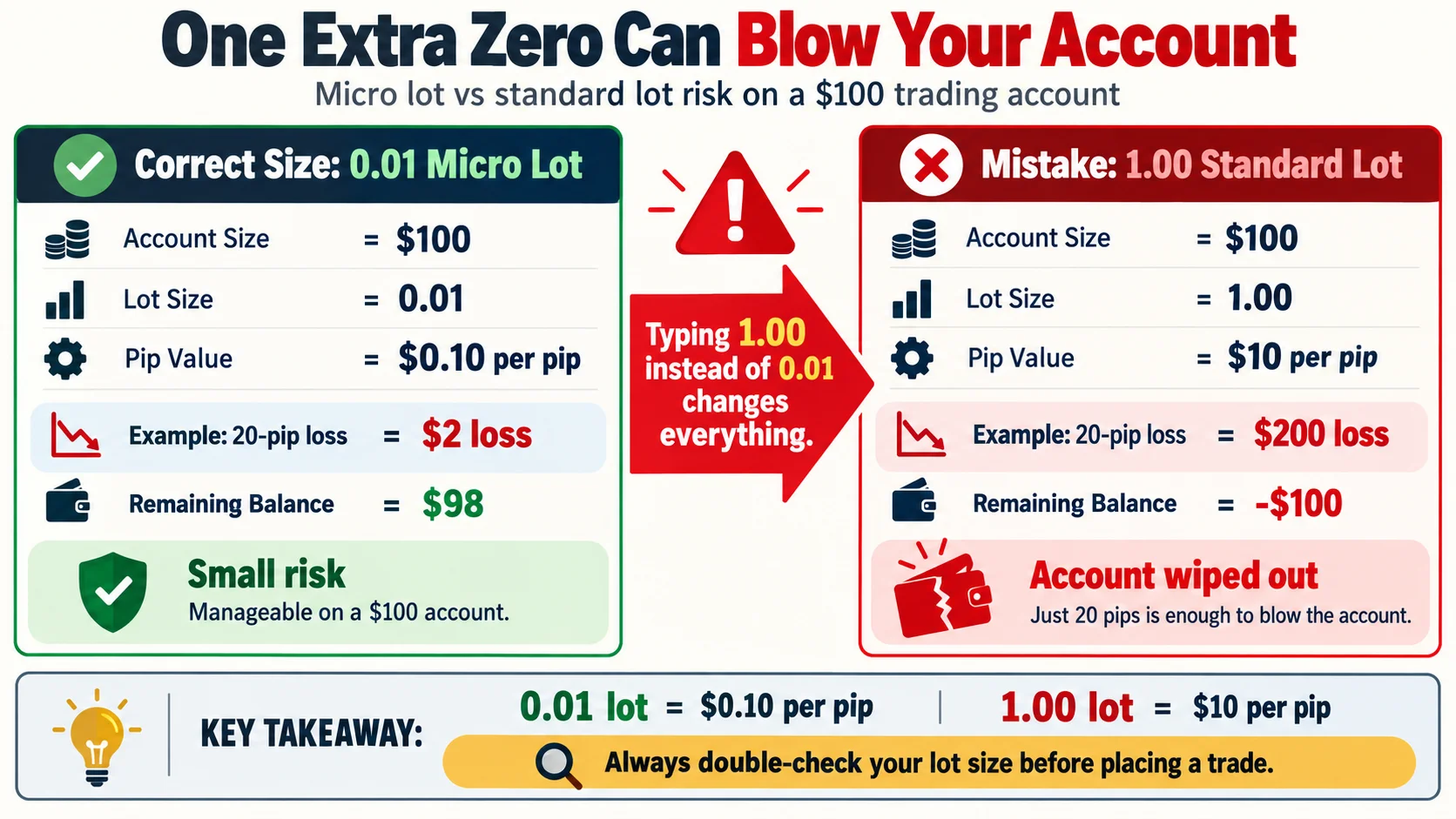
When you have a small account, like $100, every pip carries real weight, so you must know your trading rules before you start. If you get the sum wrong, a small wiggle in the market can wipe out your account. I have seen traders lose ten percent of their account in minutes because they did not know how much one pip cost them. A small account needs its own habits, and How to Start Forex Trading With $100: A Beginner Guide is where I explain the ones I would build first. If you want to master these basics properly, my guide How to Start Forex Trading With $100 Step by Step shows you how to build your account safely.
Large banks move the market, and your screen shows their moves as pips. You are surfing a wave made by giants, and if you do not know the size of the water, you will sink. Pips are one small piece of a bigger plan, and when you want to see all the pieces in order, How to Learn Forex Trading Step by Step for Beginners lays them out so you stop gambling and start trading with a plan.
How Currency Prices and Decimal Places Actually Work
To find the value of a pip, you first look at how the pair is written. Take EURUSD, where the euro is the base currency and the dollar is the quote currency, so the price tells you how many dollars you need to buy one euro. The letters themselves confuse a lot of new traders, and What Do the Letters in a Forex Pair Mean? goes through what each one stands for.
Most pairs work this way, but the Japanese yen is the big exception. Yen pairs are quoted to two decimal places, or three if your broker shows the extra pipette digit. If USDJPY is 155.50, the second decimal is the pip, so a move to 155.51 is one pip. IG's trading glossary gives the same rule, saying a pip is the fourth decimal place for most pairs and the second decimal place for yen pairs. Whenever I see a yen pair, I always double check the decimal place so I do not misjudge the size of a move.
The Simple Formula for Calculating Pip Value
A lot of blogs love to show you hard maths, but I want to keep this easy so everyone goes home with something useful. Pip value depends on three things, which are the pair, your lot size and your account currency.
The standard formula is: (One Pip / Exchange Rate) x Trade Size.
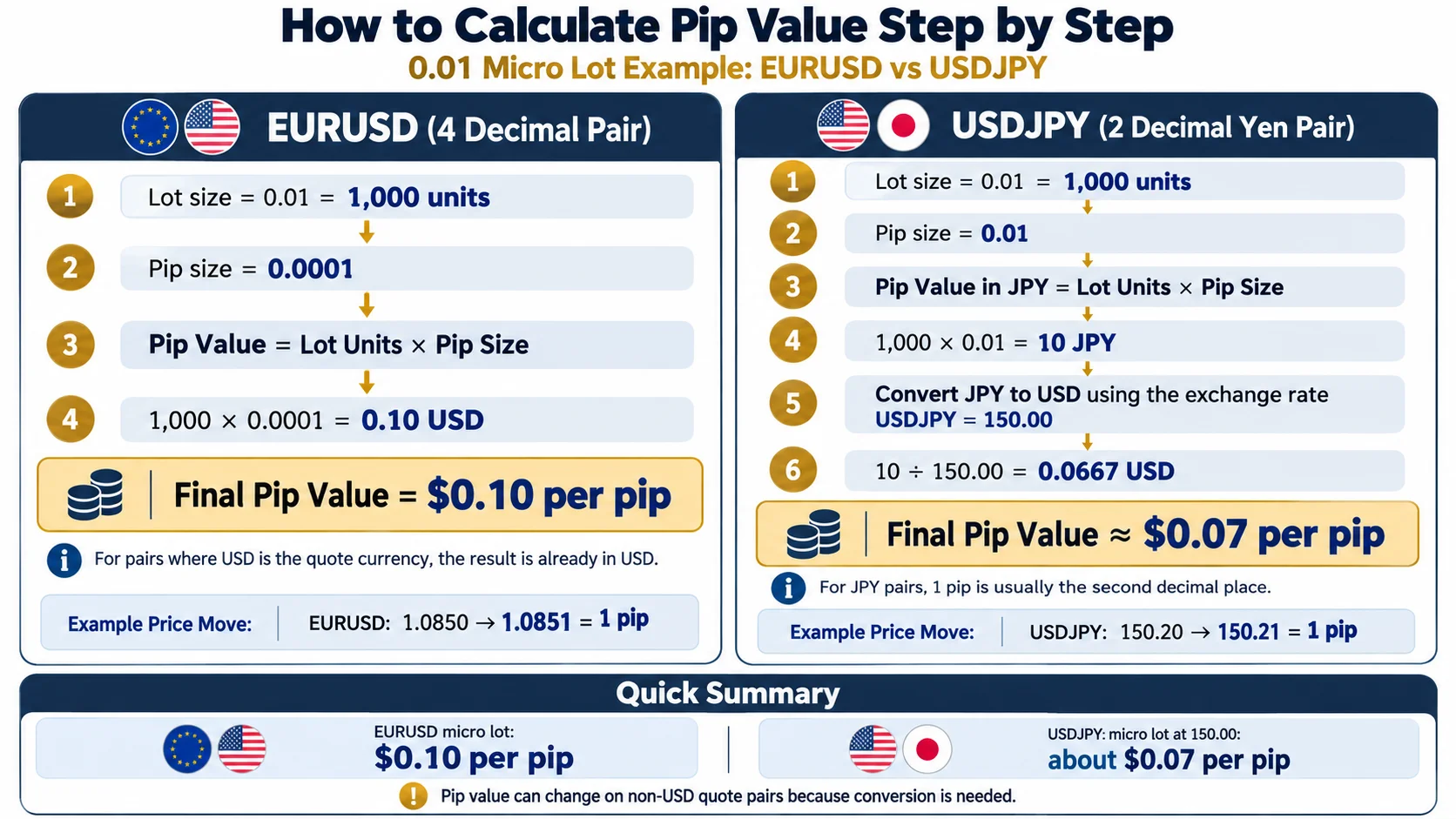
If your account is in USD and you trade a standard pair where the dollar comes second, the maths is simple. A standard lot is 100,000 units, and one pip on EURUSD is always worth $10. If you trade a mini lot (10,000 units), one pip is worth $1, and if you trade a micro lot (1,000 units), one pip is worth 10 cents. Choosing which of those sizes to trade is a separate skill, where you work backwards from your stop loss, and I cover it in What Is a Lot Size in Forex Trading?
On my first live trade, I bought a mini lot while thinking I was trading a micro lot. Every tick moved my balance by a dollar instead of ten cents, and my heart was racing and my hands were shaking because I believed that if this went wrong, I was finished. The fast moving numbers panicked me so much that I closed the trade early just to make the screen stop changing. I did make money, but it was an accidental profit, because I had not double checked my lot size before I clicked.
If you trade a pair where the USD is not the quote currency, like USDCAD, the maths changes, because the pip value shifts as the exchange rate moves. You must divide by the rate to get the real value in your home currency. This business is full of strange words like these, and keeping What Do Forex Terms Mean for Beginners? open beside you will make your desk feel a lot less foreign.
Worked Examples Across Different Currency Pairs
Let us walk through three common examples using the sizes most small traders use.
EURUSD: You trade a micro lot (0.01). Because the dollar comes second, one pip is worth 10 cents, so a 50 pip gain gives you $5.
USDJPY: You trade a micro lot. Because of the way the yen is priced, you divide by the current rate, and one pip is usually worth about 6 or 7 cents.
GBPUSD: You trade a mini lot (0.10). One pip is worth $1, so if you catch a 40 pip move, you make $40.
Never assume every pair pays the same amount, and always check the number on your platform before you trade.
Why Your Account Currency Changes Everything
Most guides assume you trade in US dollars. If your account is in pounds or euros, your broker does a live conversion in the background, which means the value of a pip can change slightly every day as currencies move against each other.
So do not guess. Most trading apps have a tool in the order window that shows the exact cash value of a pip for your account, and using it takes the guesswork out of the trade. It is a bit like a farmer checking the soil before planting instead of trusting how the field looks from the road. Before you put real money behind any of this, have a look at Is Forex Demo Trading Worth It for Beginner Traders? because a demo lets you practise the sums without any fear.
Pips, Pipettes and Points: Not the Same Thing
Three words get mixed up all the time, and the mix-up costs money:
- Pip: the standard unit for currency pairs. It is the fourth decimal on most pairs and the second on yen pairs.
- Pipette: one tenth of a pip, the extra fifth decimal (third on yen pairs) that many brokers show. Ten pipettes make one pip.
- Point: the smallest price step on your platform. On a five-digit broker, one point is one pipette, so a "10 point" stop is only 1 pip. On gold and indices, "point" means something different again, and each broker sets it out in the contract details.
When a platform or an indicator asks for a value in points, check which one it means. Typing 10 points when you meant 10 pips puts your stop ten times too close to your entry.
Common Pip Calculation Mistakes That Drain Small Accounts
Beginners usually make three big mistakes. The first is mixing up pips with points, because gold and indices like the US30 are measured differently, and if you treat a gold point like a currency pip, you can lose your money very quickly.
The second is forgetting that the spread is measured in pips too. If EURUSD has a 1 pip spread, every trade starts 1 pip down, so on a 10 pip target a tenth of your profit is gone before the trade even begins. Count the spread as part of your stop and your target.
The third is thinking a 30 pip stop is the same risk on every pair, and it is not. The value of a pip depends on the quote currency and your lot size, so the same 30 pips can cost a different amount on different pairs, which is why I always work out my risk in cash and not in pips. While risk is on your mind, it is worth reading Why Do Candlestick Patterns Fail Without Context in Forex? too, since a bad entry can hurt you just as much as a bad sum.
The Reality Check on Pip Maths
Knowing this maths will not make you rich. It is just plumbing, and its job is to stop your account from flooding. Most people read something like this, nod, and then go right back to picking lot sizes based on how much they want to make, and that is how they fail. Pips connect straight to the money you borrow from your broker, so the next thing I would learn is What Is Leverage in Forex Trading and How Does It Work?
Before you trade, write down your stop loss in pips and multiply it by the pip value, then make sure the total cash risk fits your plan. If the maths says the trade is too big, do not take it.
Where To Read Next
Pip maths is only the start, so keep learning with these:
- How to Start Forex Trading With $100 Step by Step
- How to Learn Forex Trading Step by Step for Beginners
- What Is Leverage in Forex Trading and How Does It Work?
- Is Forex Demo Trading Worth It for Beginner Traders?
- The Best Forex Brokers in 2026 and Which One to Use for What
- Why Do Candlestick Patterns Fail Without Context in Forex?
Frequently Asked Questions
How do I calculate pip value in forex?
Divide one pip by the exchange rate and multiply by your trade size in units. For pairs that end in USD on a USD account, it is simply $10 per standard lot, $1 per mini lot and 10 cents per micro lot.
How do I calculate pip value for pairs that do not end in USD?
Work out the pip value in the second currency of the pair, then change it into your account currency at the current rate. Most platforms show this in the order window.
What is the difference between a pip and a pipette in forex trading?
A pip is the fourth decimal place on most pairs, and a pipette is the fifth, which is one tenth of a pip. On yen pairs they are the second and third decimals.
What is the difference between a pip and a point?
A point is the smallest price step on your platform. On a five-digit broker, one point equals one pipette, so 10 points is just 1 pip.
How much is one pip worth on a standard lot of EURUSD?
It is worth ten dollars on a standard lot, while on a mini lot it is $1, and on a micro lot it is 10 cents.
If this helped you, send it to a friend who is learning to trade.