With $100 in an account and leverage of 1:100, a broker will let you open a position worth $10,000, which means a 1% move in the wrong direction costs you the whole $100. That one sum explains both why leverage is so attractive and why it ends so many trading accounts so quickly.
So what is leverage in forex, really? It is a way of controlling a large position with a small deposit, and when you use it carefully it is simply what makes trading with a small account possible. Below I explain how it works, how it connects to margin and the stop out level, and how I stop it from deciding my results for me. If you are building your skills from the very beginning, How to Learn Forex Trading Step by Step for Beginners gives you the full path in order.
When you trade currencies, you are not buying physical money to keep in a drawer, because what you are really doing is signing a contract with your broker. Currency prices move very slowly, and they often move less than one percent in a whole day, so if you only used your own money you would make pennies. If you have ever wondered who is actually sitting on the other side of your trades, What Is the Forex Market and Who Trades It answers that clearly.
Brokers fix this by lending you money for every trade. You put in 100 dollars and the broker lets you control 10,000 dollars, and the ratio is written as 1:100. It means that for every one dollar you own, the broker lends you 99 more, so your 100 dollars now has the power of 10,000 dollars.
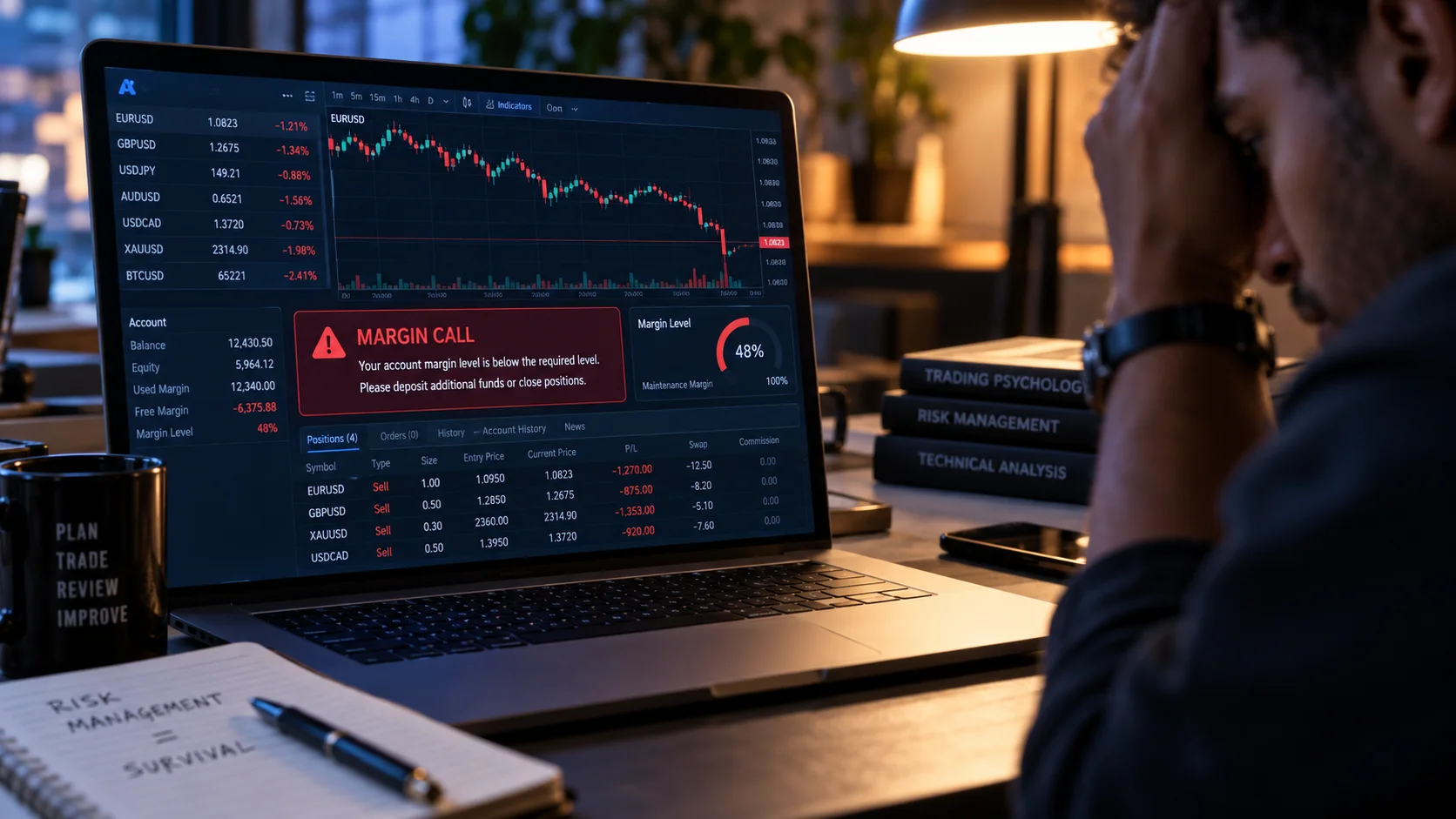
Here is the truth: the broker is not being kind. They keep your 100 dollars as a deposit, and in the industry we call this margin. If the market moves against you, the broker takes the loss from your money, not from theirs. When your losses start eating into your cash, the broker first sends a margin call, which is a warning to add more money. If the losses keep growing, the broker closes your trades for you, which is called a stop out, and that is why accounts can disappear in seconds.
The Simple Maths of How Leverage Makes Both Wins and Losses Bigger
Let us use real numbers. Imagine you trade the EURUSD pair with 500 dollars in your account, and your broker gives you a 1:100 ratio, so you open a position worth 50,000 dollars. If you look at a screen full of currency codes and wonder what you are actually buying, How Do Currency Pairs Work in Forex Trading? clears that up.
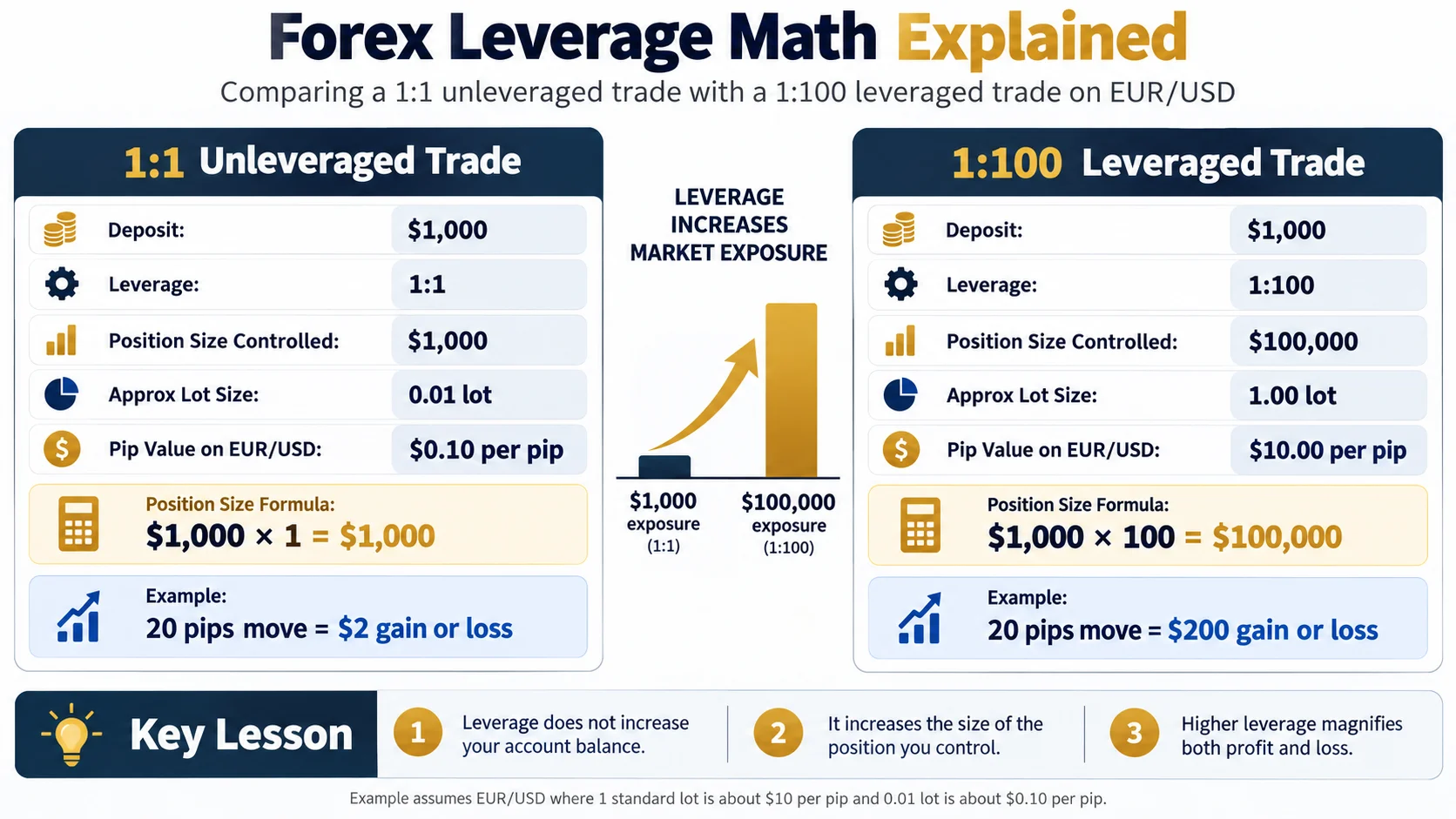
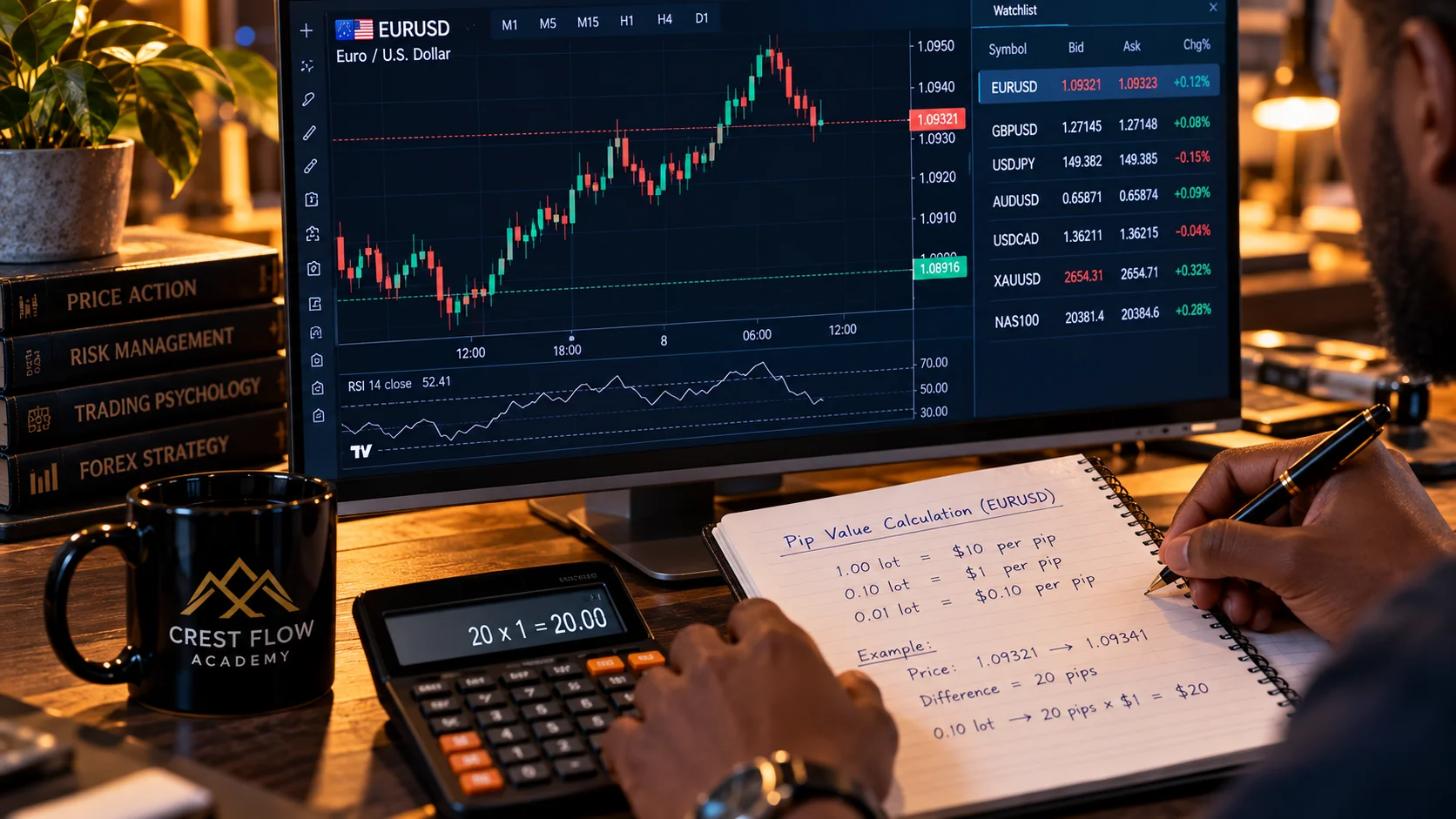
Because you control 50,000 units, every tiny move is worth 5 dollars. A pip is the smallest normal price change, like a move from 1.0850 to 1.0851. If the price moves 20 pips in your favour, you make 100 dollars, and that is a 20 percent gain in one day. When the words pip, lot and spread still feel like a foreign language, What Do Forex Terms Mean for Beginners? explains them one by one in simple words.
But think about the other side. If the market moves 20 pips against you, you lose 100 dollars, which means 20 percent of your account is gone in a completely "normal" move. If the market drops 100 pips, your 500 dollars is gone, the broker closes your trade and you have nothing left. Leverage is like a river in the rainy season, because the same fast water that carries your boat further can also flood your whole field. Leverage does not make you a better trader, it only makes the results much bigger, for better or worse. To see exactly how each of those pips turns into real dollars, What Is a Pip in Forex and How Do You Calculate It walks through the sums with you.
What Margin Actually Means for Your Account
Many people mix up leverage and margin. Think of leverage as a magnifying glass, and margin as the cash deposit you leave at the desk so you can borrow the glass. It is your own money, and the broker locks it away while the trade is open. Before you start using this borrowed power, you must understand the basics of How Do Currency Pairs Work in Forex Trading? so you know exactly what you are buying.
If you control 10,000 dollars with 1:100 leverage, your margin is one percent of the trade. That means 100 dollars of your money is locked away and you cannot touch it, and if your account balance drops too low, the broker stops you from opening any new trades. To truly see why these big moves happen, you should look at What Is the Forex Market and Who Trades It to understand the players involved.
The first time I traded the news, I had a small account and thought I was being clever by taking a big position. When the price jumped, my "free margin", the money I had not yet locked up, started disappearing until a red warning flashed on my screen. That was when I realised the broker was not going to wait for me to recover, and that they would simply take my money if I hit the limit. If you want to avoid these painful mistakes, How to Learn Forex Trading Step by Step for Beginners will show you how to build your skills properly.
Why Higher Ratios Do Not Make You a Better Trader
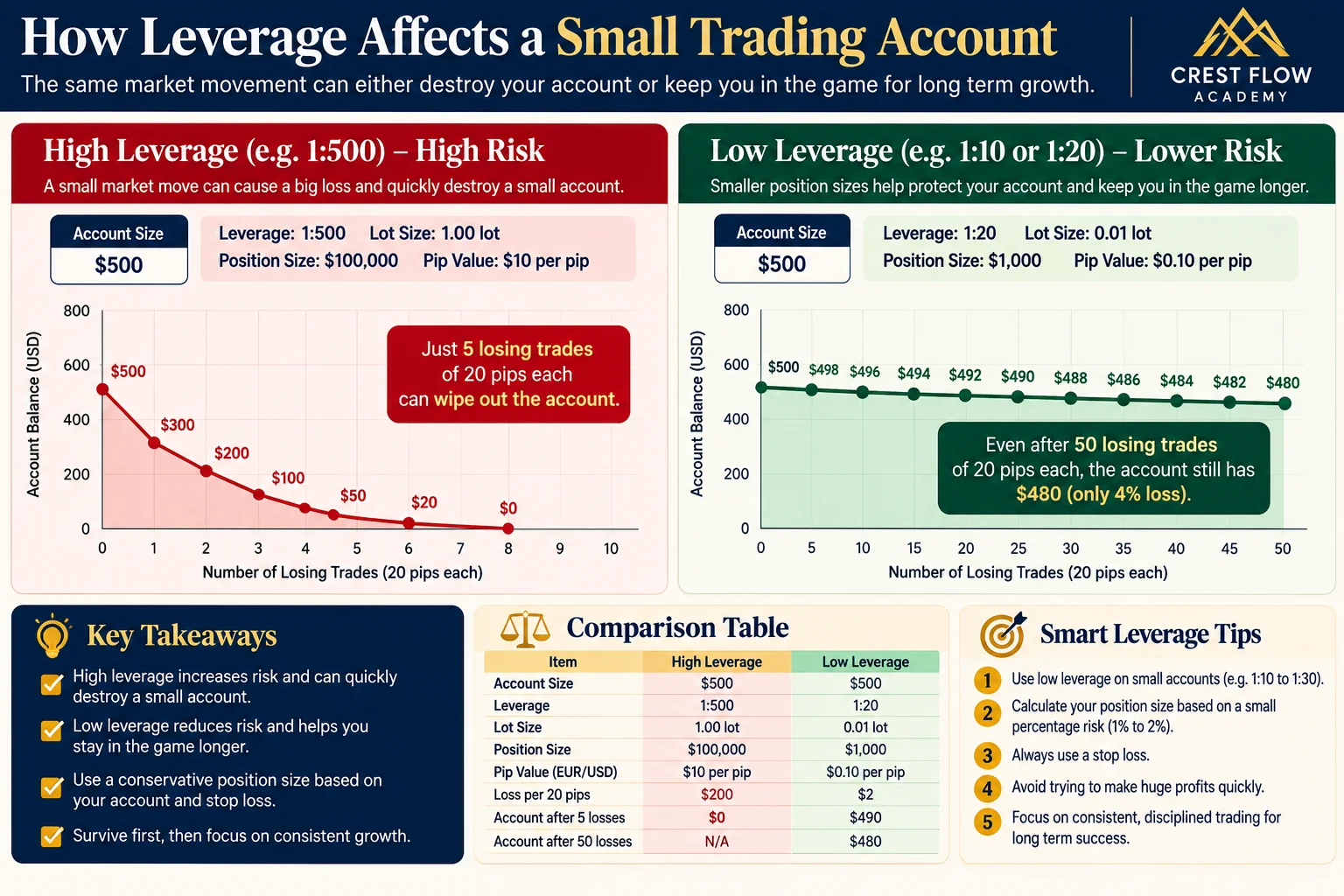
Some traders like high ratios, but I find that using 1:500 leverage is rarely needed. Brokers love to offer huge ratios because they pull in beginners who want to turn small change into a fortune. But you are not forced to use the maximum, and you can use a high ratio account to take tiny, careful trades. Professional traders do not care about the maximum ratio, because what they care about is how much they risk on each trade. Working out the right amount for your own pocket is the whole idea behind How Much Money Do You Need to Start Trading Forex, and it shows you how to start safely.
Greed once pushed me to use the maximum leverage on a small account, because I wanted a big position size to "make it count." A normal market wiggle was all it took, and my account was wiped out in seconds, which left me feeling sick and foolish. That experience taught me that position size should be based on your stop loss, not on how much debt the broker is willing to offer. When you are ready to work out the right size for each trade, What Is a Lot Size in Forex Trading? shows you how I calculate it.
How to Choose the Right Ratio for a Small Account
When you have a small account, the pull towards huge leverage is very strong, because you want to see big numbers. But that is the wrong way to think. When your money is low, you have no room for mistakes, and high leverage just makes sure that one bad trade ends your trading career. A small account can still be run properly, and How to Start Forex Trading With $100: A Beginner Guide is where I show how I would look after one from the first day. If you are feeling a bit lost, my guide How to Start Forex Trading With $100 Step by Step shows you how to build your skills properly.
Lower ratios, like 1:10 or 1:30, are better. In Europe, the markets regulator caps leverage for everyday traders at 30:1 on major currency pairs for exactly this reason (ESMA). Lower ratios force you to trade smaller sizes, and they keep you in the game for longer.
This is how I would put it into practice:
Know how much you will lose in dollars before you click buy.
Never risk more than two percent of your total account on one trade.
Ignore the high ratios your broker offers you when you sign up.
Use proper lot sizes instead of using all your buying power.
When you focus on how much you can afford to lose instead of how much you can win, you start to act like a real trader. I am not your financial adviser, this is only what worked for me. Before any of this touches your real money, you can practise it for free, and Is Forex Demo Trading Worth It for Beginner Traders? explains how to get the most out of a practice account.
Where To Read Next
To keep building your foundation, read these guides:
- How to Start Forex Trading With $100 Step by Step
- How to Learn Forex Trading Step by Step for Beginners
- Is Forex Demo Trading Worth It for Beginner Traders?
- What Is Margin Call in Forex and How to Avoid It
- The Best Forex Brokers in 2026 and Which One to Use for What
- How to Trade Micro Market Structure on Lower Timeframes
Frequently Asked Questions
What is leverage in forex trading and how does it affect my account?
Leverage lets you control a large trade using only a small amount of your own money. It makes both your possible gains and your possible losses bigger.
Why do my trades get closed out automatically when using high leverage?
This is called a stop out. It happens when your account balance can no longer cover the margin the broker needs, so the broker closes your position to stop the losses growing.
What is the best leverage ratio for a small forex account?
Ratios between 1:10 and 1:30 are usually safer for beginners. These lower settings help you avoid taking positions that are too large for the size of your account.
Is leverage a loan that I have to pay back with interest?
No, you do not pay interest on the leverage itself. However, holding trades overnight may cost you a swap fee, which is based on the difference in interest rates between the two currencies, as IG's glossary explains.
How does margin differ from leverage in a live forex trade?
Leverage is the multiplier that increases your buying power. Margin is the part of your own money that the broker holds as a deposit while your trade is open.
If this helped you, send it to a friend who is learning to trade.