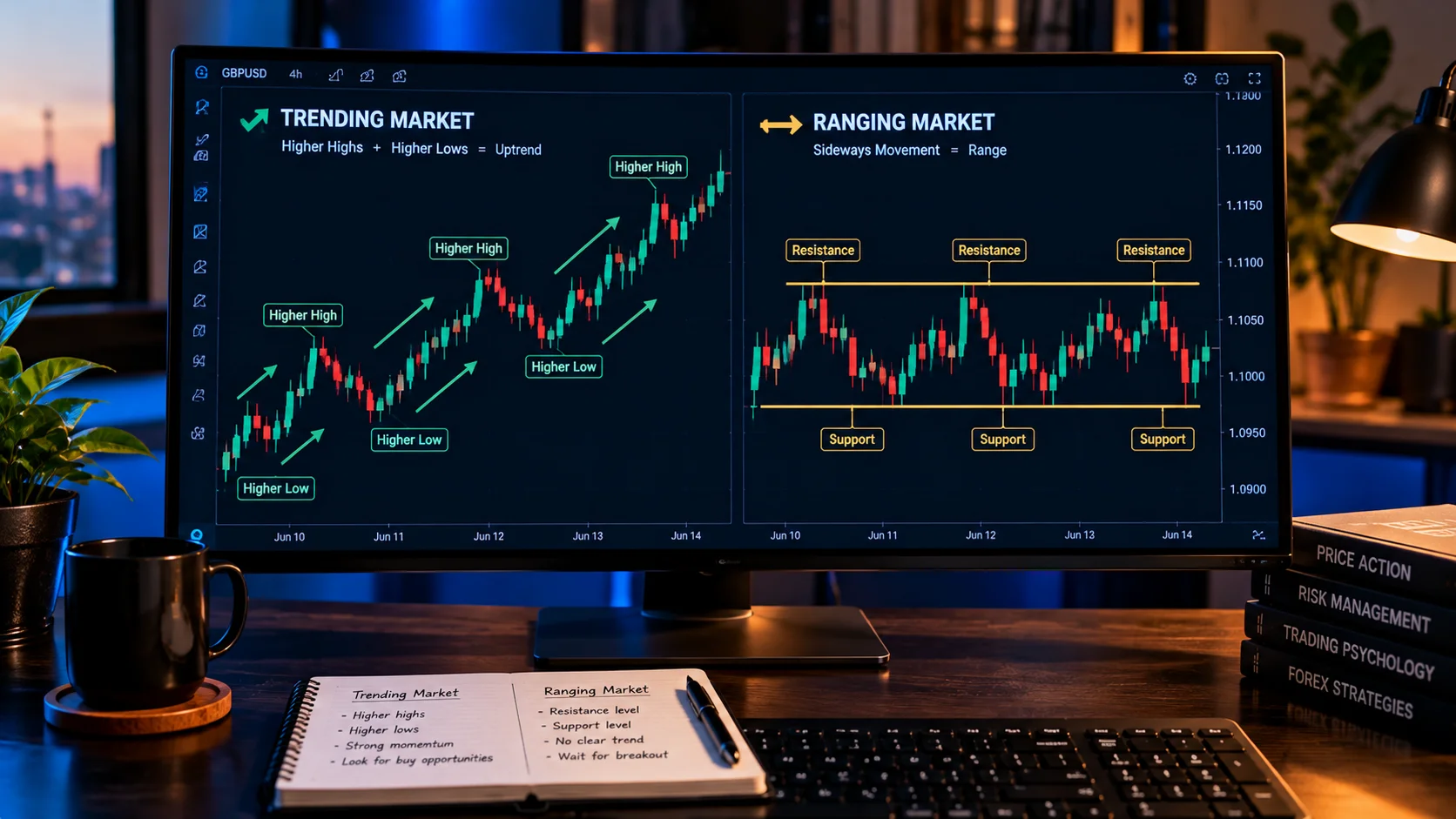
You have probably watched a video full of words like order block, fair value gap and liquidity grab, and come away feeling like everyone else speaks a language you never learned. This lesson is about how to use smart money concepts as a normal trader with a normal account, in plain words, without the noise that usually comes with them.
How Smart Money Concepts Fit a Retail Trading Strategy
Most retail traders, meaning ordinary people trading their own money, start by drawing lines on their charts. They mark support and resistance, wait for a bounce, and then wonder why price smashes through their stop loss again and again. I spent years doing exactly that, and today i want help you avoid such as i use to.
I thought the market was random, just a messy fight between buyers and sellers. But the market has a structure, and that structure is built by the largest players. When we talk about smart money concepts retail trading, we are not talking about some hidden trick. We are talking about reading the footprints that banks and other big players leave on the chart.
You do not need an expensive computer or millions in the bank to see these footprints. You just need to stop looking at the market like a typical retail trader and start looking at it like someone following where the orders go.
Price moves because of orders, and every chart is a trail of where big banks placed their buy and sell orders. Most traders treat support and resistance like a floor or a ceiling, but they are really zones where stop loss orders are bunched together.
Picture a hospital where every patient is told to queue at the same door. Anyone who wants to find a big crowd knows exactly where to go. Stop losses sitting just under an obvious support level are that crowd, and big banks need them to fill their own huge positions, so they push price down to hit them. This is called stop hunt. Price drops and grabs the liquidity, which is just the money from all those triggered stops, and then it turns around. Most traders call it a fakeout, but I think of it as a hunt for fuel. If you want to understand how the market tricks you into these traps, What Is Inducement in SMC Forex and How to Spot It? explains it very clearly.
Why Most Retail Traders Stay Stuck
I remember a night staring at a EURUSD chart with a head and-shoulders pattern that looked straight out of a textbook. I entered, set my stop, and watched price shoot up, hit my stop, and then fall exactly the way I had predicted.
I felt cheated, and I was sure the broker was watching my trade. The broker was not watching me at all, though. The market was simply looking for orders to fill, and my stop was sitting right where everyone else's was.
The problem is that most trading books teach simple rules like "buy at support, sell at resistance", because those rules are easy to sell in a course. But for every winner in a trade there is someone on the other side, so if you do exactly what everyone else does, you are the one giving the big players their trades. Once you realise this, you stop being the easy target.
Reading Market Structure and Where the Orders Are
Market structure is the skeleton of the market, and it tells you who is in control. Most retail traders connect the lows with a line, but that only reacts to what has already happened. If you are tired of drawing random lines, I suggest you follow my guide on How to Draw Market Structure on Forex Charts Step by Step.
To use smart money concepts, look for a "break of structure", which is when price pushes through a previous high or low with real force. It shows the big players are pushing in that direction. To truly understand how these big players push through levels, you should look at What Is BOS in Forex and How Do You Trade It to master structure.
When that happens, look for an "order block", which is the area where a big order started. You can spot it by finding a sharp, fast move away from a price level. That fast move often leaves a "fair value gap" behind it, which is an empty space on the chart where price moved too quickly for buy and sell orders to match up. To truly see how the big players take control after a liquidity sweep, you should study What Is a Market Structure Shift in Forex and How to Trade It?.
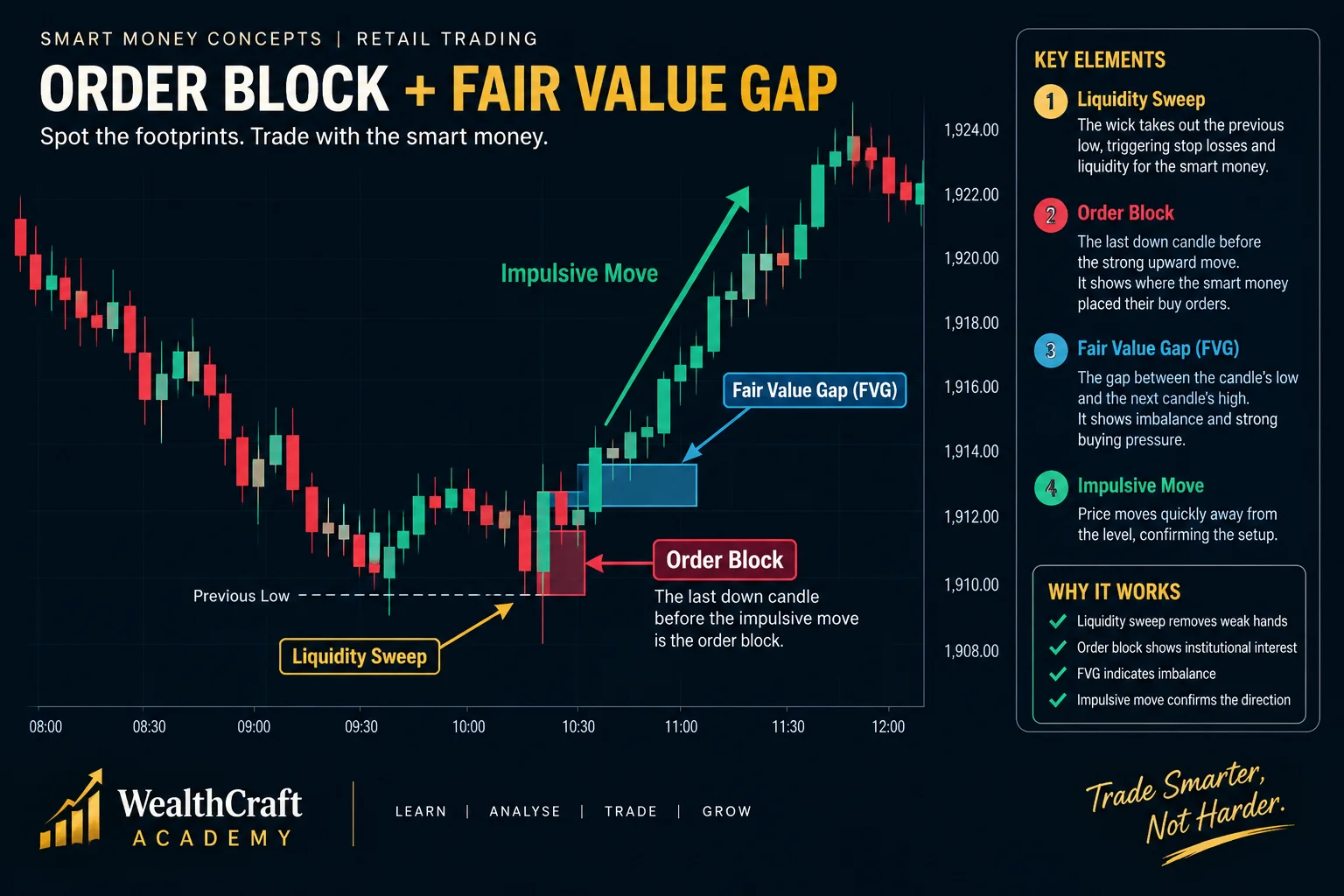
Price will often come back to this zone to tidy up, a bit like a bank clearing its books before closing time. When price returns to that order block, that is where I look for my entry, because I am not chasing the move, I am waiting for price to come back to a fair level. If you want to see exactly how I time these entries, How Do You Trade the ICT Silver Bullet Strategy for Beginners? explains the process step by step.
The Role of Liquidity in Your Trades
Liquidity is the fuel of the market, and without it price cannot move. Whenever you see a double top or a double bottom, you are looking at a magnet for these orders. Most traders see a strong wall, while the big players see a pile of stop loss orders.
They will push price through that level to trigger those stops, because they need those sell orders to fill their own large buy orders. This is why you see long wicks on your charts, where price spikes, takes out the stops and turns around. If you wait for that sweep to finish before you enter, you are trading on the same side as the smart money instead of against it. Those long wicks tell a story of trapped money, so learn how to interpret them by reading How to Read Candlestick Wicks and Shadows in Forex Trading today.
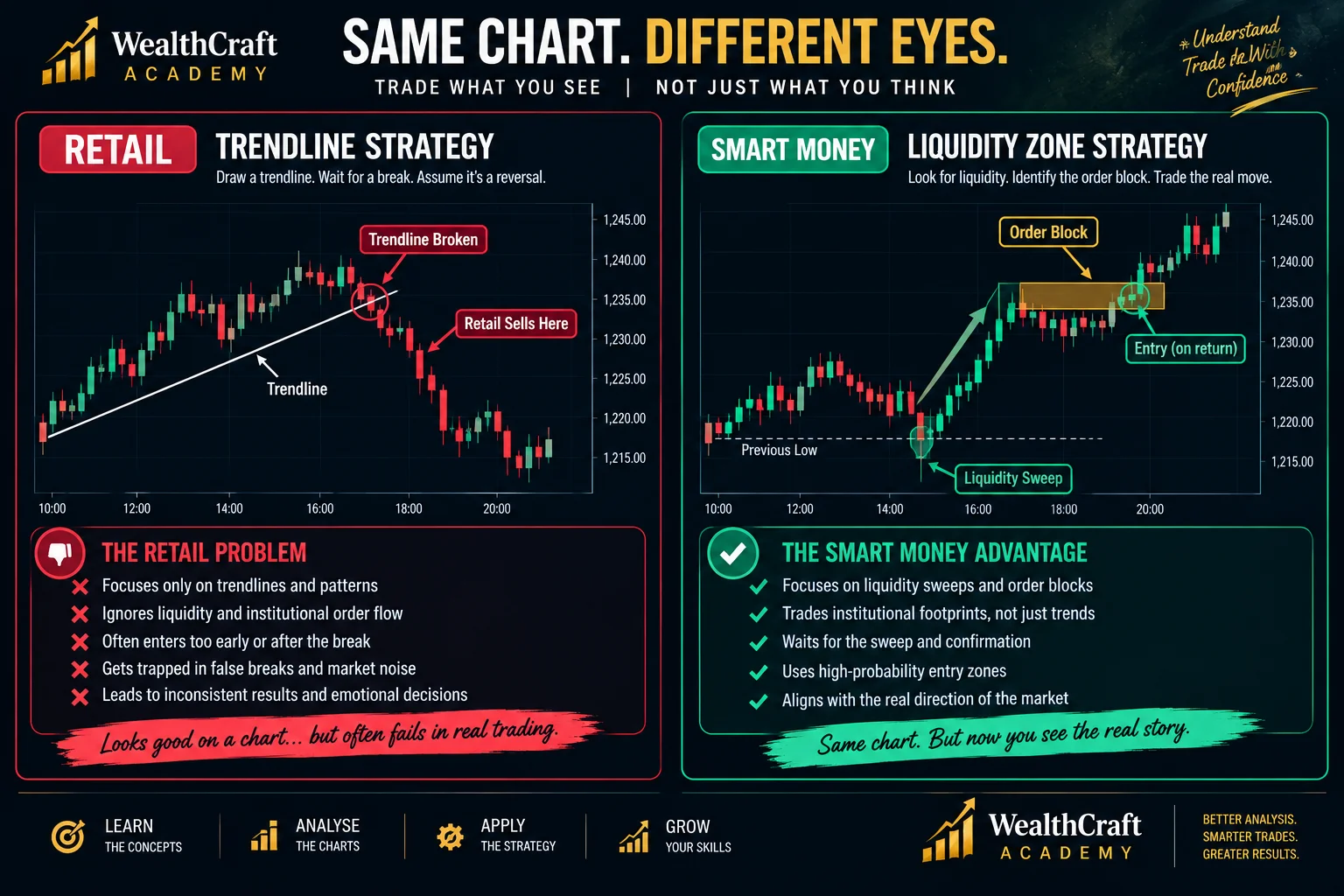
A trendline break that keeps failing is often a sign of this. Price breaks the line, traders jump in, and price snaps straight back, usually because an old order block sat just a few pips away and that is what price was really reaching for. When you only watch the trendline, you miss what the bigger players are actually doing. When your trendlines keep failing, it is time to understand Why Does Market Structure Fail and How to Avoid Fakeouts so you stop getting trapped by banks.
Smart Money Words Made Simple for Retail Platforms
The words used in smart money circles can sound scary, like "imbalance", "mitigation block" and "breaker block", but do not let them put you off, because underneath every one of them is plain price action. If you want to get comfortable with these terms, What Is Smart Money Concepts in Forex for Beginners breaks everything down into simple, everyday language for you.
An imbalance is just a gap left where the market moved too fast, like a vacuum that wants to be filled. When you see a large candle that leaves a gap, price will probably visit that area again later. You do not need special software for this, so just look for the fast moves and the areas where price broke a high or low and never looked back.
Keep your chart clean, because if you have ten indicators on it, you will never see where the orders are. I keep my charts empty so I can see what price is actually doing.
Why You Should Keep Your Entries Simple
I see beginners searching for the perfect entry, waiting for a pattern, a line and a signal all at the same time, and they end up doing nothing at all. The best entries are simple. Find a zone the big players care about, wait for price to come back to it, and look for a sign of rejection like a long wick. Seeing a long wick is a great sign of rejection, and you can learn how to use those specific shapes in How to Trade Hammer and Shooting Star Candles in Forex.
Then you enter, because you do not need a hundred reasons, you need one solid reason based on where the orders are.
Risk management is the part most traders skip. Even if you trade like a bank, a position that is too big will still wipe out your account. If you risk 1 percent of a 1,000 dollar account, that is 10 dollars, and with a 20 pip stop loss you are safe. If you get greedy and risk 10 percent, one bad day can end your trading. I am not your financial adviser, this is only what worked for me. Before you risk your hard-earned money, make sure you understand the math behind your position by reading What Is a Lot Size in Forex Trading? to stay safe.
Where To Read Next
These ideas click when you see how liquidity and structure work together, so these are the lessons I would read next:
- What Is Inducement in SMC Forex and How to Spot It?
- How Do You Trade the ICT Silver Bullet Strategy for Beginners?
- How to Draw Market Structure on Forex Charts Step by Step
- Why Does Market Structure Fail and How to Avoid Fakeouts
Frequently Asked Questions
How do I use smart money concepts for retail trading on a small account?
Look for setups that need a tighter stop loss. If you wait for a liquidity sweep instead of buying a breakout, you might use a 15 pip stop instead of 40, which keeps your risk small and easy to manage.
Is smart money concepts retail trading actually profitable for beginners?
It can be, but you first have to unlearn the habits you were taught. It is not a quick way to get rich, and most people need 6 to 12 months of practice on a demo account to get it right.
What is the best way to identify institutional order blocks?
Look for a fast, strong move that breaks a structure level, then find the last candle of the opposite colour before that move started, because that is where the big orders were probably placed.
Should I use smart money concepts or traditional technical analysis?
Use smart money concepts to understand why a move happens. Traditional analysis often fails because it ignores the hunt for stop losses, so many traders use traditional patterns to find a zone and then use smart money concepts to filter out the bad trades.
Can you actually trade forex with smart money concepts without a broker?
You need a broker to trade, but you do not need to fall for the usual traps. These ideas are about how you read the price on your screen, so they work on any normal trading platform.
If this helped you, send it to a friend who is learning to trade.