Exness is the broker I open when I want to trade the Nasdaq 100, and it is also where I trade the big economic news releases such as CPI, NFP and employment change figures. CPI is just the report on how fast everyday prices are rising, and NFP is the monthly report on how many jobs the US economy added. What most people know Exness for is something else entirely: "unlimited" leverage. Leverage is like a loan from your broker that lets you control a much larger trade than the money you have in your account.
That headline needs a careful read, because Exness only offers it under certain conditions, and it is the one feature I would warn a beginner about before anything else. Below you will find my honest take, the facts I checked on the Exness website in October 2026, why it is my go-to for the Nasdaq, and how I think about leverage when I trade the news.
My Verdict on Exness
A broker with more account choices than most, strong for indices like the Nasdaq 100 in my experience, and comfortable for active traders who want to move from simple pricing to raw pricing without changing broker. Its leverage settings need more self control than most beginners have at the start. Best for
Trading stock indices such as the Nasdaq 100.
Traders who want four different account types under one login.
Moving from a 10 dollar Standard account to raw pricing once you have more experience.
Look elsewhere if
Large leverage numbers tempt you into opening trades that are too big for your account. If you are unsure how to control your risk, please study What Is a Lot Size in Forex Trading? to keep your account safe from big losses.
You want a UK or EU regulator to hold your account as a retail client.
You specifically want to use the cTrader platform.
If you want to look at the site yourself, you can check out Exness here, but always do your own research before you deposit any money.
Exness at a Glance
A regulator is the official body that lets brokers work in its country and checks that they keep the rules. A licence is that permission, with a number you can look up. Exness is a group of companies, and each one has its own licence. I always encourage my students to read How to Choose a Forex Broker for Beginners so you can spot the warning signs before you deposit your hard-earned money.
What Exness lists is a group of companies, and most international clients join Exness (SC) Ltd, which is regulated by the Financial Services Authority of Seychelles (licence SD025). The exact company you join depends on where you live, so you should always confirm the details on your own sign-up page.
Why I Use Exness for the Nasdaq 100
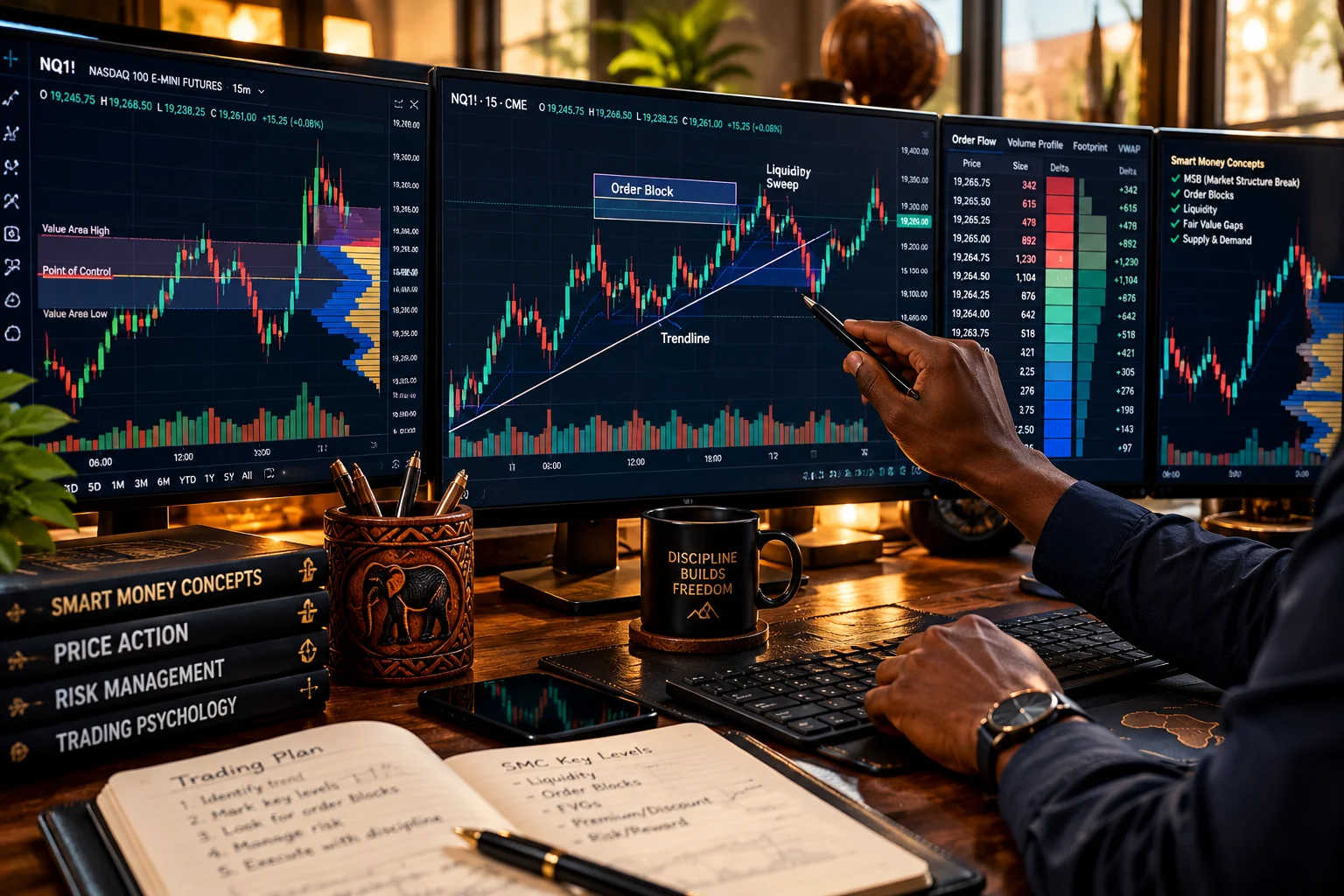
The Nasdaq 100 follows about 100 of the largest non-financial companies listed on the Nasdaq exchange. With a broker, you trade it as a CFD, which means you are trading the rise and fall of the index price rather than owning any actual shares. I like Exness when I am focused on the Nasdaq, but that is a personal preference based on the way I trade, not a promise that every index trader will get the same conditions. If you prefer trading gold instead of indices, my FxPro Review 2026 and Why I Use It for Trading Gold explains how I handle those specific setups.
If you are just starting out, you might want to read The Best Forex Brokers in 2026 and Which One to Use for What to see how they compare to the others I use. Whatever broker you choose for indices, read the symbol details first, which is the small information page each market has inside the platform. Check how much one point is worth for your lot size, the trading hours and the overnight swap, which is the small fee or payment for keeping a trade open overnight. Index contracts are sized differently from currency pairs, so the math you use on EUR/USD does not carry over.
Unlimited Leverage and How I Handle News Trading
Have you ever seen a mobile phone plan sold as "unlimited", and then found the small print that says the speed drops after a certain amount of data? Exness leverage works in a similar way. It offers unlimited leverage only on smaller accounts that meet the conditions on its leverage page, and the maximum steps down as your equity, the real value of your account, grows. Fixed limits apply to several groups of markets, and Exness says it asks for more margin, the money it holds aside to keep your trades open, for a period around major news releases. My own rule is simple. On normal days I keep my leverage at 1:100 or lower and size every trade from my stop loss, the price where I will close a losing trade, because leverage does not change the risk of a trade that is sized properly. It only takes away the brake that stops you from opening a trade that is too big. When I trade a news release I do sometimes use more leverage, but I check the news margin rules first and keep the position small enough that a fast jump past my stop is still a loss I can accept. If you want to see how the math works underneath, What Is Leverage in Forex Trading and How Does It Work? is worth reading side by side with What Is Margin Call in Forex and How to Avoid It.
The Four Accounts
Two words matter here. The spread is the small gap between the buying and selling price, which is the broker's fee, and a commission is a separate fee charged on each trade. A raw account keeps the spread very thin and charges a commission instead.
With market execution, your order goes through at the best price available when it arrives, which can be slightly different from the price you clicked. With instant execution, Exness tries to fill you at your exact price and may offer you a new one if the market has moved. That new offer is called a requote. For most beginners, market execution on the Standard account is the easier start. When you are ready to start, I suggest you look at How to Place Forex Orders on a Trading Platform to understand how these different execution types work.
What a Trade Costs: Standard vs Raw Spread
Yen pairs need one extra step. One standard lot of USD/JPY is 100,000 dollars, so one pip, the small step a price moves in, is worth about 6.67 dollars at a price of 150.00. On the Standard account, a 1.0 pip spread therefore costs about 6.67 dollars per lot. On Raw Spread, the commission at 3.50 dollars per side is 7 dollars per lot opened and closed, plus a small raw spread. In that example the Standard account is slightly cheaper, but when the Standard spread gets wider the Raw Spread account wins. So I tell people to compare both on demo, on their own pair and at the hours they trade, instead of assuming the raw account is always cheaper. If you are still learning how to calculate these costs, What Is a Pip in Forex and How Do You Calculate It is a great place to start.
Where To Read Next
Since you are looking at different brokers, it helps to see how others stack up so you can make an informed choice. I have reviewed a few others that I use for different parts of my own trading.
- The Best Forex Brokers in 2026 and Which One to Use for What
- Deriv Review 2026 for Beginners With a Small Balance
- JustMarkets Review 2026 From a Trader Who Has Used It for Seven Years
- IC Markets Review 2026 and What a Trade Really Costs
- How Much Time Do You Need Every Day to Trade Forex?
- How Much Money Do You Need to Start Trading Forex
Frequently Asked Questions
Is Exness safe for beginners? Exness is a well-known broker with licences in several countries, but safety depends on which company you join and how you manage your own risk. Always check the regulator for your specific region and never trade more money than you can afford to lose.
Does Exness offer a demo account? Yes, Exness offers demo accounts where you can trade with virtual money to test your strategy without any risk. I always recommend testing a new broker on demo for at least a few weeks before you deposit real funds.
What is the minimum deposit for Exness? The minimum deposit varies depending on your country and the payment method you use, but it often starts as low as 10 dollars for a Standard account. Always check your own sign-up page for the exact amount.
Can I trade on weekends with Exness? Exness offers some markets, such as certain indices and cryptocurrencies, that stay open over the weekend. However, standard forex pairs close on Friday and reopen on Sunday night, so be careful if you plan to keep trades open. I am not a financial adviser, and this review is only based on what has worked for me. Trading forex is volatile and carries a high risk of losing your money, so please be careful.
If this helped you, send it to a friend who is learning to trade.