You can spend a whole afternoon studying a chart, find a setup you really like, and then sit there with your hand on the mouse, too nervous to press buy. If that sounds like you, you are not alone, and learning how to place forex orders properly is the thing that fixes it. The fear rarely comes from the chart itself. It comes from not being sure what each box and button in the order window will do with your money.
It is like a piano student who plays a piece perfectly at home but freezes at the school concert, because the music did not change, only the nerves did. Words like limit, stop and lot size look strange at first, so we will go through them one at a time in plain language.
What Actually Happens When You Click Buy or Sell
Clicking buy is not like buying a book online. The forex market is a huge web of banks and big companies, and when you click buy, your order is matched with someone else who wants to sell at that exact price.
There are always two prices on your screen. The bid is the price someone is willing to pay, and the ask is the price someone wants to sell for. The small gap between them is called the spread, and this is how your broker makes its money.
When the price I get is different from the one I expected, the first thing I check is slippage. If a lot of people are buying or selling at the same moment, the price moves fast, and your order might be filled a tiny bit away from where you clicked. This is how a busy market works, not a trick.
Inside the Order Window: Market Orders vs Pending Orders
Your order window is a control panel with two main ways into a trade, a market order or a pending order. Before you start clicking, you must learn How to Choose a Forex Broker for Beginners to ensure your money is safe with a trusted partner.
A market order happens instantly, and you get the next best price available right now. I use this when I want to join a move straight away.
A pending order is more like an instruction you leave for later. You tell the broker, "Wait until the price reaches this number, then buy or sell for me." It works like a violin player in an orchestra who counts the bars of rest with the bow ready and only plays at their exact entry, which keeps emotions out of it.
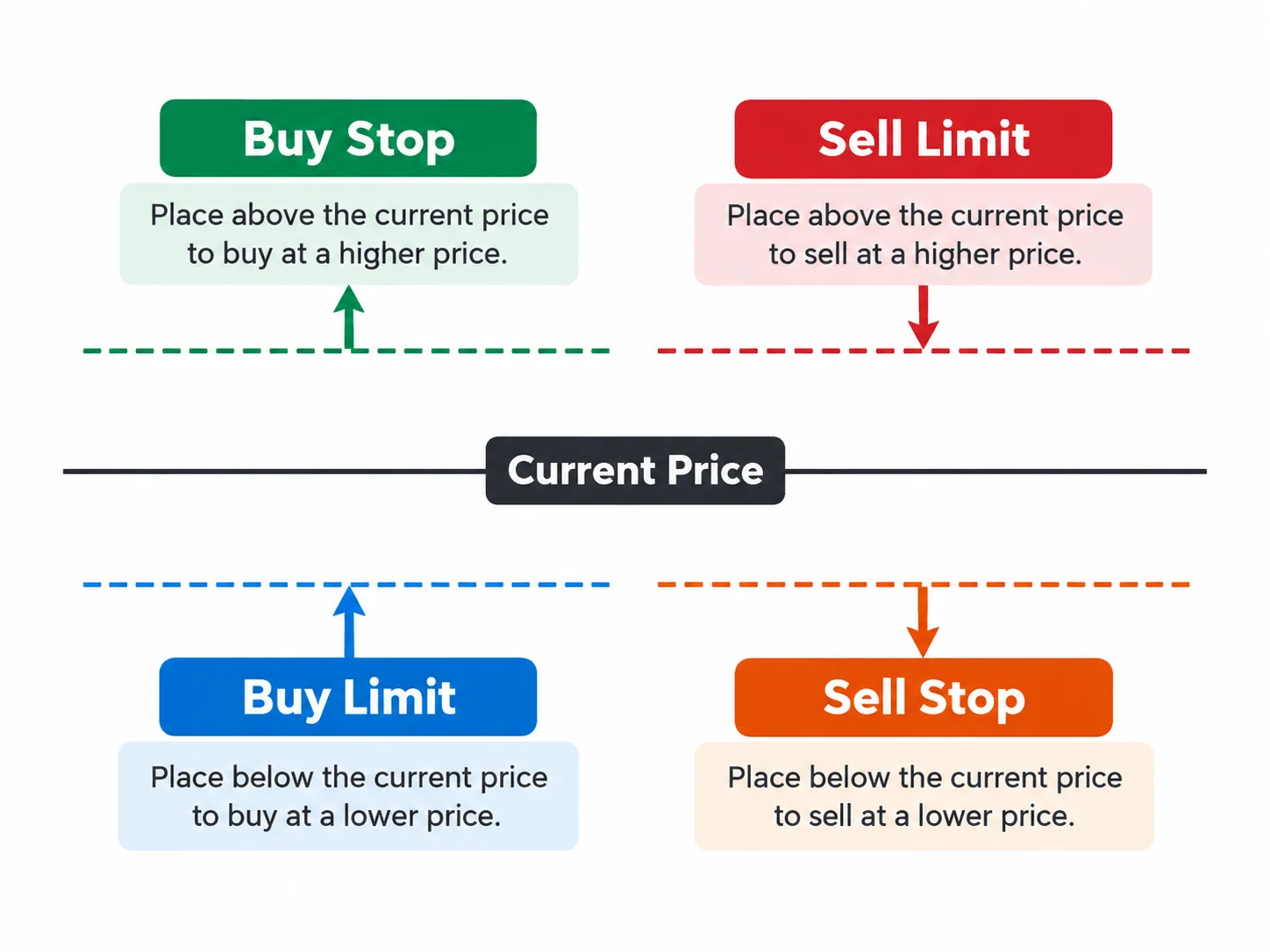
There are four types of pending order:
Buy Limit: You want to buy at a lower price, so you wait for the price to drop into your zone.
Sell Limit: You want to sell at a higher price, so you wait for the price to rise into your zone.
Buy Stop: You want to buy as the price breaks higher.
Sell Stop: You want to sell as the price breaks lower.
Most beginners stick to market orders because waiting feels hard, but I suggest you learn to use pending orders early, because they help you stay calm.
How to Work Out Position Size and Lot Size Correctly
You can have a great plan and still lose if you choose the wrong size. In forex, size is measured in "lots." A standard lot is 100,000 units of currency, which is huge, so most beginners should stick to micro lots, which are 1,000 units. You should study What Is a Lot Size in Forex Trading? to understand how these units work before you risk any of your own money.
You will also hear about leverage. This is when you put in 100 dollars, but your broker lets you control 1,000 dollars of currency. It makes your gains bigger, but it makes your losses bigger too. I want you to be careful with borrowed power, so please look at What Is Leverage in Forex Trading and How Does It Work? to stay safe.
Never guess your size, so use a calculator. If you have a 1,000 dollar account and you want to risk 10 dollars on a trade, you have to do the maths before you click, because if you risk too much, one bad move can ruin your account. If you want to know how your account stays safe while you manage these risks, What Is the Difference Between Margin and Equity in Forex? explains exactly how it works.
Setting Stop Losses and Take Profits Without Guesswork
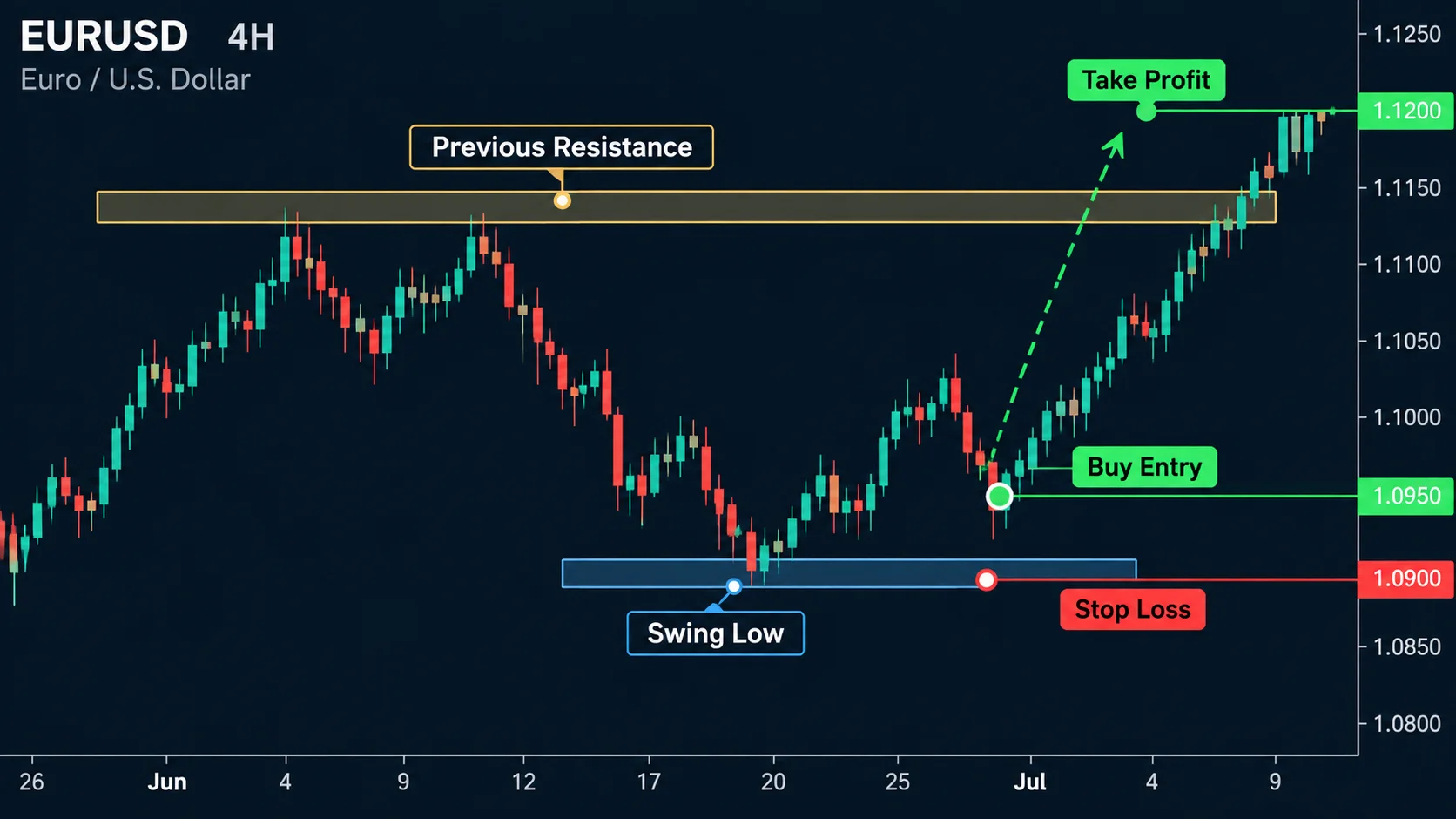
Never enter a trade without a stop loss. A stop loss is an order that closes your trade if you are wrong, and a take profit is an order that closes it when you reach your target gain.
When a trade went red, I used to drag my stop lower and tell myself I was giving it room, but really I was just scared to admit I was wrong in a way that most traders still do today. It cost me more than one account before it sank in, so do not move your stop after you set it.
Place your stop based on market structure, meaning the recent highs and lows. If your idea is that the price will go up, put your stop just below the last low point. Then, if the price reaches your stop, you know your idea was wrong. To get better at spotting these turning points, you can practice with How to Draw Market Structure on Forex Charts Step by Step to find your levels.
Placing Trades on MetaTrader 4 and MetaTrader 5
Most traders use MetaTrader, and when you press F9, an order window pops up where you choose your volume, which is your lot size. Double check this number, because one extra zero will change your risk from 10 dollars to 100 dollars. Getting your lot size right is vital, so make sure you understand What Is a Pip in Forex and How Do You Calculate It first.
You can also set a deviation, which is how much slippage you are willing to accept. If the market is moving too fast during a news event, your order will cancel instead of filling at a bad price, which makes it a very safe tool.
Changing, Scaling and Closing
Your work is not finished when you click buy, because while the trade is live you can change your stop loss or take profit, and you can also close just part of the trade, which traders call scaling out.
If you are in a good trade, you can close half of it to bank some money and let the rest run. You have already won a bit, so you can breathe easier.
Common Order Mistakes and How to Avoid Them
Mistakes happen to everyone, and the most common one is the "fat finger," when you type 1.0 instead of 0.1 and suddenly your trade is ten times bigger than you meant. Always check your volume twice before you press the button.
Another mistake is trading during big news. The spread gets very wide, so you pay more to enter, and I try to stay away from the screen when important news is about to come out. If you struggle to stay away from the screen during news, learn How Much Time Do You Need Every Day to Trade Forex? to find your balance.
Finally, never rely on a mental stop. If the stop is not in the system, you will not follow it, because you will find a reason to keep a losing trade open. Let the platform handle the exit.
Reality Check
Placing orders is a mechanical skill, a bit like learning scales on a new instrument. It feels clumsy at first, which is why you should start with a small account or a demo account. Learning how to place forex orders is about discipline, not about being clever, and if you follow your rules every time, you will do fine. Before you put real dollars on the line, see if Is Forex Demo Trading Worth It for Beginner Traders? helps you practice without the stress of losing.
I am not your financial adviser, this is only what worked for me.
Where To Read Next
If you want to understand more about what goes on behind your orders, these two lessons are on the way:
- What Is the Difference Between Margin and Equity in Forex?
- How Much Time Do You Need Every Day to Trade Forex?
- How to Draw Market Structure on Forex Charts Step by Step
Frequently Asked Questions
How do I place forex orders correctly without making mistakes?
Use a simple checklist. Before you click, check your pair, your lot size and your stop loss one more time.
What is the difference between a market order and a pending order in forex?
A market order fills straight away at the current price. A pending order waits for the price to reach a level you chose before it opens the trade.
Why did my forex order execute at a different price than what I clicked?
That is slippage. It happens when the market moves quickly and the price you asked for is no longer there.
How do I calculate the right lot size for a small forex account?
Use a position size calculator. Divide the amount you are willing to risk by the distance to your stop loss in pips.
Should retail traders use stop-loss orders on every trade?
Yes, every single time, because a stop loss protects your money and keeps your risk under control.
If this helped you, send it to a friend who is learning to trade.