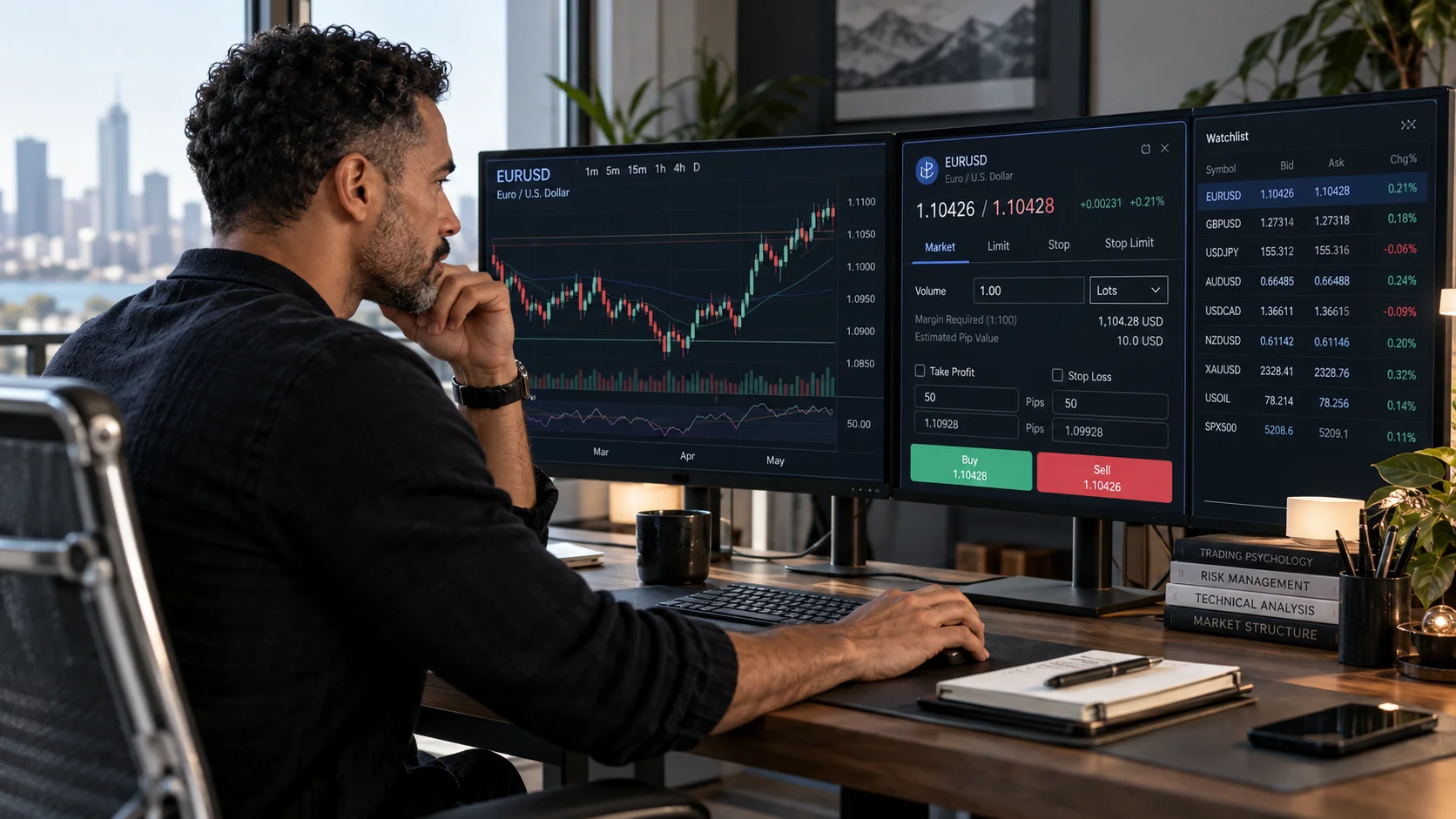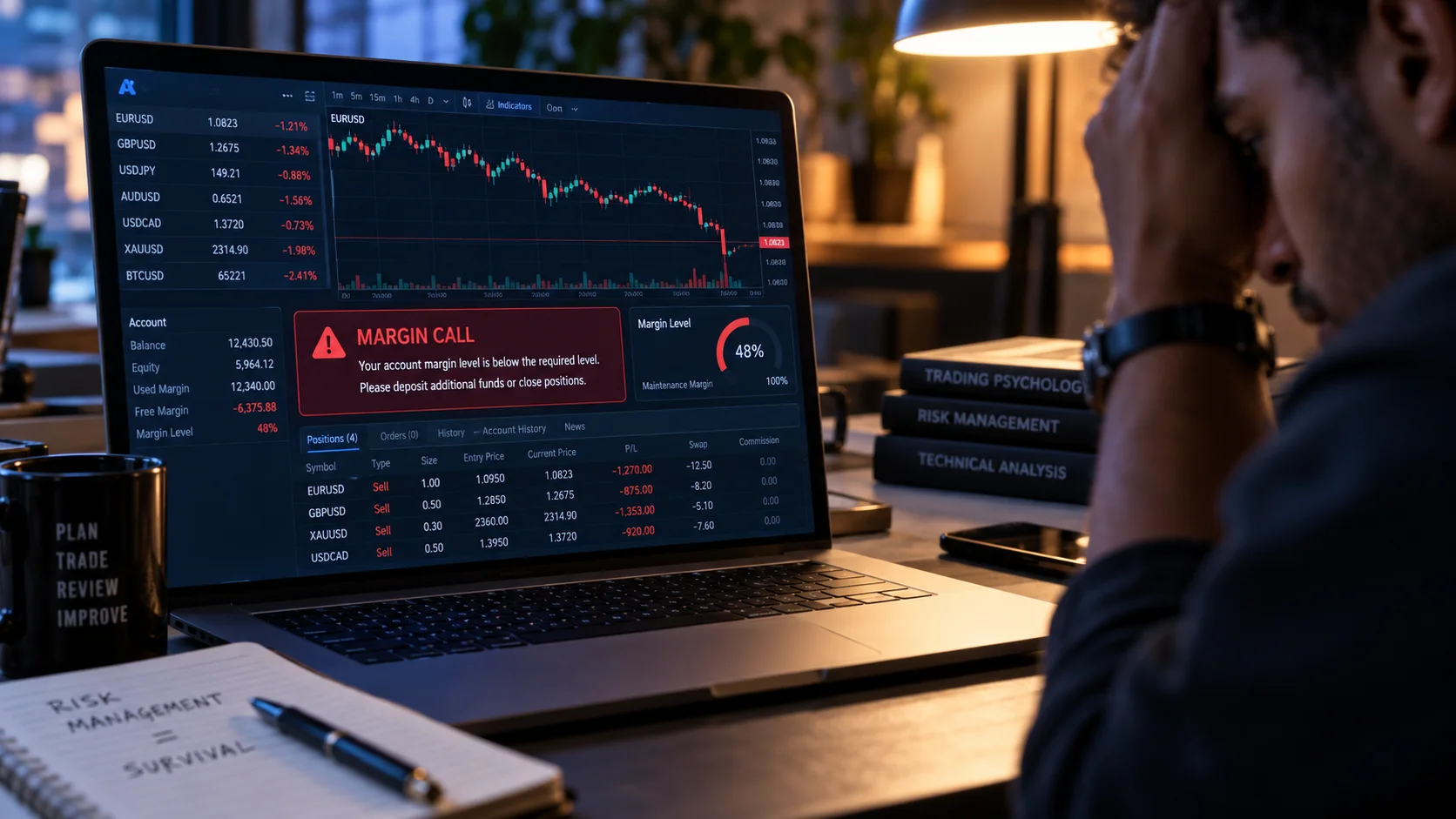
Have you ever looked at your trading plarform and see a row of figures ticking up and down, ignore them, and focus entirely on the chart. I did the exact same thing when I started, and honestly, it cost me pay, because i could not understand the difference between trading and also carefully understanding the difference between margin and equity. I was so busy looking for the next big move that I didn't even notice my account was screaming for help.
You might think you’re safe as long as your balance looks healthy, but that is a dangerous trap. The difference between margin vs equity in forex is the only thing standing between you and a broker forced liquidation. If you have ever been confused by why your trades suddenly closed on their own, or why your account feels like it's shrinking despite a winning day, let’s clear that up right now. It is much simpler than the platform makes it look, and getting this right is the first step to actually keeping your money in the market.
Why Your Platform Numbers Are Not Just Decoration
Your trading platform is like the dashboard of a car. You wouldn't drive at 100 kilometres per hour while ignoring the fuel gauge or the engine light, yet that is exactly what most beginners do with their account metrics. They stare at the chart, hoping for a setup, while the numbers at the bottom are telling a story about whether they will even be able to trade tomorrow.
The biggest mistake is confusing your balance with your actual buying power. Your balance is just the cash you had before you opened any trades; it is a static number that sits there like a bank statement. The real time health of your account is your equity, which fluctuates with every single pip the market moves. If you are still trying to get a handle on how to execute your trades properly, I explain the essentials in How to Place Forex Orders on a Trading Platform, which will help you get comfortable with these figures before you risk your hard-earned capital.
Think of your balance as your weight at your last doctor's visit, but your equity is your pulse right now. If you want to know if your account is fit enough to survive the next news spike, you have to look at the pulse, not the weight.
The Hidden Mechanics of Margin
To really get this, you have to stop thinking about forex as "buying" currency. You are actually entering a contract where you bet on the price difference between two currencies. Because these price changes are tiny, you need to control large amounts of money to make a profit. This is where your broker steps in to lend you the buying power, but they are not doing it for free. If you are still unsure how to set these up correctly, How to Place Forex Orders on a Trading Platform shows you exactly how to get started.
Your broker requires a deposit to ensure you can cover your losses, and that is what we call your used margin. They lock this money away the second you open a trade. It is not your money to use anymore; it is the broker's safety buffer. They are essentially saying, "I will let you control this 10,000 dollar position, but I am keeping 100 dollars of yours in the vault just in case things go south."
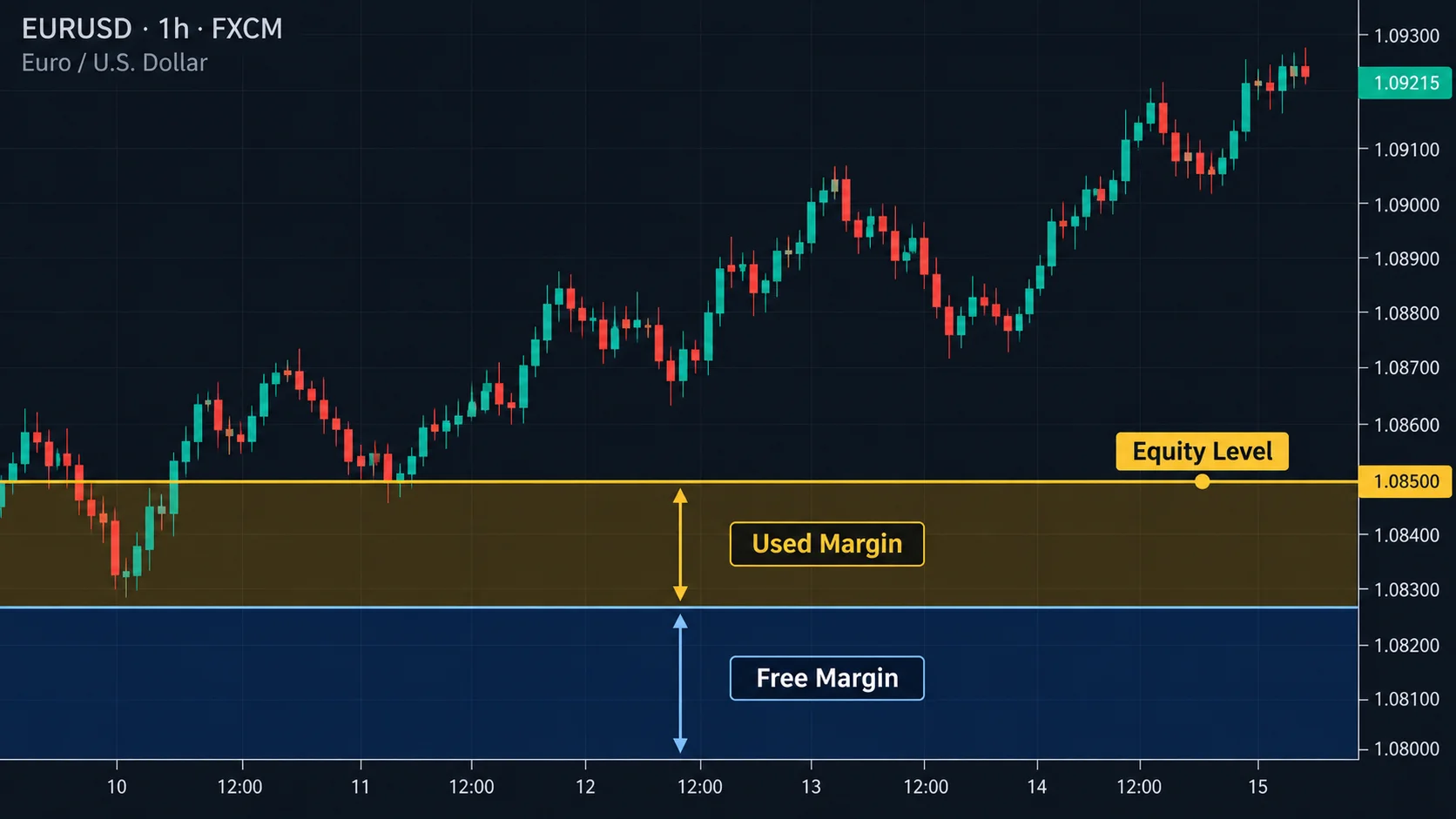
Once you understand that margin is just borrowed buying power, the whole thinking and approach changes. While your equity is the total value of your account if you closed everything right now. It is the balance plus or minus any floating profit or loss. If your equity is higher than your balance, you are winning. If it is lower, you are losing. The gap between your equity and your used margin is your free margin, which is the only money you have left to open new positions.
The Margin Trap That Kills Most Accounts
Most retail traders dig their own graves by opening too many trades at once. They see a 1,000 dollar balance, feel rich, and open five different positions. Each one locks up a piece of their margin, and suddenly, they have almost no free margin left. Their account is now so fragile that any oposite move against them causes a chain reaction. Once you stop overtrading and keep your margin safe, you should learn How to Trade Micro Market Structure on Lower Timeframes to spot real moves.
Imagine you have 500 dollars. You open three trades, and each one uses 100 dollars of margin. You have 200 dollars of free margin left. If the market moves against you by just a small amount, your equity starts to drop fast. Because you have so little free margin, your account gets into the "danger zone" almost instantly. If you want to avoid this, How to Calculate Forex Position Size to Manage Risk is a must read, because it teaches you how to keep your margin usage low enough to survive a bad day. Once you master your risk, you should learn How to Use Market Structure Entry Signals in Forex to avoid getting trapped by the big banks.
The mistake I see over and over is traders thinking they are safe as long as they have "balance." But balance is a ghost. It is a number from the past. Equity is the reality of the present. If your equity drops, your ability to trade drops with it. If you want to know who is actually pushing these prices around, What Is the Forex Market and Who Trades It explains the big players behind the scenes.
Gearing and Why It Changes Everything
Gearing, or leverage, is the reason you can even trade with a small account. It allows you to control a large position with a small deposit. If you have 1:100 gearing, it means for every 1 dollar you put up, the broker lets you control 100 dollars of the market. Your deposit is the margin, and the borrowed part is the gearing. If you are ready to test these concepts, How to Start Forex Trading With $100 Step by Step shows you how to begin small while staying safe.
Let's look at a real example. You want to trade 10,000 units of GBPUSD. Without gearing, you would need 13,000 dollars in cash. With 1:100 gearing, you only need 130 dollars. That 130 dollars becomes your used margin. If you only had 150 dollars in your account, you would have 20 dollars of free margin left. You are basically living on the edge, and one bad trade will wipe you out. If you are still deciding on your initial deposit, How Much Money Do You Need to Start Trading Forex helps you avoid the common trap of starting too small.
When Your Margin Level Hits the Red Line
Your margin level is simply a percentage that tells you how safe you are: (Equity / Used Margin) x 100. If you have 1,000 dollars of equity and 100 dollars of used margin, your margin level is 1,000 percent. You are safe. But if your equity drops to 110 dollars, your margin level drops to 110 percent. You are now in the danger zone.
Most brokers will send a margin call when you hit 100 percent. It is their way of saying, "You are running out of money, and if you don't add more, I'm going to close your trades." If you ignore this and keep losing, you eventually hit the stop out level, usually 50 percent. That is when the broker takes the decision out of your hands and closes your trades for you. I explain how to spot these warnings early in What Is Margin Call in Forex and How to Avoid It, because relying on the broker to save you is the fastest way to lose your account.
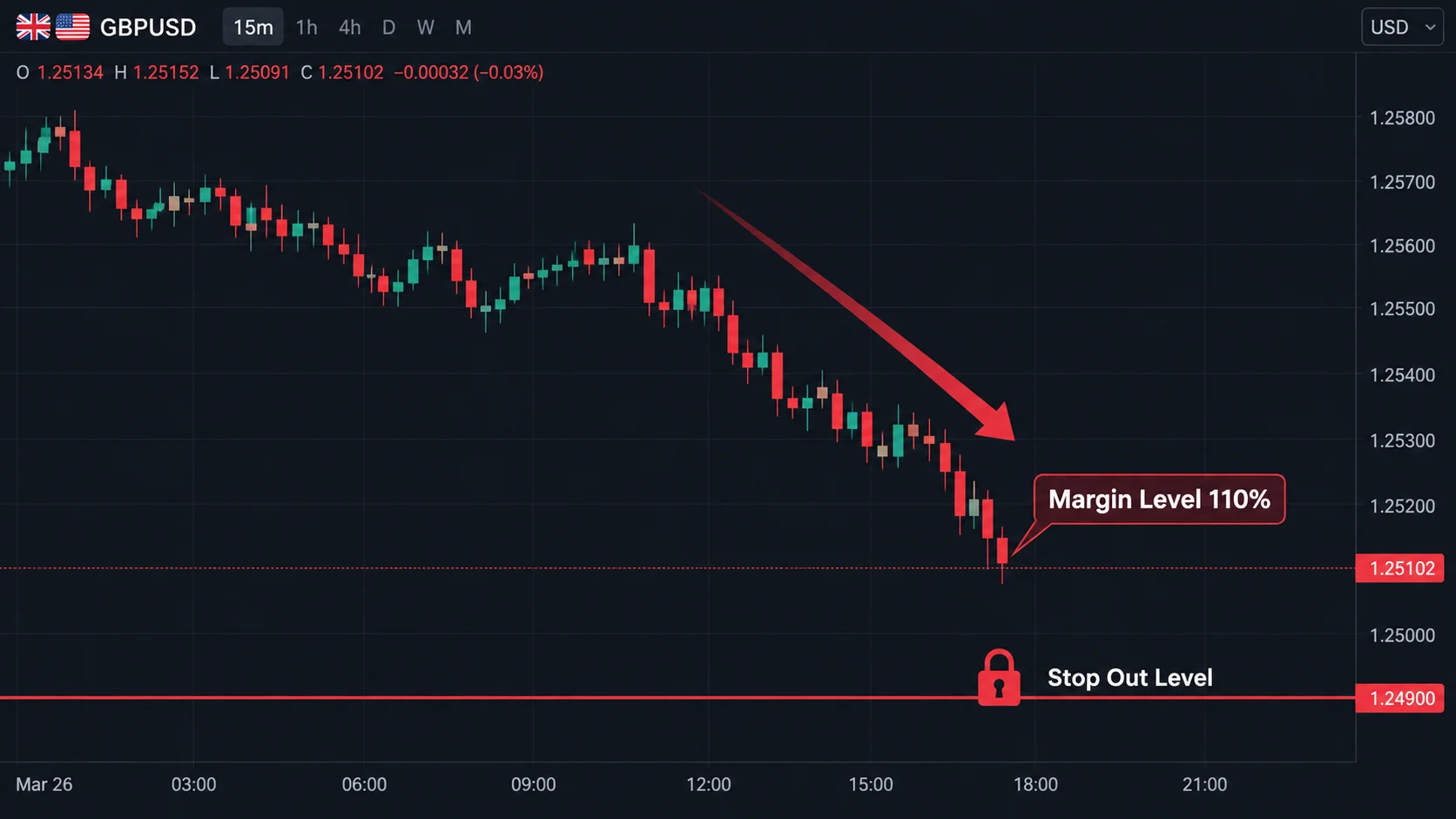
There is no magic trick to staying alive in this market. It is all about math and discipline. If you find yourself constantly hitting these low margin levels, it is a sign that your position sizes are too big for your account. You are not trading; you are gambling on your account's survival. Take a step back, lower your risk, and focus on the equity, not the dream of a quick win. If you are feeling overwhelmed by this pressure, How Much Time Do You Need Every Day to Trade Forex? helps you find a calm, balanced routine instead.
Where To Read Next
I have put together these articles to help you build a stronger foundation. If you are still learning the basics, start here:
- How to Place Forex Orders on a Trading Platform
- How Much Time Do You Need Every Day to Trade Forex?
- How to Trade Micro Market Structure on Lower Timeframes
- How to Use Market Structure Entry Signals in Forex
- What Is Margin Call in Forex and How to Avoid It
- How to Start Forex Trading With $100 Step by Step
Frequently Asked Questions
Can I trade without using margin?
In forex, you technically need margin for every trade because you are controlling a larger contract value than your cash balance. However, you can effectively avoid the risks of high margin usage by keeping your trade sizes very small relative to your account balance.
What is the difference between balance and equity?
Your balance is the amount of cash you have if you have no open trades. Equity is your balance plus or minus the profit or loss of your currently open positions, representing the real-time value of your account.
Will a margin call automatically close my trades?
A margin call is usually just a warning from your broker that your account equity is getting low. Your trades are only automatically closed when your margin level hits the specific stop out percentage set by your broker.
How can I check my broker's stop out level?
Every broker is different, so you should check your account settings or the broker's website under their trading conditions. If you are struggling to find it, How to Read Forex Broker Terms and Conditions Before You Deposit will show you exactly what to look for.
If this helped you, send it to a friend who is learning to trade.