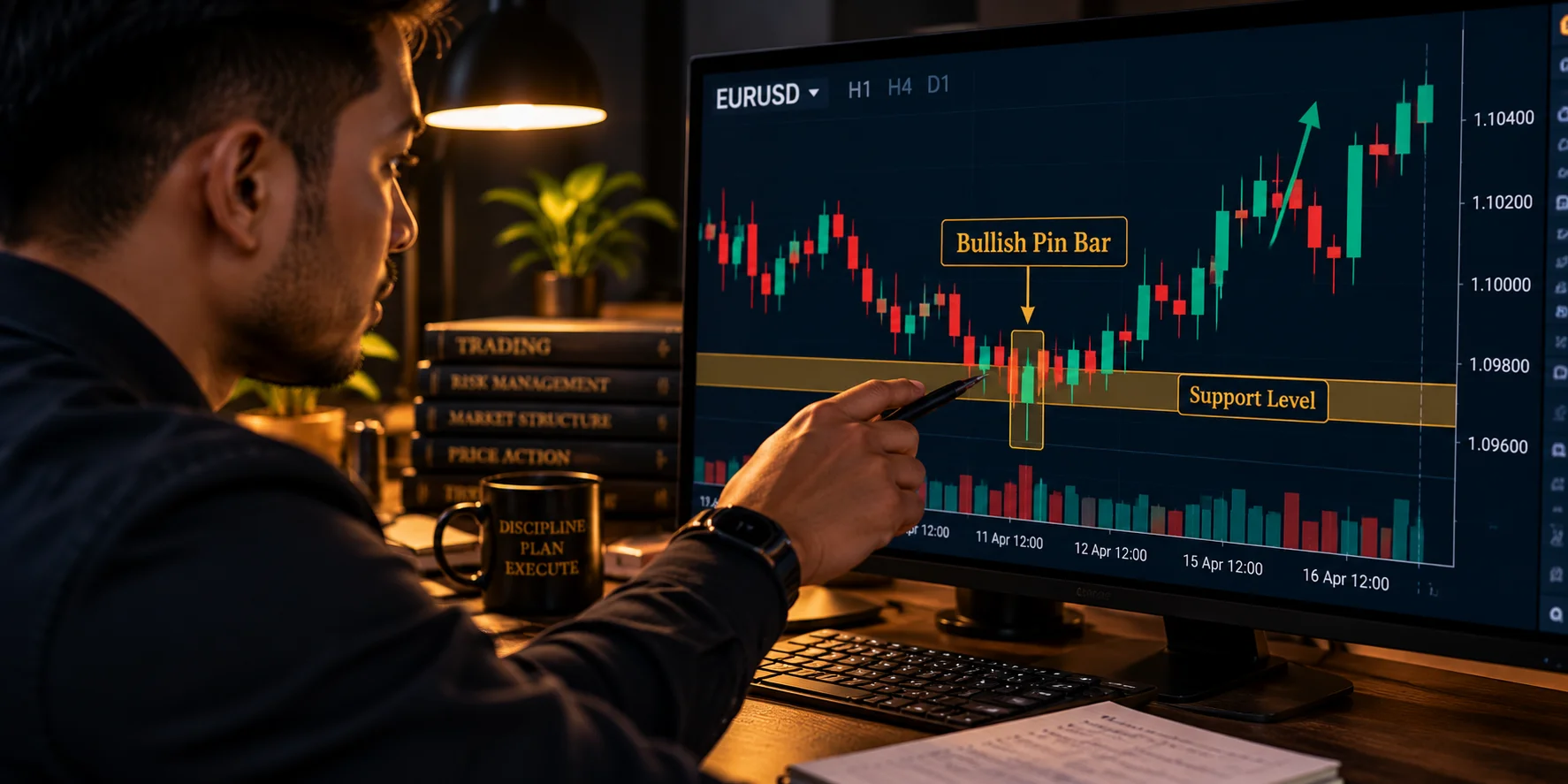
Most reatil traders look at one candle and think they can see the future. This is a fast way to lose money. A single candle only shows a small block of time. It does not show the whole story.
A big market turn is a conversation between buyers and sellers. That takes time. It usually takes three candles to finish that talk. If you want to spot turns before others do, you must look at groups of candles. Let us look at how morning and evening star patterns in forex work. These are not just pretty shapes. They show you where the big money is moving.
Why Three Candle Reversals Tell the Real Story
Many people treat these patterns like magic road signs. They are not. They are footprints left by big banks and firms. These groups have so much money they cannot buy or sell all at once. They have to move slowly.
Think of it like a massive ship turning in the ocean. It does not spin on a dime. It slows down first. Then it turns. Then it speeds up in the new direction.
The first candle shows the old trend still in control. The middle candle is the "star." It has a tiny body. This means the fighting has stopped for a moment. Neither side is winning. The third candle shows the new side taking over. It needs to be strong. If it is weak, the move is likely fake.
I remember my first year. I saw a pattern, got excited, and jumped in. I did not wait for the third candle to finish. I clicked buy, and the market crashed lower right after. I learned that you must understand how price actually forms on the chart before you trust any shape you see.
Anatomy of a Morning Star Pattern
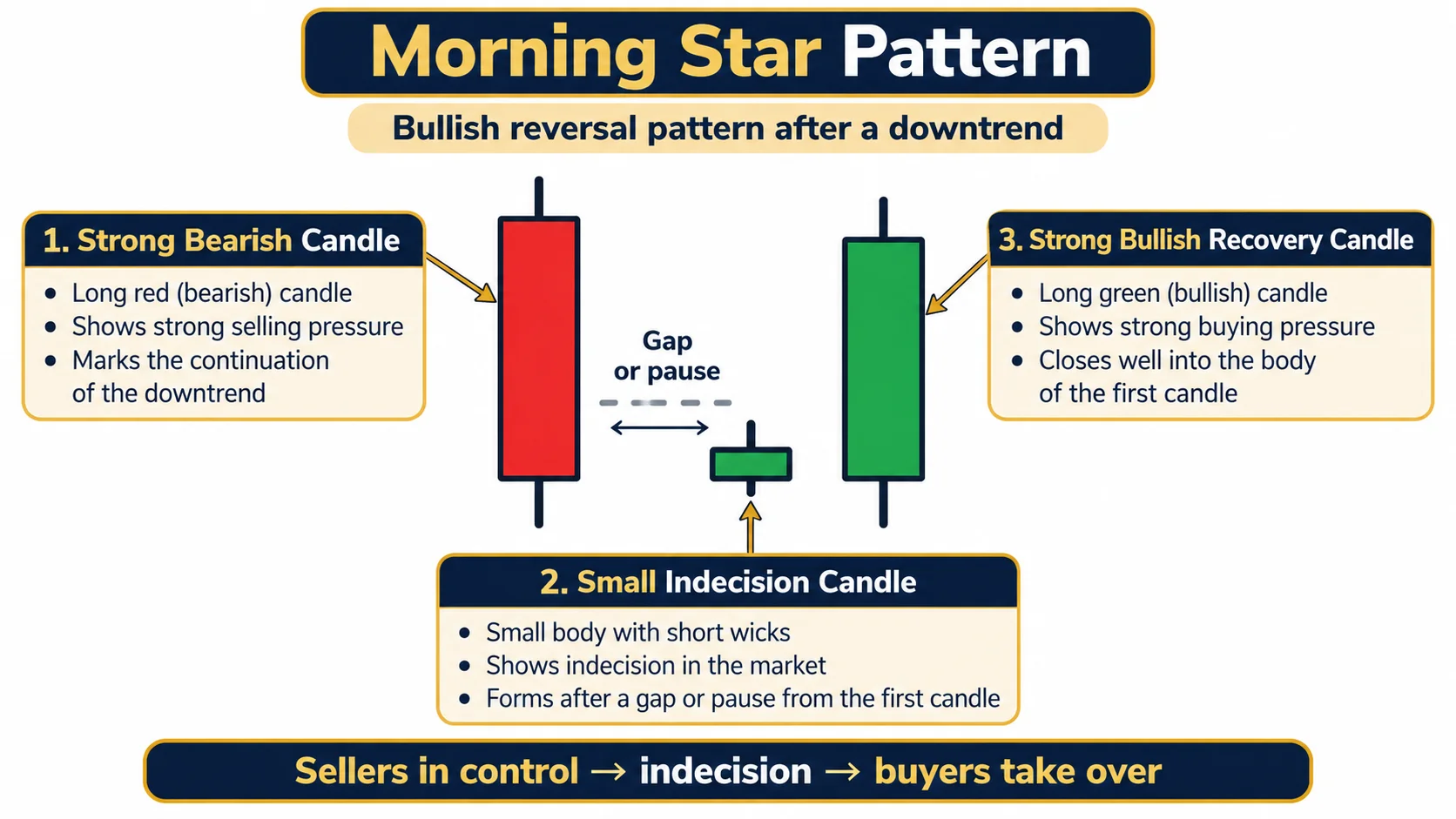
A morning star happens at the bottom of a slide. It is a sign that the price might go up. The first candle is long and red. It shows sellers are still in charge. The second candle is the star. It is very small. It shows the sellers are tired. The third candle is green and strong. It should close high up into the first red candle. This shows buyers are now in control.
Anatomy of an Evening Star Pattern
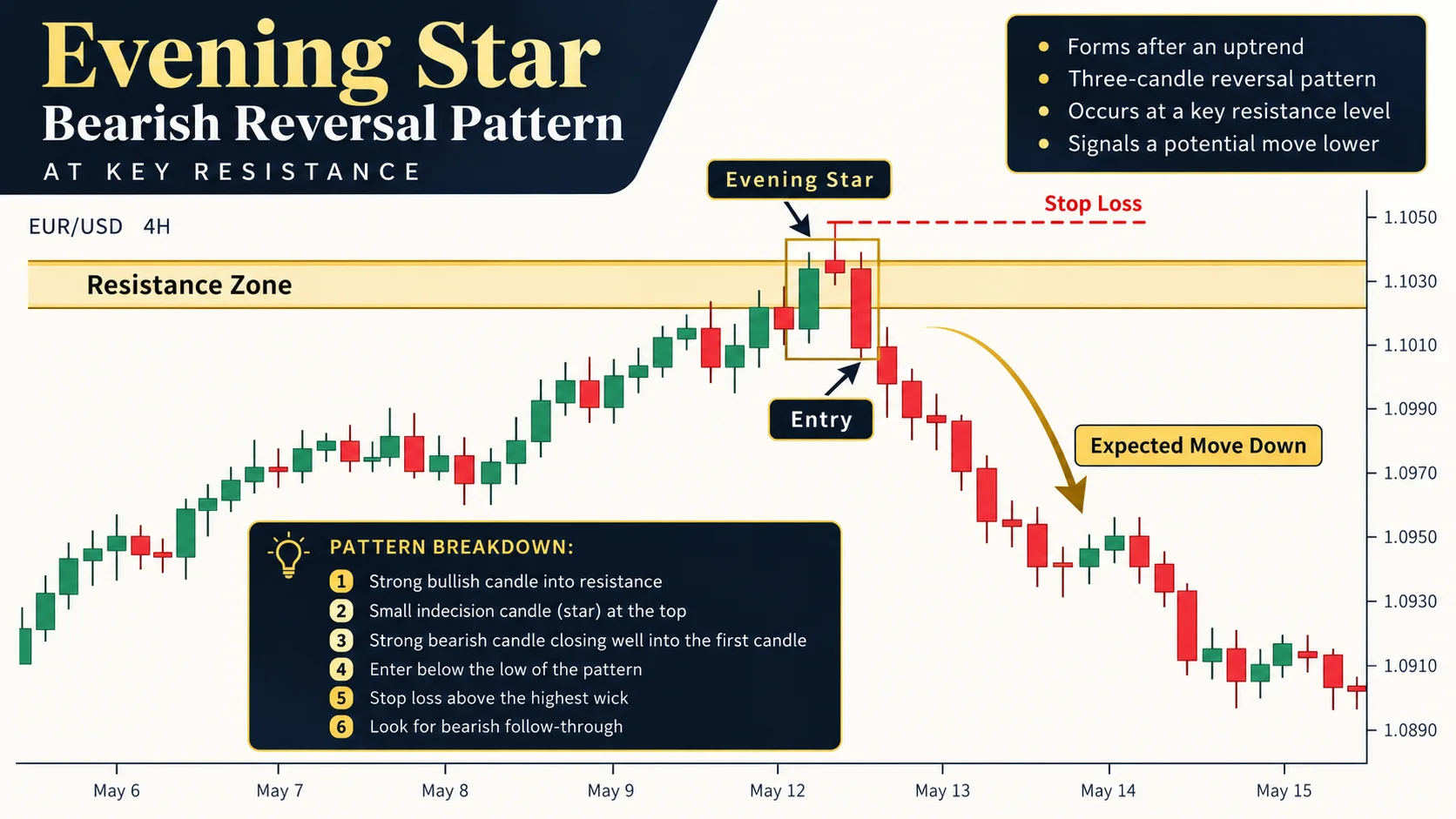
An evening star is the flip side. It happens at the top of a climb. It warns that buyers are out of gas. The first candle is a long green one. The second candle is small and sits at the top. The third candle is a long red one that drops down. It shows that buyers have left the building and sellers have taken the keys.
Where to Trade Them (And Where to Ignore Them)
Location is everything. If you see these patterns in the middle of a messy chart, ignore them. They mean nothing there.
Years ago, I traded a pattern on USDJPY that looked perfect. I was so proud of myself. But it was in the middle of a sideways move. The price went up a little, then slammed down and hit my stop. I felt foolish. I was trading noise, not a real turn.
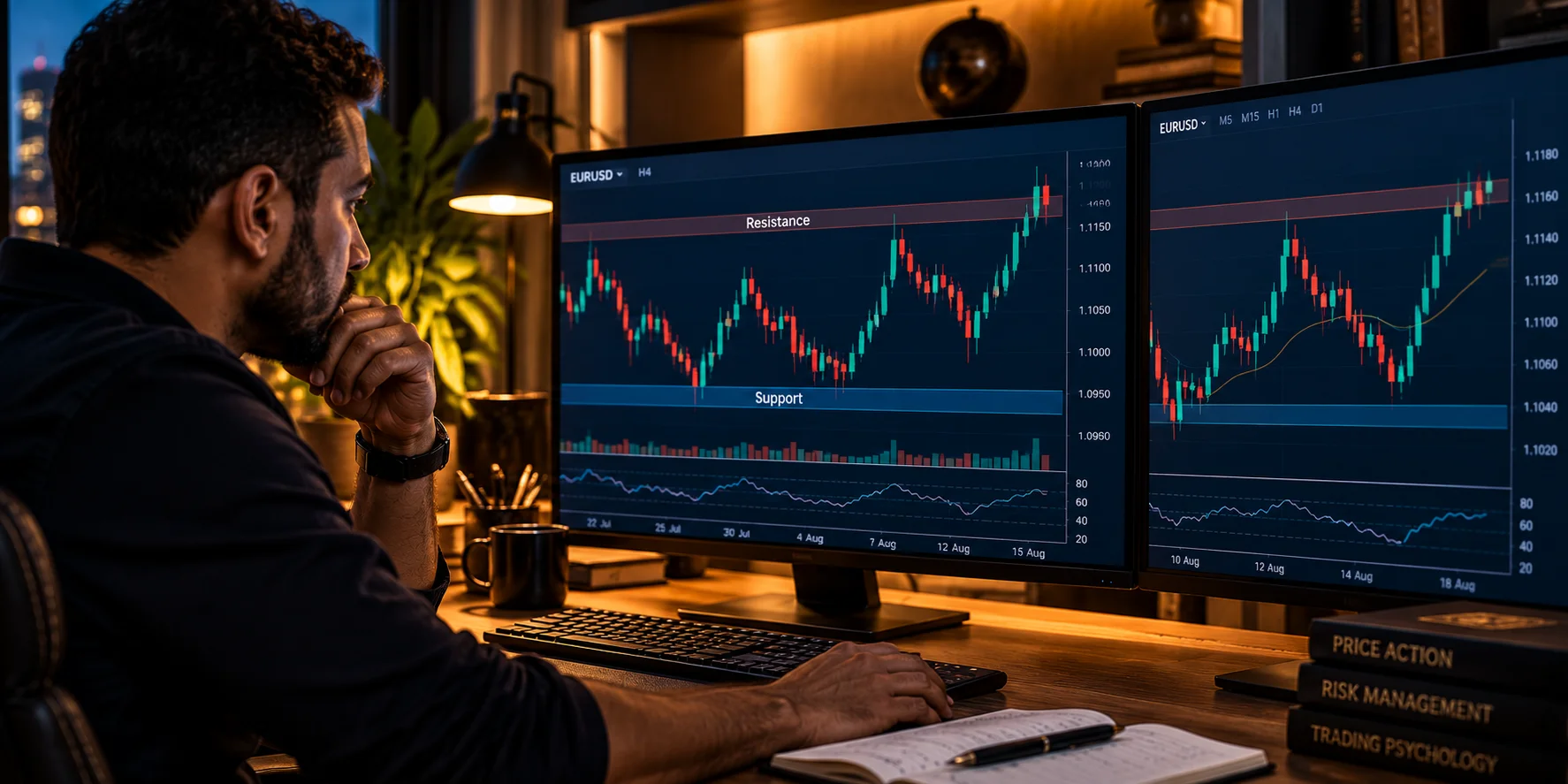
You must find these patterns at "support" or "resistance." Support is a floor where price has bounced before. Resistance is a ceiling where price has fallen before. Only trade when the pattern touches these lines. I am not your financial adviser, this is only what worked for me.
How to Manage Risk When Trading Star Patterns
Even a great pattern can fail. That is why you need a plan for when you are wrong. Your stop loss is your safety net. A stop loss is an order to close your trade if the price goes against you, to stop you from losing more money.
Put your stop loss behind the middle candle of the star. If you are buying, put the stop just below the low of that middle candle. If the price goes past that, your idea was wrong. Get out.
Let us say you trade EURUSD. You see a morning star. Your stop is 20 pips away. If you have a 1,000 dollar account, you should not risk more than 10 dollars. If that means your trade size must be very small, so be it. Never risk more than you can afford to lose.
Common Mistakes Traders Make With Morning and Evening Stars
The biggest mistake is moving too fast. People see the middle candle and think, "This is it!" They enter the trade before the third candle is finished. This is dangerous. A candle can change its shape until the very last second.
Wait for the third candle to close. If it does not close strong, do not enter. Another mistake is forgetting the size of the candles. If the candles are tiny, the market is bored. You want to see big, fast moves on the third candle. That shows power.
Where To Read Next
Keep learning how the market moves. Check out these guides:
How to Trade Bullish Engulfing Candles in Forex (coming soon)
How to Trade Hammer and Shooting Star Candles in Forex (coming soon)
- How to Read Candlestick Patterns for Beginners in Forex
- How to Trade Hammer and Shooting Star Candles in Forex
- How to Trade Bullish and Bearish Engulfing Candles in Forex
- How to Read Bullish and Bearish Candlesticks in Forex
- How to Trade a Pin Bar Candlestick Strategy in Forex
Frequently Asked Questions
What are morning and evening star patterns in forex?
They are three-candle groups that show a market might turn. The morning star is for when a fall might stop. The evening star is for when a climb might stop.
How do I know if a morning star pattern is valid?
It must happen at a support level. The third candle must be strong and close high up into the first candle.
Where should I place my stop loss when trading an evening star?
Place it just above the high of the middle star candle. Add a few extra points for the spread, which is the small fee your broker takes to open the trade.
Why do my reversal patterns keep failing in forex?
You are likely trading them in the wrong place. Patterns only work when they happen at important zones on the chart.
What is the difference between a doji and a star candle?
A doji looks like a cross. It means total confusion. A star has a small, real body. It means momentum is slowing down.
Can I trade star patterns on a small account?
Yes. Just keep your risk very small. Use micro lots so that a loss only costs you a tiny amount of money.
Found this helpful? Share it with someone who needs it.